
Amor is one of Make My Blinds' best-known fabric families, and this is its double-roller make-up: two blinds sharing one bracket, a sheer for the daytime and a shading layer for when the room wants to go quiet. The colourway names do the explaining - each pairs a front fabric with a Haze sheer layer, as in Midnight With Haze Pure or Royal Blue With Haze Soft Grey - so you are buying a combination someone has already balanced rather than assembling one yourself. There are 25 colourways from £13.16, and the range is a Make My Blinds exclusive among the retailers we track.
Who it suits
Rooms that live two lives. The sheer runs through the day, softening glare and stopping the street seeing in while the room stays bright; the shading layer takes over for evenings, films and slow mornings. That rhythm suits bedrooms and street-facing living rooms best, and it delivers what a curtain-plus-blind build usually delivers, in a shallower and tidier package.
Two practical notes before ordering. First, opacity: confirm on the listing how dark the shading layer actually goes, because a room that must be genuinely black for sleep needs that checked rather than assumed - and any recess-fitted blind admits a little light at its edges regardless of fabric. Second, depth: two tubes need more room than one, so measure your recess depth against the measuring notes before committing to an inside fit; a shallow recess simply moves the blind onto the wall above instead. The range comes in the standard make-up only, so there are no extra formats to weigh up.
The colours
25 colours available

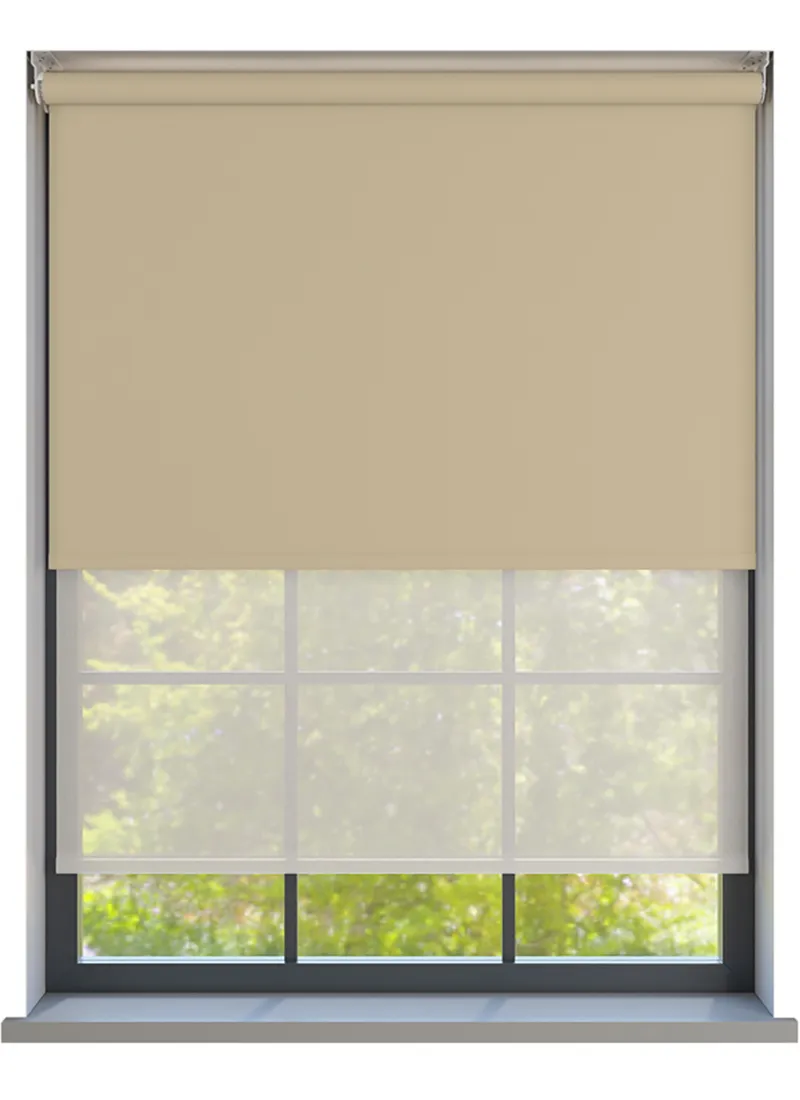


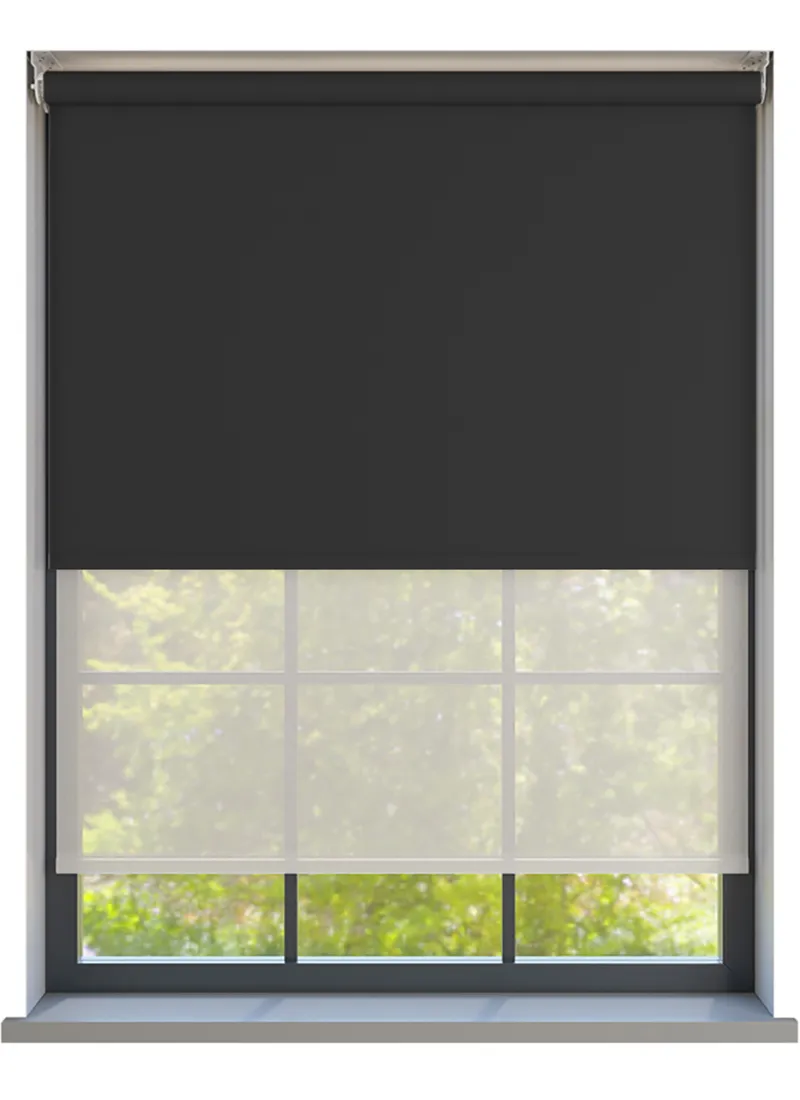


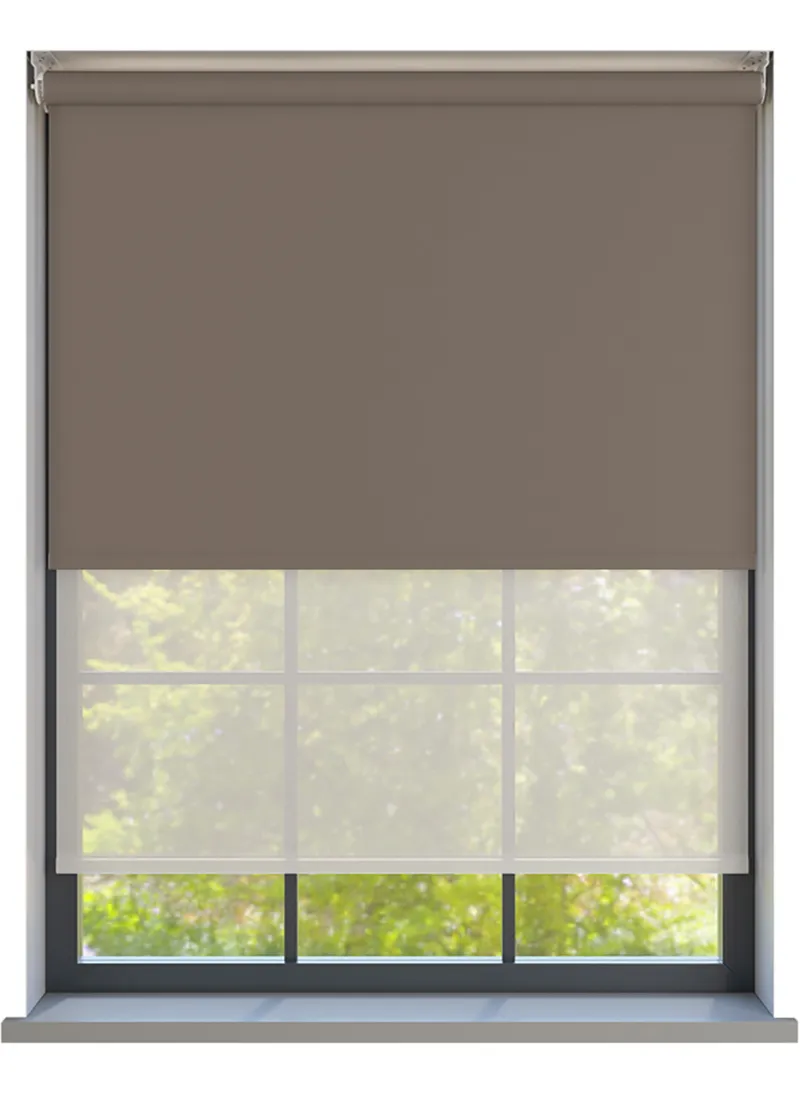
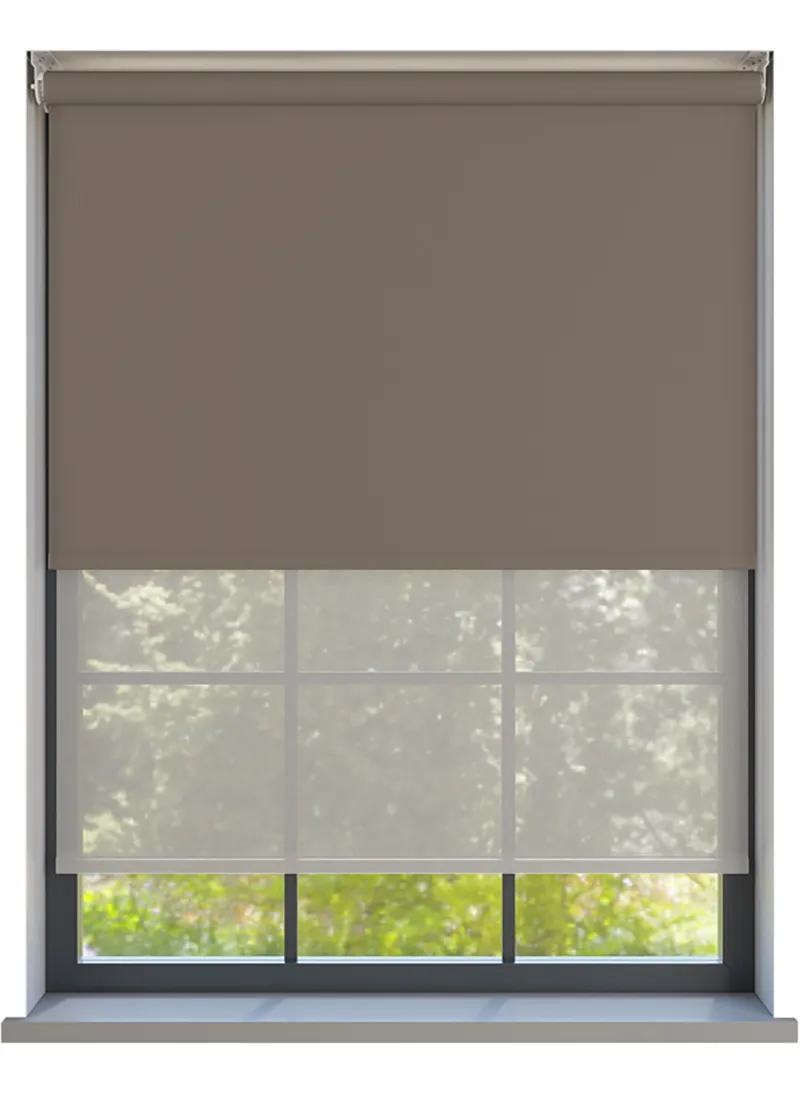


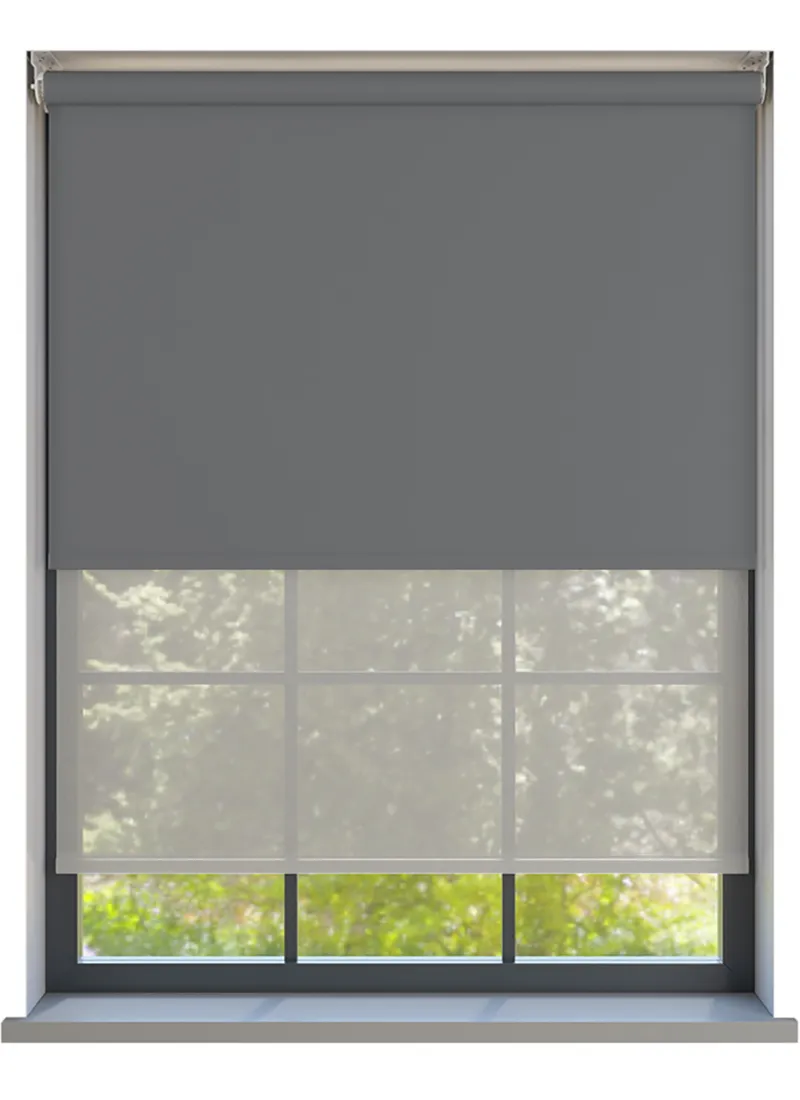

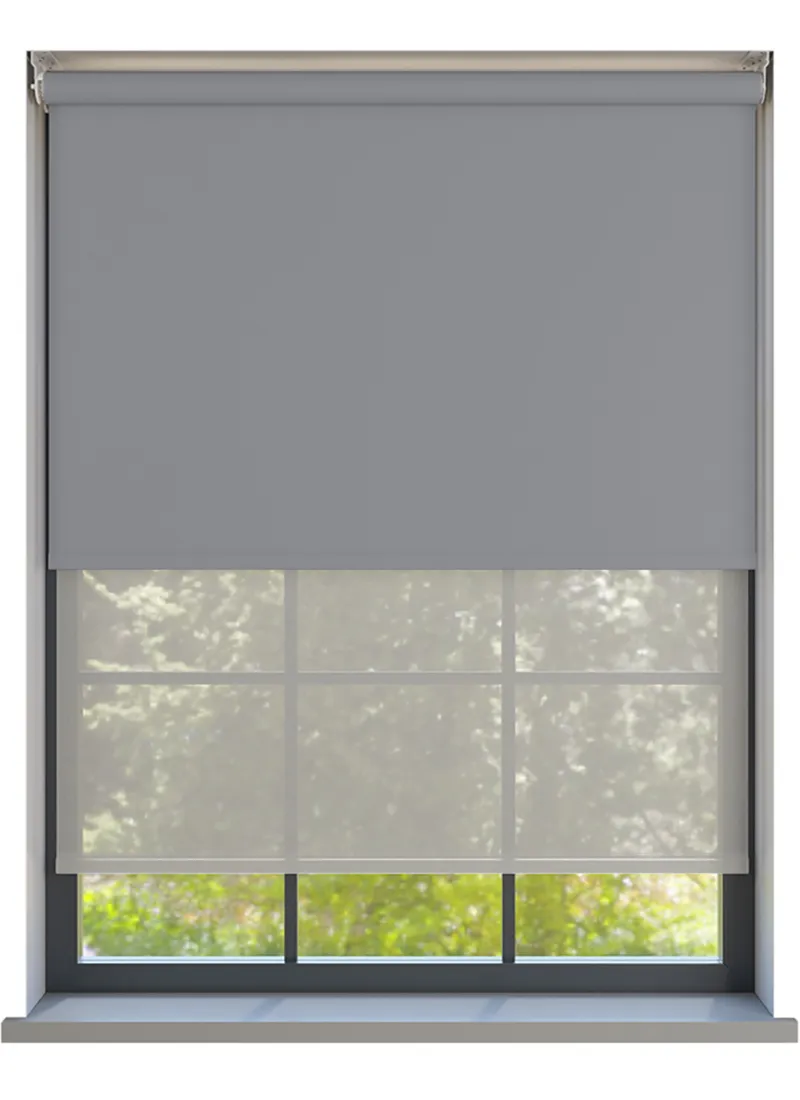


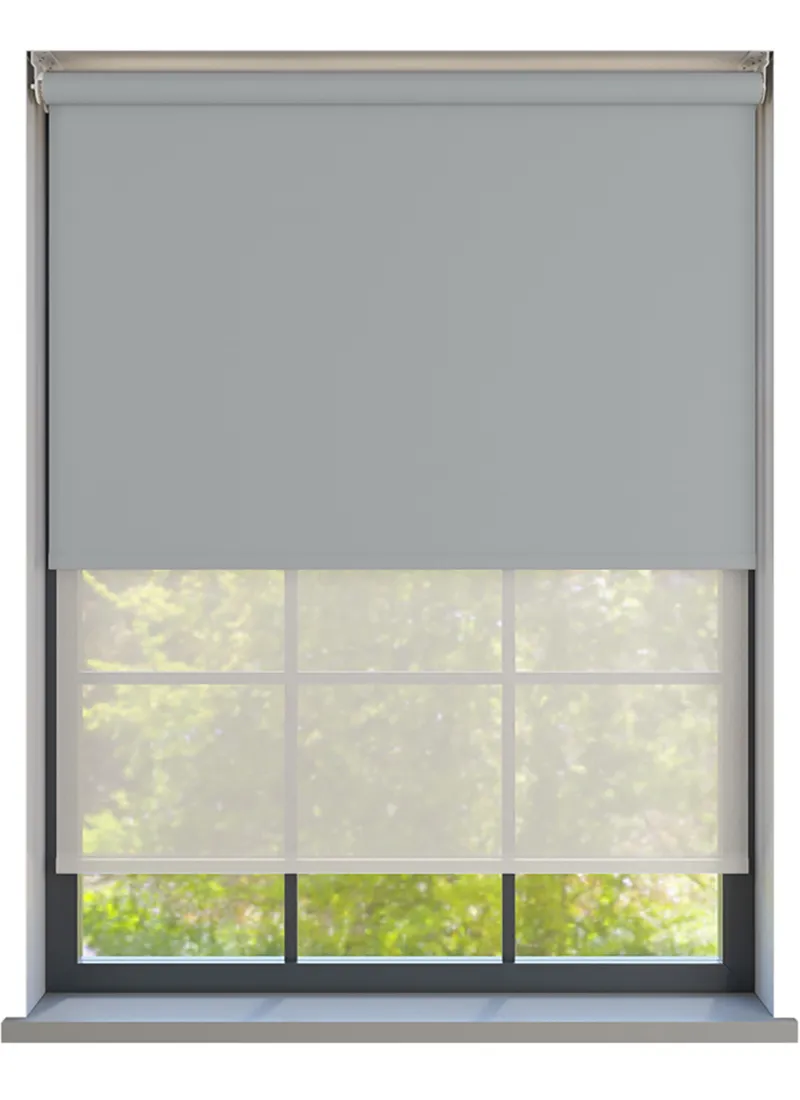


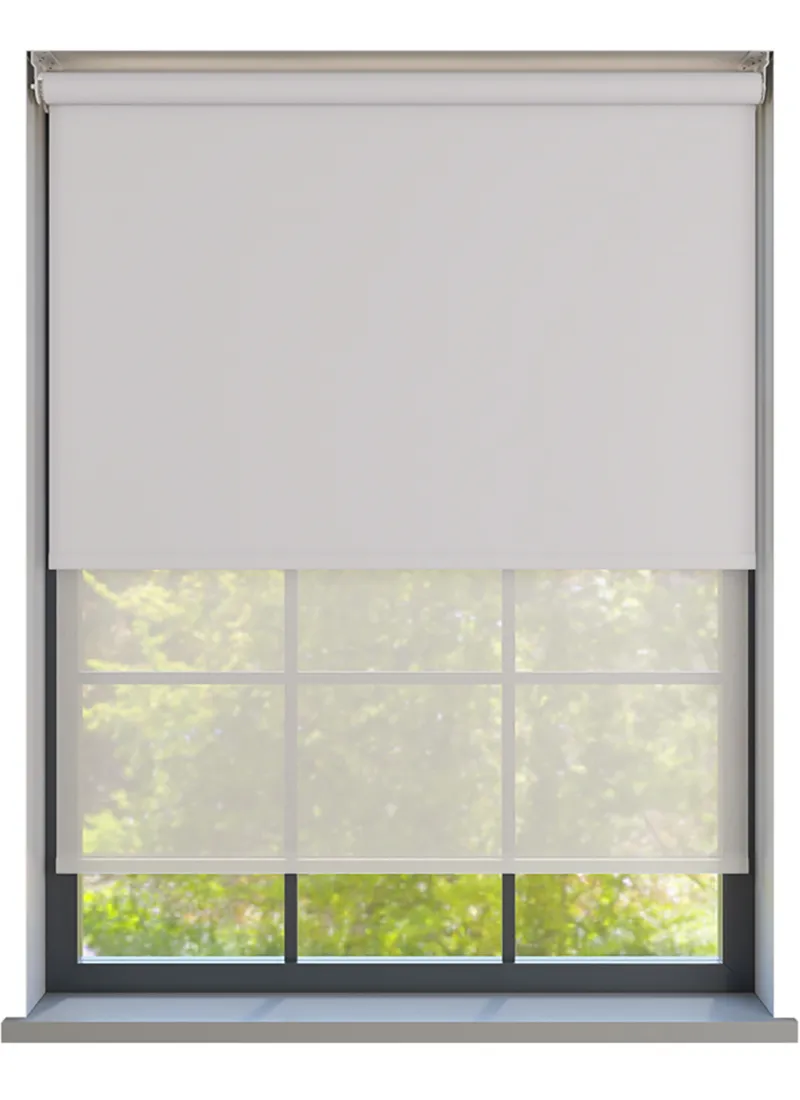

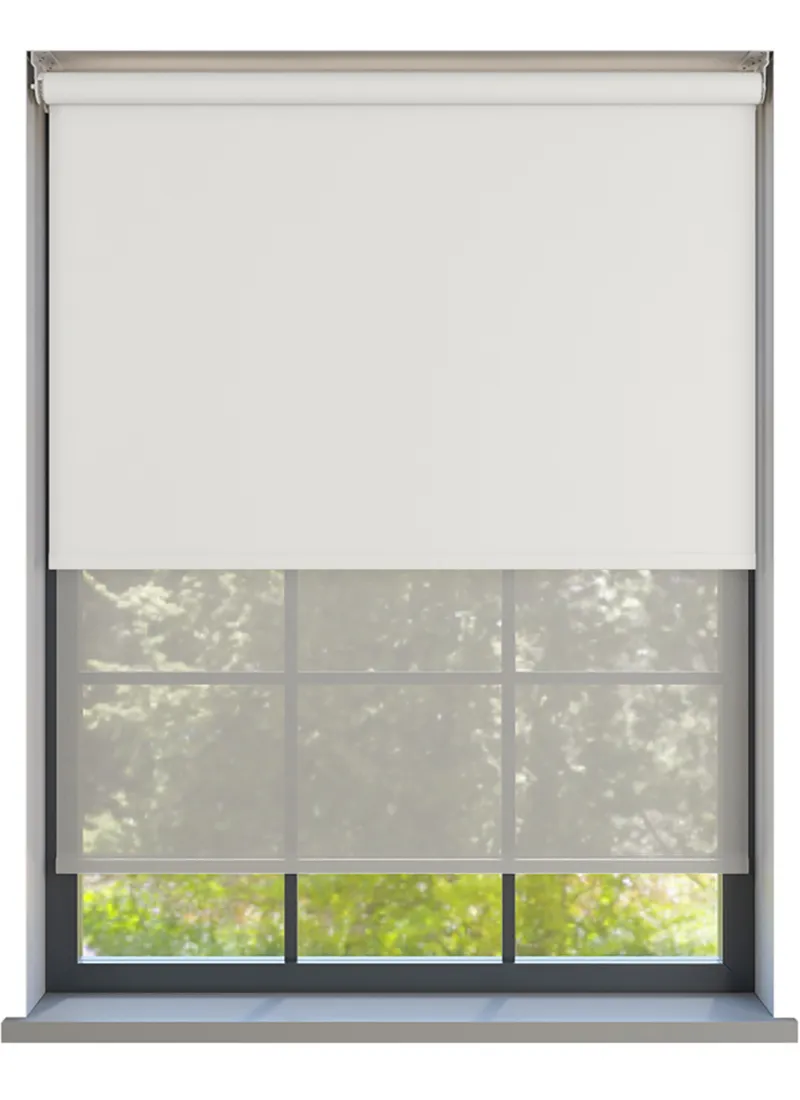
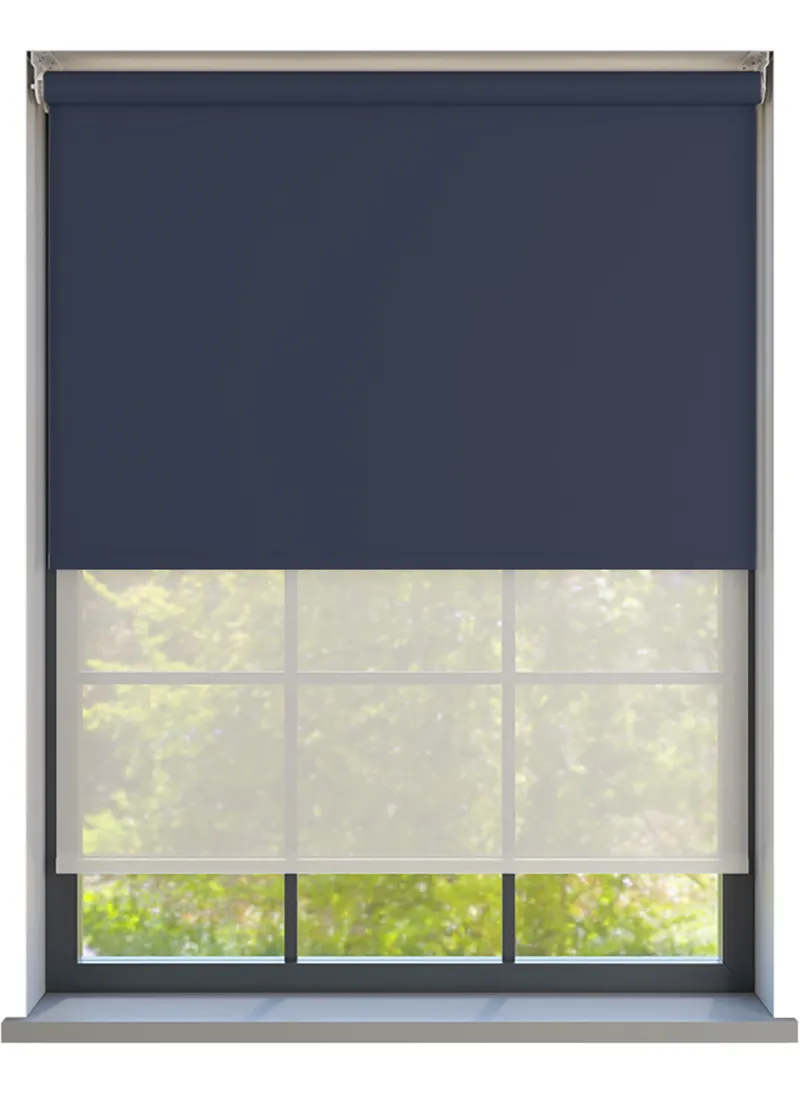


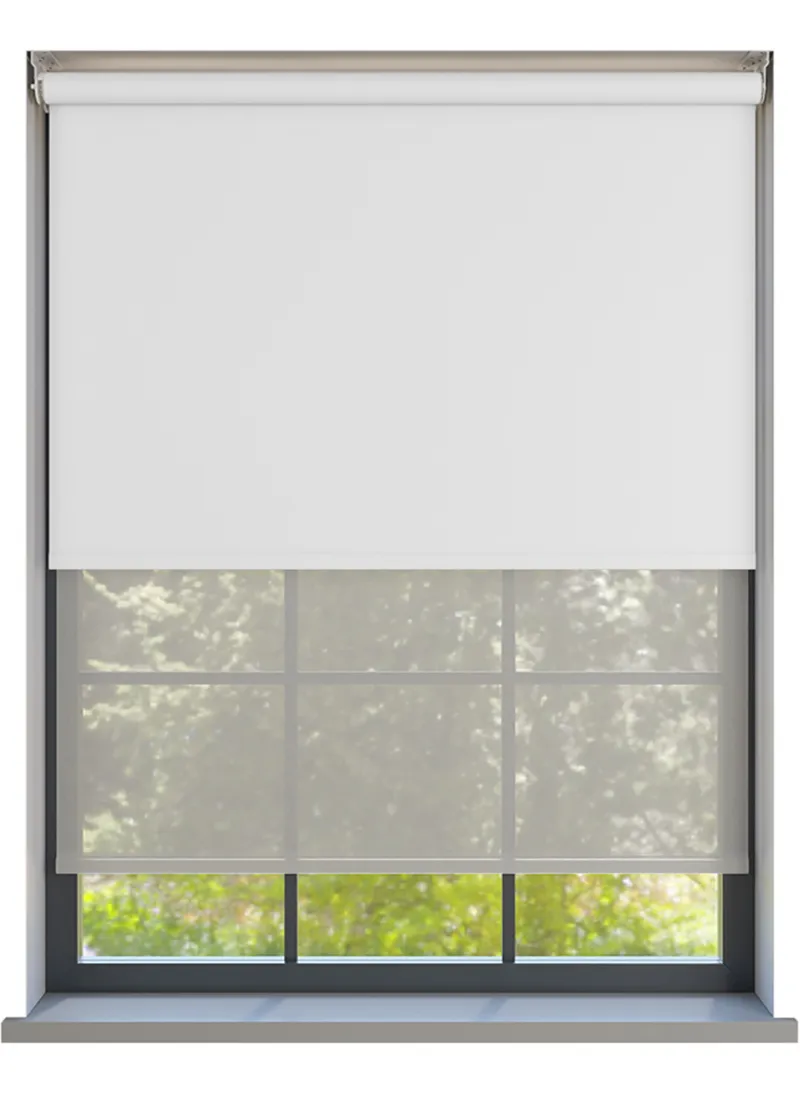

Read the names as recipes: the first words are the front fabric, and everything after "With" is the sheer. Two voiles do all the pairing - Haze Pure sits behind fronts like Beige and Midnight, while Haze Soft Grey partners the cooler bench of Royal Blue, Coffee, Grey Mist, Ironmonger, Shark Grey and Soft Grey. The greys run deep, as they tend to across the wider Amor family, with the warmth held by Beige and Coffee and the colour interest carried by Midnight and Royal Blue. Remember that both layers show: the sheer is the face you look at for most of the day, so sample the pairing rather than the front fabric alone, and judge the two together against the light they will actually hang in.
Price by your dimensions
Enter your window size. We round up to the next standard size, which matches how the retailer actually quotes you.
Price around its usual level (checked since 2 Jun).
The range opens at £13.16, an unusually approachable start for a two-layer blind, and the figure climbs with width and drop as it does for every made-to-measure blind - there is simply more of everything here, two fabrics and two tubes, so price the window you actually have rather than budgeting from the smallest one the retailer will cut. Measure the width at top, middle and bottom, work from the smallest figure, and settle the recess-or-exact question before comparing anything.
How it compares
There is no cross-shop price check to run on this one: among the retailers we track, the Amor double roller lives only at Make My Blinds. That cuts both ways - nobody to play off against the retailer, but a range the identikit made-to-measure catalogues do not carry. The comparison that matters is within the house. The Amor name also hangs as a vertical and a perfect-fit blackout roller, and several of the grey fronts here echo the vertical's card, so choosing between them is choosing a mechanism rather than a mood. Against the format's wider field - and against the banded day and night blinds it is constantly confused with - the double roller guide maps the alternatives; the short version is that a true double roller keeps its two layers separate and independently useful, which a single striped fabric cannot.
A note on care
Care is the standard roller routine, twice over. Run a soft brush or the vacuum's upholstery head down each layer every few weeks, lift marks with a barely damp cloth rather than scrubbing, and give the sheer most of the attention, since it faces both the room and the window. Let each layer roll true rather than creeping towards one end of its tube, and raise the shading layer fully instead of leaving it half-dropped behind the voile - fabrics hold creases longest where they sit folded against each other, and a half-height band behind a sheer reads as a smudge from across the room. Treated that gently, there is no reason both layers should not run quietly for years.