
A wide window flatters a room right up to the moment you try to dress it. Order forms that accept any sensible drop start refusing widths, the field of ranges thins out fast, and the blind that does arrive is heavier and harder to drive than anything you have hung before. None of that is retailers being awkward: width is the one dimension that fights the engineering. This guide explains why, walks through the three honest strategies for a wide opening, and picks a range for each of the jobs a wide window usually turns out to be.
Why width is the hard limit
Three pieces of physics gang up on a wide blind. Fabric is woven and coated on rolls of a fixed width, and a blind wider than its roll would need a seam - a join puckers, shows against the light and wears unevenly, so makers simply refuse to sew one. A roller's tube is supported only at its ends, and the longer the span, the more it bows in the middle until the fabric creeps off line as it winds. And everything gets heavier with width: a roman lifts its entire weight in folds, a venetian hoists a full stack of slats, and chains, cords and springs all have a working load. Every range sets its maximum comfortably inside the point where one of the three gives out, which is why the ceilings differ so much between ranges and even between fabrics on the same card. Our blind size limits guide unpacks the detail; the short version is that verticals typically span the widest, because each louvre hangs from its own carrier and nothing is lifted in one piece, rollers commonly come next, and romans and timber venetians run out soonest.
The three strategies
Faced with an opening past the ordinary limits, you have three moves, and it pays to choose one deliberately rather than defaulting to the first blind that fits.
Cover it with one blind built for the job. Verticals are the natural first call: the track carries the weight along its whole length, so the format reaches spans no pull-up blind can match, and the louvres draw aside like a curtain. A handful of roller ranges are engineered for width too, with stiffer tubes and published maximums up to three metres - rarer beasts, but the cleaner look if you want a single flat panel rather than moving slats.
Split the opening across two or three matching blinds. This is the standard answer for very wide glass, and it works, with one honesty clause attached: where two blinds meet there is a slim strip at the join, and a little light will always find it. The trick is to align the splits with the window's own glazing bars or frame mullions, so the joins land where the eye already expects a line and read as architecture rather than compromise. Keep the blinds identical, hang them level, and raise them to the same height every time.
Change treatment entirely. Wide openings are where curtains have always lived, and a generous wall of glass can absorb the fabric and the stacking space a curtain demands. If you want that softness while keeping blind-like control, remember the vertical grew up on precisely this territory - patio doors and glazed walls - and it tilts as well as draws, which no curtain can offer.
Measuring a wide opening
Width magnifies the usual measuring rules. A long lintel can bow a few millimetres over its span and brickwork is rarely square, so measure the width at three heights - top, middle and bottom - and work from the smallest figure, then check the drop at three points across the width for the same reason. Decide early whether the blind lives inside the recess or on the wall above, because that decision changes which figures you give and whether the maker deducts clearance. And take fixings seriously: a wide blind is a heavy blind, often supplied with a centre bracket as well as the pair at the ends, and it wants solid anchorage - proper fixings into brick, concrete or the lintel itself, never plasterboard plugs alone. If the drill meets steel above a wide opening, that is the lintel doing its job; it calls for the right bit and fixing, not a change of plan.
Operating a blind this wide
A chain that is pleasant on a kitchen window becomes a workout at three metres: more fabric means more weight, more turns per drop, and more strain on whichever hand does it twice a day. Verticals stay light to use at any width because nothing is lifted, only drawn and tilted. For everything else, width is where motors genuinely earn their keep rather than being a pleasant extra - one press moves the whole wall of glass, there is no hauling on a chain at a blind you can barely reach across, and some ranges offer their motorised version in larger sizes than the manual one, because a motor can lift what a chain sensibly cannot. Our guide to whether electric blinds are worth it weighs the premium properly before you pay it.
Room by room
Patio and sliding-door spans behave like wide windows with traffic through them. A vertical draws fully clear for the doorway and tilts against a low sun; anything that only lifts up and down leaves you ducking under it all summer.
Living-room picture windows are the wide format's showcase and its trap. The window is the room's best feature, so the blind must vanish when open - a single wide-capable roller keeps the frame clean and quiet - while a two-layer blind earns its place where the glass is most of the wall and all-or-nothing light control grates, holding daytime privacy behind a sheer without giving up the view.
Offices and work rooms meet width twice: long runs of glazing, and glare that migrates across a wide desk as the day turns. Tilting louvres manage that hour by hour without dimming the room. Commercial and public fit-outs often add a fire-rating clause to the specification, which quietly rules out most domestic ranges - exactly the brief a specification-led roller exists to answer.
How we chose
Three picks from three retailers, one for each sensible route to width: a roller engineered to span three metres in a single piece, a vertical from a specialist in the format for the openings rollers cannot cover, and a two-layer blind for the generous window that wants different light at different hours. Between them they also catch the practical extras wide glass drags in - fire-retardant fabric where the paperwork demands it, and an electric option where a chain would be a chore.
Our picks

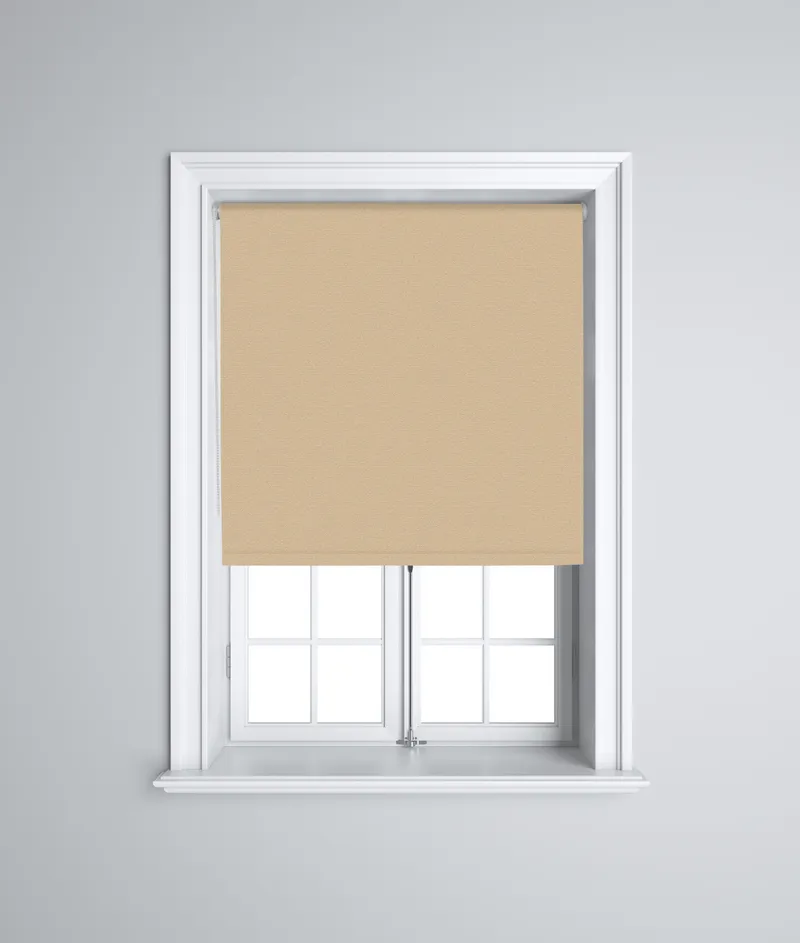
Darktex Fr 3m Roller Blinds
at New Blinds
New Blinds' Darktex FR, made in widths up to three metres as the name says, with an electric option.

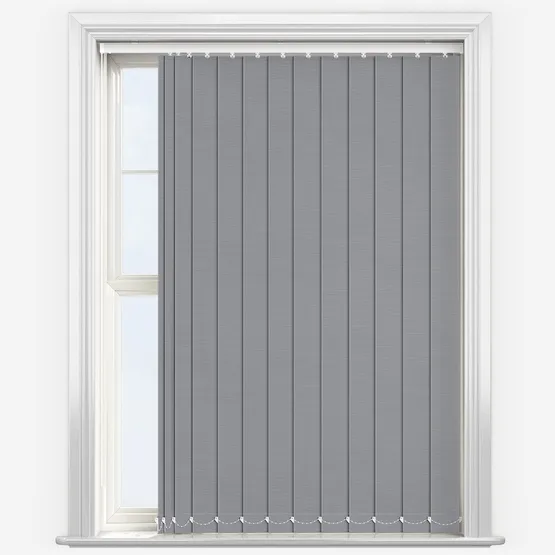
Aqualuxe Vertical Blinds
at Vertical Blinds Direct
Vertical Blinds Direct's Aqualuxe - louvres built for spans rollers cannot cover.

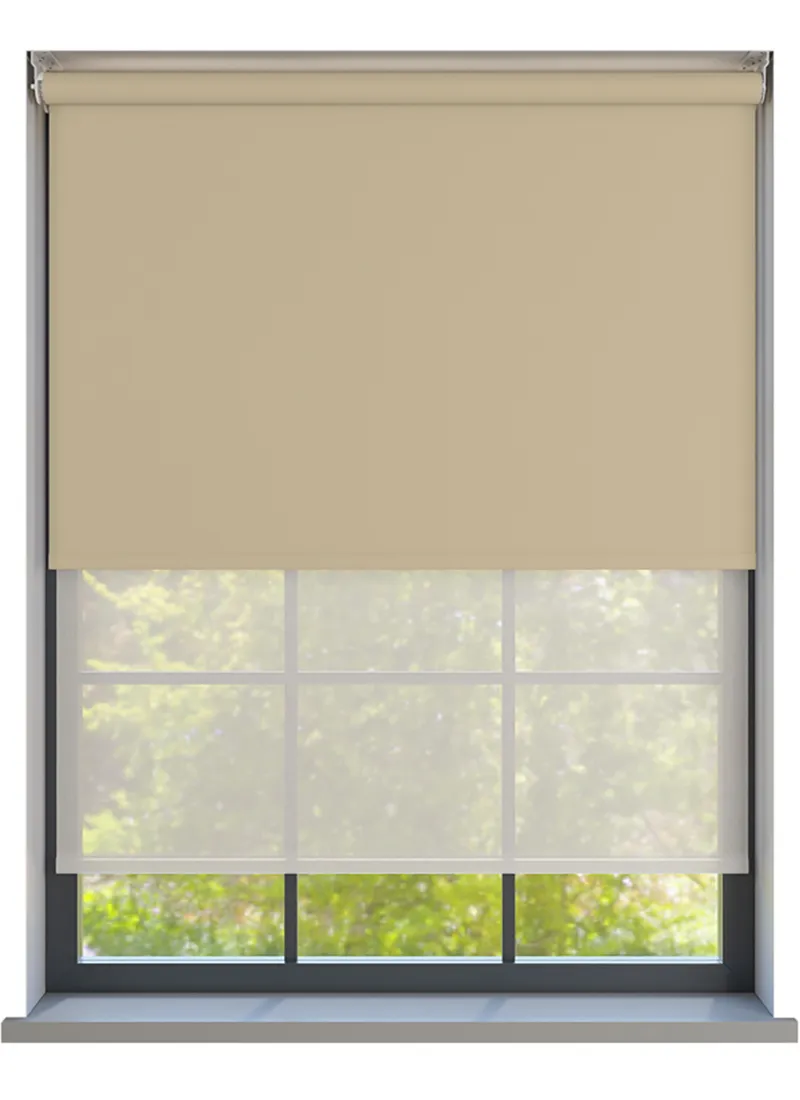
Amor Double Roller Blinds
at Make My Blinds
Make My Blinds' Amor double roller - sheer plus shade across a generous window.
Pick details
Darktex Fr 3m Roller Blinds
at New Blinds
New Blinds' Darktex FR, made in widths up to three metres as the name says, with an electric option.
The Darktex FR at New Blinds is that rare thing, a roller named after its specification: FR for fire-retardant fabric, 3m for widths up to three metres, as the name says. That combination - one flat panel across glass most rollers refuse, in a cloth that satisfies fit-out paperwork - makes it the pick for the widest single spans here, and for offices, schools and rented or shared buildings where the fire rating is a requirement rather than a preference. A 230v radio-operated electric version sits alongside the standard blind, and at these widths the motor is the version to take seriously rather than the indulgence.
The palette is as businesslike as the name, running whites, creams, beiges and greys through to black with a few more nuanced neutrals around them, and the fabric is standard opacity - it screens and shades, but it will not black out a bedroom. Our full Darktex FR review walks through the colours and the sizing logic; the sensible order of business is to put your true opening against the range's limits before you fall for anything.
Aqualuxe Vertical Blinds
at Vertical Blinds Direct
Vertical Blinds Direct's Aqualuxe - louvres built for spans rollers cannot cover.
Aqualuxe is the vertical pick partly because of where it lives: Vertical Blinds Direct sells the format and nothing else, and this range brings more personality to it than verticals usually manage. The mechanics are the whole argument for wide openings - the track spreads the weight along its length, the louvres draw to one side in a single sweep, and the tilt knocks glare back while keeping the room bright and the view half-open, a halfway house no pull-up blind of any width can offer.
The palette splits between dependable neutrals - White, Cream, Linen, Grey, Granite - and the watery streak the name promises, with Marine, Surf and Royal Blue running the blues from deep to bright. A fabric vertical always admits a little light between slats, so a bedroom chasing true darkness should look elsewhere, but for a patio door or a broad run of glass this is the format doing exactly what it was built for. The Aqualuxe review covers the colours, the care and the pricing at your own sizes.
Amor Double Roller Blinds
at Make My Blinds
Make My Blinds' Amor double roller - sheer plus shade across a generous window.
The Amor double roller answers the wide-window problem nobody warns you about: the bigger the glass, the more you resent all-or-nothing light control. Two fabrics share one bracket - a sheer that holds daytime privacy without surrendering the view, and a shading layer for evenings and lie-ins - and every colourway names its pairing outright, a front fabric matched to a Haze sheer, so you are choosing a combination someone has already balanced rather than assembling one from two lists. Amor is one of Make My Blinds' best-known fabric families, and this is its two-layer make-up.
It is a Make My Blinds exclusive among the retailers we track, and it remains a roller at heart, so respect the physics: check your true width against the range's own limits, and if the opening outruns a single blind, a matched pair with the join landing on a glazing bar keeps the look deliberate. The Amor double roller review decodes the pairings and prices the window you actually have.
What we didn't include
Bay windows are deliberately absent: a bay is an angle problem rather than a width problem, solved with a blind per facet instead of one heroic span, and the bay window guide treats it properly. Bifold doors sat outside the brief for the same reason - the glass concertinas, so the blinds must live on the panels themselves, a discipline the bifold door guide covers. And there are no curtain picks: curtains are the right answer for some wide openings, as above, but they are a different purchase with different measuring rules, and they deserve judging as curtains rather than as honorary blinds.