
French doors are where standard blind advice falls apart. The glass is in the door, and the door moves: anything hung above the frame swings away from the glazing the moment the door opens, flaps against it as it closes, and catches the handle in between. The handles themselves stand proud exactly where a blind wants to hang, the panes are tall and narrow, and there are two of everything. The blind that works is the one that treats the door as the window - fixed to the door itself, moving with it, and clear of the lever. This guide explains which formats manage that, how to measure for them and what to check before ordering, then sets out three picks that take the job on in different ways.
Why frame-mounted wins on a door
The answer to a moving window is a blind that moves with it, and that is the perfect fit format's whole reason to exist. The blind sits in a slim frame that clips into the beading around the glass of a uPVC door - no screws, no drilling - so it hugs the pane and travels with it: swing the door and the blind swings too, still covering the glass, still clear of the handle. Nothing flaps, nothing catches, and nothing is left dressing a hole in the wall where the glass used to be.
The format brings two side benefits that matter on doors in particular. Because the fabric or slats are held in the frame, they stay put as the door swings and shuts, where a hanging blind would slap against the glazing with every use. And because the operation happens at the blind itself, there is no looped cord or chain to tangle with the handle or the lock - a clip-in door blind is cordless by construction, which is welcome anywhere and essential where children barrel through to the garden all summer.
The alternatives, honestly
Frame-mounted is not the only answer, and it is worth being straight about when the others win. Vertical blinds earn their place when the French doors sit within a wider span of glazing - a fully glazed elevation, or doors flanked by full-height side panels. One vertical across the entire opening treats doors and panels as a single window: draw the louvres aside like a curtain to use the doors, tilt them for privacy the rest of the time. Curtains remain the honest answer for sliding patio doors, where the moving panel slides behind a fixed one and a curtain simply draws clear of the whole track. And a standard blind mounted above the frame works in exactly one case: doors that open away from the room, outwards onto a garden or balcony, so the moving glass never meets the hanging fabric. If your doors open inwards, rule it out.
Measuring French doors
Perfect fit is measured on the glass, not the recess. The retailer's guide will ask for the width and height of the visible pane and the depth of the beading around it - the lip the frame grips - and each range publishes its own instructions, so follow the guide for the range you are ordering rather than a generic one. Measure each door separately even when the pair looks identical: a few millimetres of difference between panes is common, and the frame is made to the millimetre. The clip-in frame itself comes with the blind, so what you are specifying is the glass it has to fit, and it is worth ordering both doors together so the fabric comes from the same batch.
What to look for
Slim frames. Door glazing is already bordered by uPVC, and the blind's frame adds another border inside it. The slimmer the profile, the more glass survives - worth checking the frame dimensions on the listing, especially on narrow panes where a chunky surround eats the view.
Handle clearance. A lever handle stands proud of the door exactly where the blind's frame and fabric live. Check the handle's projection against the depth of the blind's frame before ordering, and think about slats in particular: a venetian tilts towards the handle side and wants room to do it.
One palette across everything. French doors rarely stand alone - a pair of doors, often with windows either side, all visible at once. Matching matters more here than on any single window: choose a range with enough shades to cover every pane in the room, or a cloth sold in several fittings so the doors and the windows can wear the same fabric differently.
How much light the room needs stopped. A door blind spends more of its life down than a window blind does, because door glass is at eye level from both sides. Check how much light the cloth lets through on the listing, and order samples: a shade that reads right on screen can read very differently across two tall panes.
Room by room
Kitchen-diners hold most of the country's French doors, and they argue for wipeable surfaces and tilt control: steam, splashes, and a garden you want to keep half an eye on. Living rooms opening to a patio suit soft neutrals and a solid panel - privacy after dark without turning the glazed wall into a blank one. Bedrooms with doors to a balcony or garden need the most thought about light: a solid panel in a deeper shade, sitting tight to the glass, and a check of the fabric's light-blocking on the listing before you order.
How we chose
Three picks from three retailers, each answering a different door brief: a clip-in roller for the straightforward case, a venetian for tilt-by-tilt privacy, and a cloth sold in several fittings for whole-room matching. All three clip to the door without drilling and move with it, and each links to a full review of its range covering the palette and prices by pane size.
Our picks

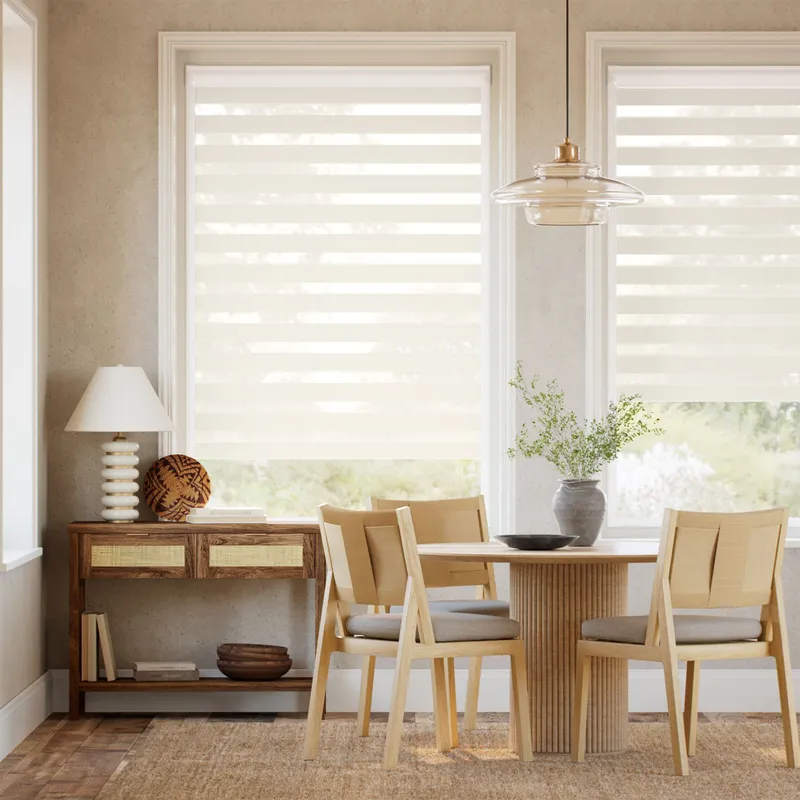
Enjoy Roller Blinds
at Blinds 2go
Blinds 2go's Enjoy perfect fit roller - a clip-in frame that travels with the door, in Luxe neutrals.
This range is currently unavailable.
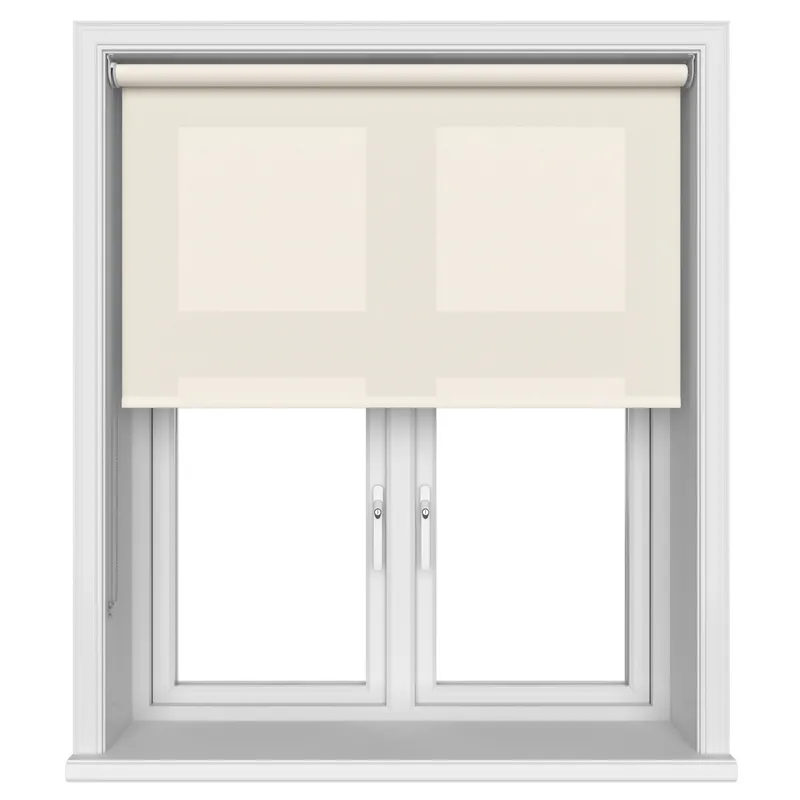
Zephyr Roller Blinds
at Blinds By Post
Blinds By Post's Zephyr cloth in its clip-in Perfect Fit cut - match the doors to every window around them.
Pick details
Enjoy Roller Blinds
at Blinds 2go
Blinds 2go's Enjoy perfect fit roller - a clip-in frame that travels with the door, in Luxe neutrals.
Enjoy is Blinds 2go's perfect fit roller and the default door pick here: a solid panel sliding in a clip-in frame, held wherever you leave it, travelling with the door and clear of the handle. There is nothing to learn and nothing to foul - and on a door that opens twenty times a day, that is the whole brief.
The Luxe palette is disciplined rather than broad - Cream, White and Dove Grey through Ironstone to Anthracite and Jet - and it is plainly chosen to sit well against both white and anthracite uPVC, which is exactly what a door blind spends its life doing. Two matching doors in one of the paler shades all but disappear into their frames, which is usually the point. Our Enjoy roller review covers the palette and the format premium in full.
This range is currently unavailable.
Door glass is eye-level glass, from both sides, and that is what makes the Matte venetian at Order Blinds the privacy pick. The 25mm slats tilt inside their clip-in frame, so you can block a sightline from the garden while keeping the daylight, then flatten the slats for the view when the sightline stops mattering. On a kitchen-diner door the venetian earns its keep twice over: the slats wipe down after steam and splashes, and they never need clearing off the glass before the door can be used.
The palette runs well past the whites and silvers clip-in venetians usually offer - Blush, Sea Breeze and Amber Glaze alongside Navy and Black - and the matte finish keeps the stronger shades calm where gloss slats would flash in low sun. The trade-off is darkness: light finds the gaps between slats in any venetian, so a bedroom door that must go properly dark wants a solid fabric instead. Our Matte venetian review takes the colourways one by one.
Zephyr Roller Blinds
at Blinds By Post
Blinds By Post's Zephyr cloth in its clip-in Perfect Fit cut - match the doors to every window around them.
Zephyr at Blinds By Post is the matching pick: one quiet neutral cloth made up four ways - standard roller, cassette, motorised, and a clip-in Perfect Fit cut for uPVC doors and windows. That answers the room where French doors never stand alone: Perfect Fit frames on the doors, standard or cassette rollers on the windows beside them, the same fabric throughout, and a scheme that holds together across every pane in the elevation.
The card is deliberately quiet - Cream, Linen, Grey and White among the shades - and the differences between its colourways are half-steps, which is precisely what whole-room matching wants. Judge samples against the door's own uPVC before choosing between near-whites, because the frame colour shifts them more than a screen admits. Our Zephyr review covers all four fittings and where each one earns its premium.
What we didn't include
Bifold doors are a different problem wearing similar glazing. A bifold is three, four or five narrow panels that fold and stack, every one of them moving, and dressing that well means either a slim blind per panel or rethinking the treatment entirely - integral blinds sealed inside the glazing unit exist for exactly this, but that is a glazing purchase rather than a blind purchase. Our bifold door guide takes the format on properly.
Tilt-and-turn windows share the French door's underlying problem - glass that moves into the room - and the same clip-in logic answers it; our tilt and turn guide covers where the details differ. Integral-blind glazing more broadly, with the blind sealed between the panes, solves the moving-glass problem at the point of buying the doors themselves - worth knowing about if the doors are not yet ordered, but beyond what a made-to-measure blind can retrofit.