
A white day and night blind is the format at its most natural. The alternating sheer and solid bands that define this type of blind can divide opinion in a bold colour, but in white the banding settles into something closer to a woven texture, and the blind gets on with its real job: letting you tune daylight and privacy from a single piece of fabric. White also happens to be the tone most UK windows ask for, sitting quietly against uPVC frames and suiting every scheme from period plaster to new-build grey.
This guide explains how the mechanism works, why white flatters it, and what separates one white day and night blind from another. It then picks three ranges from three retailers: a value pick, a pick with an electric option, and the range with the deepest choice of whites and ivories.
How a day and night blind works
A day and night blind - sold in some shops as a zebra or vision blind - is a roller at heart, with the cleverness woven into the cloth. It is a single fabric woven in alternating horizontal bands, one band sheer, the next solid, joined into a continuous loop that runs over the tube. Because the fabric hangs as a loop, the window is always covered by two faces of the same banded cloth, one just in front of the other.
The control chain slides one face past the other, and the relationship between the bands sets the light. Align the sheer bands and daylight comes through in soft stripes; the room stays bright and you keep a filtered view out. Slide the loop on so the solid bands of one face sit over the sheer bands of the other and the window is fully screened: privacy, and a dimmed room. Everything between those two positions is a gradient, which is the appeal of the format - you adjust the light through the day without ever raising the blind.
Be clear about the limit before buying, though: this is not a blackout blind. Even at its darkest setting the cover is a series of solid bands rather than one sealed panel, so a little light finds the joins, and like any roller it leaks around the edges of the recess too. If a room has to go properly dark - a child's bedroom on a June morning, say - pair the blind with curtains, or give that job to a blackout roller instead.
Why white works so well in this format
Colour decides what the banding looks like. In a strong tone the stripes announce themselves: light band, dark band, all the way down the glass. Some rooms carry that confidently; plenty would rather not. In white and the pale tones either side of it, the same construction reads differently. At normal viewing distance the alternation of matt solid and translucent sheer stops being stripes and becomes texture, closer to a fine weave than a pattern. The blind looks quieter, and rooms that would reject a striped window accept a white one without a second glance.
White earns its place in practical ways too. The sheer bands of a white blind wash a room with soft, uncoloured light, so kitchens and north-facing rooms stay bright even with the blind drawn. White sits flush against the white uPVC frames fitted to most UK homes, where a coloured blind can draw a box around the glass. And it is the tone that outlasts redecoration: wall colours come and go around a white blind without an argument.
One honest note before the picks. Pale sheer fabric shows its age sooner than mid-tones: dust settles into the open weave, and marks a grey blind would quietly absorb are visible on a white one earlier. That is true of any pale blind, but the sheer bands raise the stakes a little, so regular light care matters - a soft brush or a gentle vacuum before dust beds in, rather than a scrub after it has.
What to look for
Band width. Ranges differ in how deep the alternating bands are, and that sets the character of the blind. Wider bands make a bolder rhythm and suit larger windows; narrower bands read as a finer, subtler texture and flatter smaller panes. Judge it from room-scale photography rather than the close-up swatch, because band width is the thing you notice from the sofa.
Which white, exactly. "White" covers a surprising distance: cool bright whites, soft whites, creams, ivories, pearls. Against bright white uPVC a cream can look yellow; against timber or warm plaster a cool white can look stark. Screens flatten these differences, so order samples and hold them against the frame in daylight before committing to a made-to-measure order.
The solid band's opacity. How dusky the dimmed setting gets depends on the density of the solid bands, and that varies between ranges. Some solids are a light-filtering weight; others use a denser weave that pulls the room noticeably darker. Check how the retailer describes the solid band rather than assuming, because in white especially a lighter solid lets a visible glow through.
Chain safety in children's rooms. Day and night blinds run on a looped control chain, and UK child-safety rules require a safety device - typically a tensioner holding the loop taut to the wall - to be supplied. Fit it, keep the loop well clear of cots and beds, and for a child's room consider a motorised version, which removes the loop altogether.
Room by room
Living rooms are where the tunable daytime light earns its keep: sheer bands aligned for a bright morning, half-set against afternoon glare on the television, fully offset once the street lights come on. A white blind keeps the room feeling bright through all of it.
Kitchens suit the format for the same reasons, and white does its best work here, bouncing light around a room that usually wants more of it. Kitchen windows tend to be smaller too, which is where finer banding sits well. Just keep the blind clear of sink and hob splash zones, since sheer bands are not a fabric you want to scrub.
Bedrooms come with the caveat from earlier: the dimmed setting is banded, not black. Treat the blind as the daytime layer - privacy, soft light, a finished window - and pair it with curtains for genuine sleeping darkness. In a room that works through the day, such as a guest room doubling as a study, the layered combination is a good one.
Home offices get the most practical value. Screen glare is the enemy, and the offset setting cuts low sun without plunging the room into gloom, which is precisely what a desk facing a window wants. White keeps the remaining light neutral rather than tinting the room.
How we chose
We looked across the day and night ranges carried by the UK retailers we track and set three briefs: the strongest value route into the format, the range to choose when a powered blind is wanted, and the deepest genuine choice of whites. One range per retailer, so the guide compares shops as well as fabrics. For each candidate we checked the colour list itself rather than the shop's headline copy, and only ranges carrying true white or ivory colourways stayed in: "available in neutrals" was not enough. The three below answered their briefs best.
Our picks

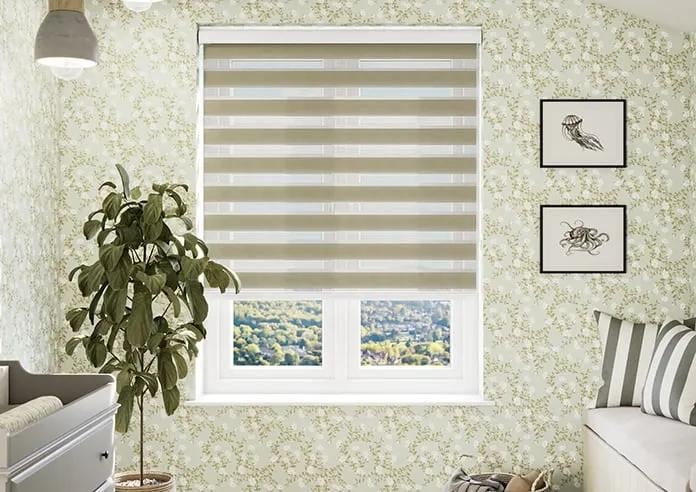
Origin Day Night Day and Night Blinds
at 247 Blinds
A big mainstream retailer's day and night range with a proper run of whites - Cream, White and Soft White sit among its 14 colourways.

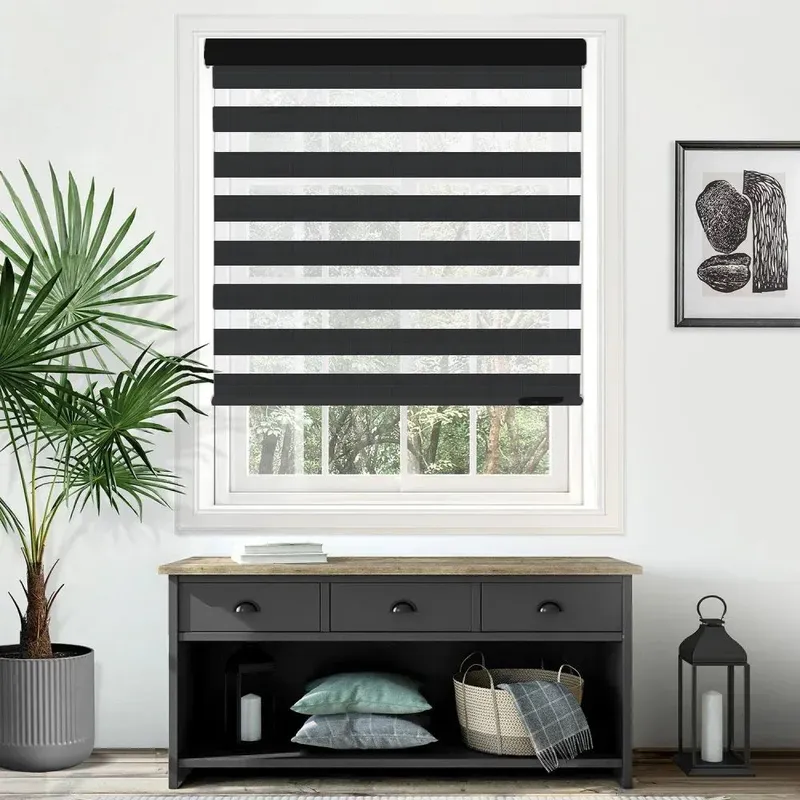
Plain Soft Day and Night Blinds
at 1Click Blinds
1Click Blinds' day and night range whose White and Cream colourways can both be ordered as electric blinds.
%22%3E%0A%20%20%20%20%20%20%3Crect%20width%3D%2214%22%20height%3D%2214%22%20fill%3D%22%23e88a8a%22%2F%3E%0A%20%20%20%20%20%20%3Crect%20x%3D%220%22%20y%3D%220%22%20width%3D%224%22%20height%3D%2214%22%20fill%3D%22%23ffcc4f%22%20opacity%3D%220.85%22%2F%3E%0A%20%20%20%20%20%20%3Crect%20x%3D%228%22%20y%3D%220%22%20width%3D%223%22%20height%3D%2214%22%20fill%3D%22%234fc3f7%22%20opacity%3D%220.85%22%2F%3E%0A%20%20%20%20%3C%2Fpattern%3E%0A%20%20%3C%2Fdefs%3E%0A%20%20%3Crect%20x%3D%2260%22%20y%3D%2222%22%20width%3D%2280%22%20height%3D%228%22%20rx%3D%221.5%22%20fill%3D%22%233a3a3a%22%2F%3E%0A%20%20%3Crect%20x%3D%2262%22%20y%3D%2230%22%20width%3D%2276%22%20height%3D%2283%22%20fill%3D%22url(%23print-fill)%22%20stroke%3D%22%232a2a2a%22%20stroke-width%3D%220.8%22%2F%3E%0A%20%20%3Crect%20x%3D%2257%22%20y%3D%22113%22%20width%3D%2286%22%20height%3D%225%22%20rx%3D%221%22%20fill%3D%22%233a3a3a%22%2F%3E%0A%20%20%3Cline%20x1%3D%22146%22%20y1%3D%2230%22%20x2%3D%22146%22%20y2%3D%22116%22%20stroke%3D%22%239a9a9a%22%20stroke-width%3D%221%22%2F%3E%0A%20%20%3Ccircle%20cx%3D%22146%22%20cy%3D%22120%22%20r%3D%222.2%22%20fill%3D%22%239a9a9a%22%2F%3E%0A%3C%2Fsvg%3E)

Edition Anthracite Vision Day And Night Blinds
at Order Blinds
Order Blinds' Vision day and night collection: four distinct ivory designs among 55 colourways, the deepest pale choice in this guide.
Pick details
Origin Day Night Day and Night Blinds
at 247 Blinds
A big mainstream retailer's day and night range with a proper run of whites - Cream, White and Soft White sit among its 14 colourways.
The Origin day and night blind from 247 Blinds is the value way into the format, from £11.54. It is a big mainstream retailer's day and night range with a proper white run rather than a token one: Cream, White and Soft White all sit among its 14 colourways, with pale companions such as Ecru and Stone close by. That covers the warm-to-cool choice most buyers are actually making, and the rest of the palette stays in the same practical register of greys and browns.
As a value pick it keeps the decision simple: one fabric family, chain operation, made to measure. The real judgement is between its three whites - Cream the warm one, White the bright one, Soft White sitting between - and that is exactly the decision a set of samples settles in an afternoon. For a first day and night blind in a living room or kitchen, this is where we would start.
Plain Soft Day and Night Blinds
at 1Click Blinds
1Click Blinds' day and night range whose White and Cream colourways can both be ordered as electric blinds.
The Plain Soft day and night range from 1Click Blinds is here for the electric option: its White and Cream colourways can both be ordered as electrical versions, which is still unusual in this format. A powered day and night blind makes more sense than it might first appear. The format invites constant small adjustments, and a motor turns those into a button press rather than a trip to the window; it also does away with the looped chain, which is worth having in a child's room or anywhere a dangling loop would be unwelcome.
The manual range stands on its own feet too, running to 15 colourways with White and Cream leading its pale end, so choosing this range does not commit you to the motor. But the powered white blind is the brief it answers directly: if that is what you came for, this is the pick.
Edition Anthracite Vision Day And Night Blinds
at Order Blinds
Order Blinds' Vision day and night collection: four distinct ivory designs among 55 colourways, the deepest pale choice in this guide.
Order Blinds' Vision day and night collection is the pick for choice of whites, and the numbers carry the argument: 55 colourways, within which the pale end is not a single white but a run of distinct ivory designs - Motif Ivory, Patina Ivory, Petra Ivory and Picturesque Ivory - with further plain whites alongside. Nowhere else in this guide does white come in several deliberately different designs; the decision stops being white-or-cream and becomes which ivory suits the room.
That depth changes how to shop it. Order the ivories as a set of samples and compare them against the frame in daylight: the differences between them - warmth, sheen, how the banding sits in each design - are exactly the kind a product photo flattens. For anyone already sold on a white day and night blind who wants pale tones to choose between rather than settle for, this collection is the deepest pool here.
What we didn't include
A note on naming first. Day and night blinds are sold elsewhere as zebra blinds, vision blinds or duo blinds, and those are the same product family rather than rivals to it. We did not treat the label on the shop shelf as a difference: ranges sold under the vision name were judged on the same briefs as everything else, and one of them made the cut above.
We also left blackout options out on purpose. The dark setting of a day and night blind is banded, and it will not black a room out; when genuine darkness is the need, a purpose-made blackout blind serves it far better, and our blackout guide and blackout roman guide cover that ground properly. Pairing a white day and night blind with blackout curtains is the honest compromise when one window must do both jobs.
Finally, this guide confines itself to whites and ivories by design. For the same format judged across every colour, see the main day and night guide for the all-colours view.