
A roman blind is the soft option at the window - fabric that folds rather than rolls - and the common knock against it is that soft usually means see-through-ish. A blackout roman fixes that with a coated or laminated lining behind the face fabric, so you keep the folds, the texture and the furnished look, and still get a properly dark room. This guide covers the ranges we track where blackout is available across a real spread of colours, not just one token shade, with picks at three prices from three retailers.
What "blackout" means on a roman
The blackout in a roman lives in the lining, not the face fabric. A woven face cloth always passes some light on its own; the blackout layer behind it is what stops the glow. That construction has two honest consequences. First, the blind's edges still leak: a roman hangs inside or over the recess and light finds the gap between fabric and wall, so a blackout roman gives you a dark room, not a photography darkroom. Fitting outside the recess (face-fix) with a generous overlap shrinks the leak substantially, and matters more than the fabric choice once the lining is blackout. Second, the lining changes how the folds sit - a lined roman is a little fuller and heavier than an unlined one, which most people read as fuller and more deliberate, not a downgrade.
If you want the softened-light version of a roman instead - dim, not dark - a dimout lining does that, and our dimout guide covers the middle ground.
What to look for
Blackout across the palette, not just in it. Plenty of ranges offer blackout on two or three shades. The useful ranges carry it across most of the palette, so the sleep requirement does not dictate the room's colour. All three picks here were chosen on that test.
The fold and the stack. Romans stack their folds at the top when raised. On a short window the stack eats a share of the glass; on a tall one it disappears. If the window is small, check the stack allowance in the range's measuring notes before assuming a roman suits.
Face-fix for bedrooms. As above: the lining does the darkening, the mounting does the sealing. Fix outside the recess with overlap on each side for the darkest result.
Operation and safety. Chain-operated as standard; a child's room needs the cord-safe fitting every UK retailer now offers - specify it at order time.
Roman versus roller for the same job. A blackout roller is cheaper at the same window and blocks the same light. The roman's case is entirely aesthetic - folds, fabric depth, a dressier window - and it is a good case, but if budget is the constraint the roller wins on function alone. The blackout guide covers the whole field.
Room by room
Adult bedrooms are the obvious brief, and the place to spend on the face fabric - the blind is looked at in low light morning and evening, and texture reads better than flat colour in both. Face-fix with overlap, as above, and let the lining do the rest.
Children's rooms and nurseries arguably benefit more: naps happen in daylight, and summer bedtimes fight a bright sky. A blackout roman softens the room where a blackout roller can look clinical - though for a character print with blackout the children's guide linked below is the better starting point. Cord safety is non-negotiable here; order the safe fitting.
Living and dining rooms use blackout romans less for sleep than for screens and west light: a lined roman drops the room to film-watching levels on a bright evening without the space feeling shuttered, and the fuller lined folds suit rooms where the window is dressed rather than merely covered.
Bathrooms and kitchens are the wrong home for the format - lined fabric and steam disagree - and a wipeable roller or venetian serves those windows better.
Measuring and the stack
Two numbers decide whether a roman flatters your window. The first is the drop-to-stack ratio: the folds gather at the top when raised, and the range's measuring notes state how much glass that stack covers - fine on a tall window, meaningful on a short one. The second is the overlap on a face-fix: allow enough width past the recess on each side (the retailer's guide gives the figure) to close the light path that recess-mounted blinds always leave. Measure the drop to where the blind should finish, not just the recess bottom, if the sill layout allows a longer line - a slightly longer roman reads more generous and seals better. When in doubt, follow the retailer's own measuring guide to the letter - made-to-measure mistakes are cut into the fabric.
How we chose
Three picks, three retailers, three prices - a value all-rounder, the widest blackout palette, and a budget entry - and every pick had to offer blackout across at least a meaningful run of its colours, verified shade by shade rather than taken from the range's headline. Each links to its made-to-measure price table, so the same window can be costed three ways before you commit.
Our picks

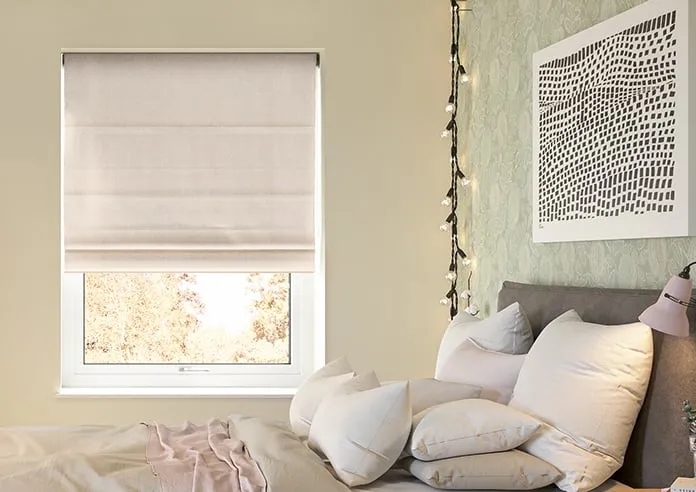
Atina Roman Blinds
at 247 Blinds
247 Blinds' Atina roman carries blackout across most of its palette at a low entry price, with a no-drill option.

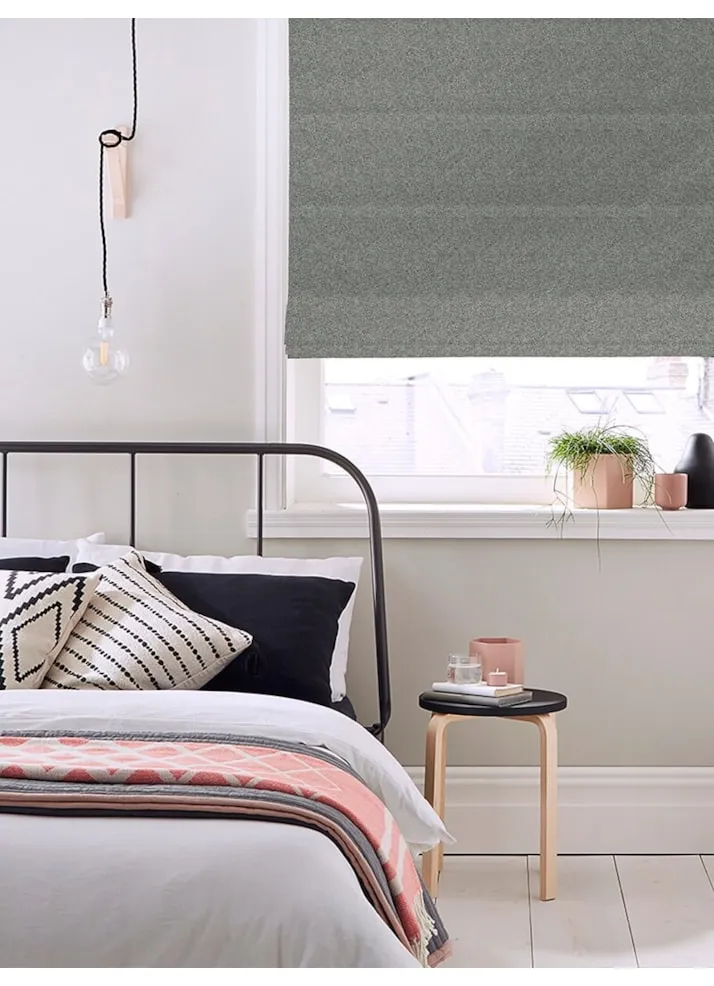
Hampton Roman Blinds
at Order Blinds
Order Blinds' Hampton offers the deepest blackout colour run in this guide, in a textured weave.


Orka Roman Blinds
at Swift Direct Blinds
Swift Direct Blinds' Orka - a compact three-shade roman with a blackout finish at one of the lowest from-prices we see.
Pick details
Atina Roman Blinds
at 247 Blinds
247 Blinds' Atina roman carries blackout across most of its palette at a low entry price, with a no-drill option.
The Atina at 247 Blinds is the value pick, and the one we would point most bedrooms at first. Blackout runs across most of its palette - soft neutrals like Oatmeal and Pure Ivory through mottled greys to a proper Mottled Black - so the colour decision stays free, and the entry price sits at the low end for a lined roman. It also carries a no-drill fitting option, which is unusual in romans and useful on uPVC frames and in rentals where drilling the surround is unwelcome.
The mottled finishes are worth a look in a bedroom specifically: a lightly textured face fabric hides the slight shadowing that strong morning light can throw across any lined blind, and reads warmer than a flat plain at close range.
Hampton Roman Blinds
at Order Blinds
Order Blinds' Hampton offers the deepest blackout colour run in this guide, in a textured weave.
The Hampton at Order Blinds is the palette pick - the deepest run of blackout colourways in this guide, in a textured weave with a naming convention (Armour, Castle, Poseidon, Rockpool) that signals its ambitions. This is the roman for a room where the blind is part of the scheme: the colours skew rich and tonal rather than pastel, and the texture gives the folds something to do in the light.
It carries a higher entry price than the other two picks, which is the honest trade for the fabric and the range's depth. Choose it when the roman is a design decision and the blackout is the non-negotiable underneath - and cost it at your sizes against the Atina, since the gap between them moves with the window.
Orka Roman Blinds
at Swift Direct Blinds
Swift Direct Blinds' Orka - a compact three-shade roman with a blackout finish at one of the lowest from-prices we see.
The Orka at Swift Direct Blinds is the budget entry: a compact palette - anthracite, beige, dark green - with a blackout finish, at one of the lowest roman from-prices we track. Three shades is a genuine limitation, but they are three usable shades, and if one of them suits the room the saving against the picks above is real money on a multi-window order.
It is the right pick for a rental refresh, a spare room, or anywhere the brief is "a dark, tidy roman without ceremony." If the palette does not land for your room, step up to the Atina rather than forcing it - a blind in the wrong colour is a daily annoyance no saving covers.
The lining does double duty
A useful side-effect of the blackout construction: the coated lining that stops light also slows heat. A lined roman traps a layer of still air against the glass, and the coating adds its own resistance, so a blackout roman is meaningfully warmer-feeling at a cold window than an unlined one - not a substitute for a thermal honeycomb blind, but a real improvement over bare glass on winter evenings, and one you get free with the darkness. Our winter warmth guide ranks the formats if insulation is the primary goal rather than the bonus.
The same lining earns its keep in summer the other way round: dropped against a west-facing window through a hot afternoon, the blind intercepts a share of the solar gain before it reaches the room. Bedrooms that are both bright at dawn and warm by evening - the classic west-facing complaint - get both fixes from the one blind.
What we didn't include
We have kept this guide to romans where blackout spans a real share of the palette, so ranges offering a single blackout shade did not make the cut, however good the fabric. We also have not repeated the general roman-buying advice on measuring and styles - the roman guide handles that - and if the actual requirement is dim rather than dark, the dimout guide is the better read. Character-print romans for children's rooms, which often carry blackout options of their own, live in the children's guide.