Dimout blinds sit in a practical middle ground that pure blackout fabrics cannot occupy: they reduce incoming light substantially without plunging a room into darkness during the day. For living rooms, home offices, and bedrooms that do double duty, that balance matters more than total opacity. This guide covers four blind types - roller, roman, pleated, and day-and-night - and picks one range from each category based on the options we cover across UK retailers.
What dimout actually means
The term "dimout" refers to a fabric that significantly reduces light transmission without fully blocking it. In practice, if you hold a dimout fabric up to a bright window you will see a glow through it; hold a blackout fabric up and you won't. That distinction matters when choosing.
Retailers use the term with reasonable consistency, though occasional overlap occurs at the heavier end of the dimout range. Some heavier dimout fabrics are marketed as "blackout" by certain sellers, so it is worth reading the product description rather than relying on the category label alone. Where the per-range information below describes a fabric as dimout, that reflects the retailer's own classification.
The practical consequence of choosing dimout over blackout in a bedroom is that early-morning light will be reduced but not eliminated. For most adults in living rooms or home offices, that is the desired outcome. For shift workers or young children who need the room genuinely dark, a blackout fabric with side channels is usually the more reliable choice.
Blackout fabrics and dimout fabrics are not always sold as alternatives within the same range. Some ranges offer both opacity levels in the same colour, letting you choose how much light control you want without changing the room's colour scheme. The Sambo Roman from Swift Direct Blinds is a clear example of this approach.
What to look for
Blind type and room use. The four types covered here behave differently in a room. Roller blinds are the flattest and most compact when raised; roman blinds fold into horizontal pleats and take up more stack height at the top; pleated blinds fold accordion-style and suit smaller or awkwardly shaped windows; day-and-night blinds use alternating stripes to give adjustable light control in a single blind.
Fabric weight and hang. Heavier dimout fabrics hang flatter and resist creasing better than lighter ones. Roller blinds in particular benefit from heavier fabric because lighter cloth can flap slightly in a draught near a sash or tilt-turn window. Pleated fabrics tend to be lighter by nature, which is a consideration for large windows.
Colour and opacity together. Darker dimout fabrics pass less visible light than lighter ones even at the same opacity rating. A charcoal or Anthracite Grey dimout will darken a room more effectively than a White or Cream at the same dimout classification. If maximum dimming is the aim, lean towards darker finishes.
Fitting method. All four types in this guide are available as made-to-measure. For inside-recess fitting, check the minimum recess depth the retailer specifies; roman and pleated blinds need more recess depth than a flat roller. For outside-recess fitting, all four types work well because the blind overlaps onto the wall.
Number of finishes. The ranges in this guide vary considerably - from 2 finishes (Sambo Roman) to 39 (Honeycomb Dimout Fit). If colour matching to existing furnishings is a priority, the wider palettes of the roller and day-and-night picks give more flexibility. The roman and pleated picks make up for narrower palettes by offering good coverage of neutral tones.
Child safety. All of the ranges covered here should be available with cord-safe operation options. For children's rooms, ask the retailer specifically about cordless or wand-operated variants; UK regulations require blinds sold for domestic use to comply with cord-safety standards.
Our picks


Honeycomb Roller Blinds
at Swift Direct Blinds
Swift Direct Blinds' 39-finish roller with Clic and Stick mounting options - the widest palette of any pick here, spanning Raven to Cream.


Sambo Roman Blinds
at Swift Direct Blinds
A white roman from Swift Direct Blinds offered in exactly 2 finishes - Blackout and Dimout - making the opacity choice the whole decision.

Tradechoice Pleated Blinds
at Blinds By Post
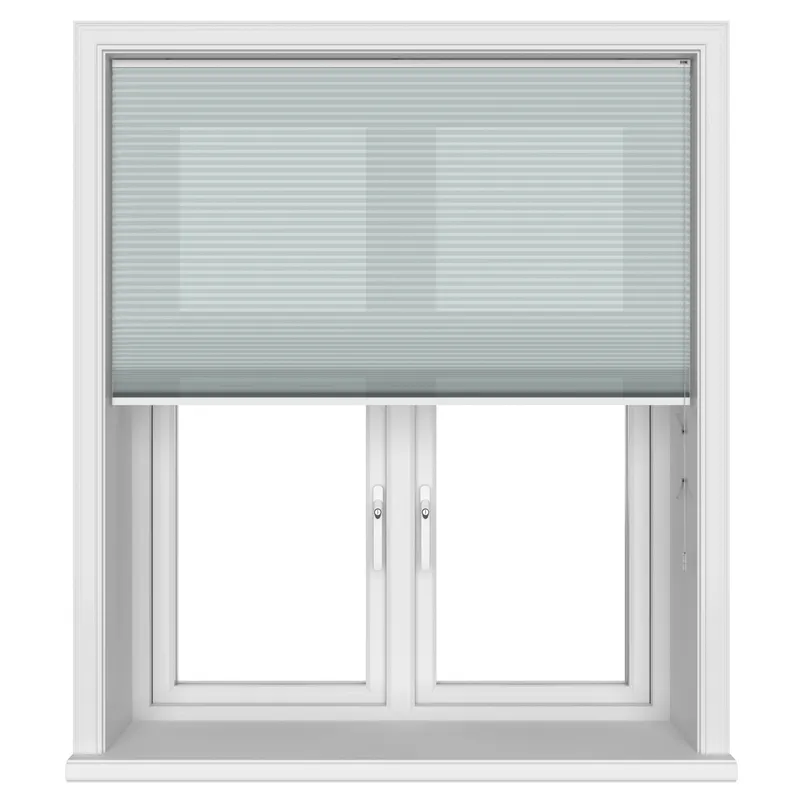
Blinds By Post pleated blind with 14 finishes from £17 - Anthracite Grey and Onyx Black included for buyers wanting the darkest dimout result.


Enjoy Day and Night Blinds
at Blinds 2go
Blinds 2go day-and-night blind with 24 finishes from around £13 - alternating sheer and opaque stripes give a third light-control position without raising the blind.
Pick details
Best dimout roller: Honeycomb Dimout Fit
Honeycomb Roller Blinds
at Swift Direct Blinds
Swift Direct Blinds' 39-finish roller with Clic and Stick mounting options - the widest palette of any pick here, spanning Raven to Cream.
The Honeycomb Dimout Fit from Swift Direct Blinds is a roller blind with 39 finishes, sold in pairs of Clic (click-fit) and Stick (adhesive) mounting variants for most colours. Despite the "Honeycomb" in its name, this is a roller blind, not a cellular pleated blind - the name refers to the fabric's texture or weave rather than its structure. The dimout classification applies across the range's colour selection.
With 39 finishes the palette is the widest of the four picks here. Colours run from neutrals such as Cream, Pearl, Snow White, Ash, and Mouse Grey through warmer tones like Camel, Dawn, Melon, and Jaffa, and into stronger shades including Aubergine, Jeans, Ocean, Grass, and Raven. The dual mounting system - Clic and Stick variants of the same colour - means each shade comes in two fitting options, which accounts for the high finish count. If an exact colour match matters, this range offers the most options of any pick in this guide.
Pricing starts from around £26, making this the mid-range option among the four picks by entry price. Roller blinds in general are the flattest and most compact when raised, which suits rooms where the window recess needs to stay clear. The flat fabric profile also means dimout rollers perform consistently: the fabric either passes a given amount of light or it doesn't, with no slat or pleat angle to adjust.
One consideration: the Clic and Stick variants suit different window types, so confirming which fitting is right for your window before ordering matters. Swift Direct Blinds should advise on which option suits UPVC versus wooden frames.
Best dimout roman: Sambo Roman
Sambo Roman Blinds
at Swift Direct Blinds
A white roman from Swift Direct Blinds offered in exactly 2 finishes - Blackout and Dimout - making the opacity choice the whole decision.
The Sambo Roman, also from Swift Direct Blinds, is a white roman blind available in exactly 2 finishes - Blackout and Dimout - with prices starting from £11.26. That minimal palette is deliberate: the range targets buyers who want a clean white roman blind and need to choose between full opacity and dimout, rather than buyers who are colour-matching across a spectrum.
Roman blinds fold into horizontal pleats when raised, which gives a softer, more layered appearance than a roller blind and suits traditional or country-style interiors well. The trade-off is that the stack at the top of the window, when the blind is fully raised, takes up more space than a roller. For taller windows this is rarely an issue, but on shorter windows it can eat into the view when the blind is up.
Its from-price reflects the blind type as much as the fabric: roman blinds generally cost more than rollers at the same size because they use more fabric and require additional construction for the folding mechanism.
The two-finish structure makes the buying decision unusually clear. If you want a white roman that occasionally lets some light through when the blind is down - enough to see by without harsh brightness - the Dimout finish is the right choice. If you want the same white roman to block light for sleeping, the Blackout finish is there. This is one of the more practical dual-opacity setups available in a roman blind, and it removes the usual colour-versus-opacity trade-off from the decision.
Best dimout pleated: Tradechoice Dimout Blinds UK
Tradechoice Pleated Blinds
at Blinds By Post
Blinds By Post pleated blind with 14 finishes from £17 - Anthracite Grey and Onyx Black included for buyers wanting the darkest dimout result.
The Tradechoice Dimout Blinds UK range from Blinds By Post is a pleated blind with 14 finishes, starting from approximately £17. That entry price is the lowest of any pick in this guide, which reflects both the blind type and Blinds By Post's positioning for made-to-measure pleated blinds.
Pleated blinds fold accordion-style rather than rolling onto a tube or stacking in deep folds like a roman. The result is a compact stack at the top and a relatively thin profile when raised. This makes them a practical choice for smaller windows, awkward shapes, or any situation where a roller's tube mechanism is inconvenient.
The 14 finishes cover a useful spread of neutral and mid tones: White, Cream, Taupe, Grey, Dove Grey, Anthracite Grey, and Onyx Black form the neutral core, with Sky, Lagoon, Neptune, Orchid, Spring, Saffron, and Terra adding a range of colour options. The Anthracite Grey and Onyx Black finishes are particularly worth noting for buyers who want maximum dimming effect from a dimout fabric - darker finishes pass less visible light than pale ones at the same opacity rating.
Pleated fabrics tend to be lighter in weight than roller or roman fabrics, which is worth knowing for large windows where a heavier hanging fabric might be preferred. For standard domestic windows the weight is rarely a practical concern. The compact stack and straightforward made-to-measure ordering from Blinds By Post make this range well suited to buyers looking for a no-fuss dimout blind at a lower entry price.
Best dimout day and night: Enjoy Roller Blind
Enjoy Day and Night Blinds
at Blinds 2go
Blinds 2go day-and-night blind with 24 finishes from around £13 - alternating sheer and opaque stripes give a third light-control position without raising the blind.
The Enjoy Roller Blind from Blinds 2go is a day-and-night (vision or zebra) blind with 24 finishes, starting from around £13. That entry price is the lowest of the four picks, and the day-and-night format is the most structurally distinct from the other three choices in this guide.
Day-and-night blinds use two layers of alternating sheer and opaque horizontal stripes. When the stripes are aligned - opaque over opaque, sheer over sheer - the blind gives maximum privacy and light reduction. When staggered, the sheer panels overlap the opaque ones and the blind lets light through while still obscuring the view from outside. This in-fabric adjustment replaces what would otherwise require two separate blinds.
The Enjoy range carries the dimout classification in its description, which here refers to the opaque stripe layers rather than the overall fabric. It is worth being clear about what dimout means in this context: in the fully closed (stripes aligned) position, a day-and-night blind reduces light substantially but does not approach full blackout. In the staggered position, it filters light while maintaining some visibility. This format is better suited to living rooms or home offices where daytime light control is the goal than to bedrooms where genuine darkness is needed.
The 24 finishes range across warm neutrals (Sandy Beige, Barley, Honey Oak, Dark Wood), cool greys (Light Grey, Luxe Grey, Luxe Slate, Thunder Grey, City Grey, Iron Grey, Mist), whites (Soft White, Vanilla, Luxe White, Luxe Pearl White, Antique White, Matte White), and a few bolder tones (Midnight Blue, Navy, Teal, Cream, Almond, Luxe Gold). That spread gives reasonable flexibility for colour matching in living areas. The Blinds 2go pricing model means the from-price is accessible, with the final price scaling by the window dimensions you specify.
Compared to the roller pick in this guide, the day-and-night format offers more in-use adjustment: a roller is either up or down, while a day-and-night blind gives a third position. That flexibility comes at the cost of simplicity - there are more moving parts to consider, and the dual-layer construction means the blind is slightly thicker when rolled at the top. For buyers who want a single blind to handle different times of day without raising it completely, the day-and-night format is a genuine functional difference worth knowing about.
What we did not include
This guide focuses on four blind types: roller, roman, pleated, and day-and-night. Several other types can also be ordered in dimout fabrics but are not included here.
Venetian blinds - aluminium or faux-wood slat blinds - control light through slat angle rather than fabric opacity, which makes the dimout classification less directly applicable. They are a strong choice for kitchens and home offices but work differently from a fabric blind.
Vertical blinds use the same principle as venetians: rotating vanes rather than an opaque fabric. They suit wide windows and patio doors well but the dimout question is less about fabric opacity and more about vane closure. A guide covering wide-opening window treatments would be the more natural home for vertical blinds.
We also did not include motorised or smart blinds. These use the same fabric types as manual blinds but at a meaningfully higher price point, which shifts the buying decision towards the motor and control system rather than the fabric choice. For buyers specifically evaluating dimout fabrics, the manual ranges in this guide cover the material options well.
at Swift Direct Blinds Swift Direct Blinds' 39-finish roller with Clic and Stick mounting options - the widest palette of any pick here, spanning Raven to Cream. at Swift Direct Blinds A white roman from Swift Direct Blinds offered in exactly 2 finishes - Blackout and Dimout - making the opacity choice the whole decision. at Blinds By Post Blinds By Post pleated blind with 14 finishes from £17 - Anthracite Grey and Onyx Black included for buyers wanting the darkest dimout result. at Blinds 2go Blinds 2go day-and-night blind with 24 finishes from around £13 - alternating sheer and opaque stripes give a third light-control position without raising the blind.
Honeycomb Roller Blinds
Sambo Roman Blinds
Tradechoice Pleated Blinds
Enjoy Day and Night Blinds
Independent. We have no affiliate relationships with any retailer mentioned here. How we work.