
Bifold, French and patio doors put more glass into a room than any window, and whatever covers that glass still has to let the doors open, fold or slide. Pleated blinds are the usual answer. The fabric folds into a shallow stack, the blind can be fixed to the door leaf itself rather than to the wall above, and in cellular form it is the best-insulating blind type there is, which matters when a wall of glazing leaks heat all winter and gathers it all summer. This guide explains how pleated blinds behave on each door type, what to check before you measure, and compares three curated picks: one for bifold doors, one for thermal performance and one for colour choice. It covers made-to-measure pleated blinds only.
Why pleated blinds end up on doors
Pleated blinds use accordion-folded fabric that concertinas into a compact stack when raised. A roller wraps its fabric around a tube, and a Roman folds into deep horizontal pleats that take a noticeable bite out of the glass when up. A pleated blind's raised stack is shallow by comparison. On a door that is a practical advantage rather than a cosmetic one: there is less to catch on a handle, less to swing when the door moves and less bulk when several blinds sit side by side across a run of panels.
Two terms appear in almost every listing and are worth keeping apart. "Pleated" describes a single folded layer of fabric. "Cellular" or "honeycomb" describes a structural cousin in which two pleated layers are joined to form sealed air pockets. Those pockets give cellular blinds the best insulation of any blind type, and they measurably reduce heat loss through glass in a way a single pleated layer does not. A single-layer pleated blind with a thermal backing offers a modest improvement over plain fabric, but the gap between it and a true cellular construction is the one that matters if insulation is the reason you are buying.
The third term is "perfect-fit". This is a slim clip-in frame designed for UPVC double-glazed units with rubber gaskets. The frame grips the rubber seal around the glass, the blind sits within the frame, and nothing is drilled or screwed, so it can be removed without trace. For doors it is the fitting that solves the fundamental problem, because the blind becomes part of the door leaf and travels with it. All three picks in this guide use a perfect-fit frame. The limitation matters as much as the benefit: the frame is designed for UPVC and does not grip timber or aluminium frames the same way, so confirm what your doors are made of before assuming a perfect-fit blind will clip in. Our perfect-fit compatibility guide walks through the checks.
Bifold, French and sliding patio doors
Bifold doors
A bifold set folds back on itself in a concertina, so each panel has to clear its neighbour and the hinges between them. Anything fitted to the glass must sit flat and slim enough not to clash with the adjacent panel when the set is stacked open. A perfect-fit pleated blind is one of the few blind designs that satisfies this, because the frame sits on the glazing unit rather than on the surrounding wall and the fabric gathers into a shallow band at the top of the glass. Quantity is the other difference. A bifold run means several blinds rather than one, so the shade needs to repeat well across panels and the cost per panel matters more than it would for a single window.
French doors
French doors are a pair of hinged leaves, each with a handle standing proud of the surface. A blind face-fixed above the frame has to be raised every time the doors are used, and a Roman or roller stacked above the opening is in the way of anyone walking through. A perfect-fit blind on each leaf avoids both problems. The detail to check is the handle: measure where the blind frame will sit in relation to it, and confirm with the retailer that the frame will clear it with the blind fully lowered.
Sliding patio doors
A sliding patio door has a fixed pane and a moving leaf that passes close to it. A blind fitted to the moving leaf must clear the fixed pane as it travels, which again favours a slim frame fixed to the glass. This is also the door type where the traditional alternative deserves a mention. Vertical blinds on a track above the opening were designed for wide spans and patio doors, and sliding the vanes aside is as quick as sliding the door. We have kept this guide to pleated blinds, but if a track and vanes would not look out of place in the room, our vertical blinds guide is the companion read.
What to look for
Door frame material first. A perfect-fit frame is designed to clip into the rubber gasket of a UPVC double-glazed unit. On timber or aluminium doors it does not grip the same way. Check the material before you look at fabric, and if your doors are not UPVC, ask the retailer whether the range offers an alternative fitting.
Single-layer pleated or cellular. If the door is the cold spot in the room in winter, or the room overheats behind it in summer, a cellular construction is the one that measurably helps. If the room is already comfortable and you mainly want a screen for glare and privacy, a single-layer pleated blind does the job. Of the three picks, only the Blenheim from So Easy Blinds describes itself as cellular.
Opacity, and where the light leaks. A blackout fabric is opaque against a backlight, but it does not darken a room on its own because light leaks around the edges. A perfect-fit frame reduces that leak, which is why blackout fabric in a perfect-fit frame suits bedrooms with French doors or a ground-floor bedroom with a patio door. For a living room or kitchen-diner, a fabric that filters rather than blocks light keeps the view and the daylight. Only one of our picks is labelled blackout by its retailer, and that label is the retailer's description rather than an independent test.
Colour across several panels. On a bifold run or a pair of French doors the same shade repeats, so choose one that works in multiples. Light-coloured fabrics reflect more summer heat than dark ones, which matters behind south-facing glass. A dark shade such as anthracite frames the view strongly but absorbs more of that heat.
Wear on a blind that moves every day. Pleated fabrics tend to be lighter than roller or Roman fabrics, and pleats can show wear over time. A door blind is handled more often and jolted every time the door closes. Operate it by the part the retailer intends rather than by pinching the fabric. Most polyester blind fabrics can be vacuumed gently with a brush attachment and spot-cleaned with a damp cloth; follow the retailer's care label for anything beyond that.
Child safety. Blinds sold for domestic use in the UK must be cord-safe by design under BS EN 13120, which has applied since 2014. Doors in a family kitchen or living room are exactly where small children spend their time, so ask how a given blind is operated and what cord-management equipment, if any, is supplied.
Measure the way the retailer asks. Made-to-measure blinds are quoted as width by drop in millimetres. A perfect-fit blind is measured differently from a recess or face fit, and each retailer publishes its own instructions on what to measure and whether to add or subtract an allowance. Follow the guide for the range you are buying, and measure every panel individually: door panels that look identical are not always the same size.
Our picks


Bifold Clickfit Pleated Blinds
at Blinds 2go
Bifold Clickfit: a perfect-fit pleated from Blinds 2go with a broad palette.

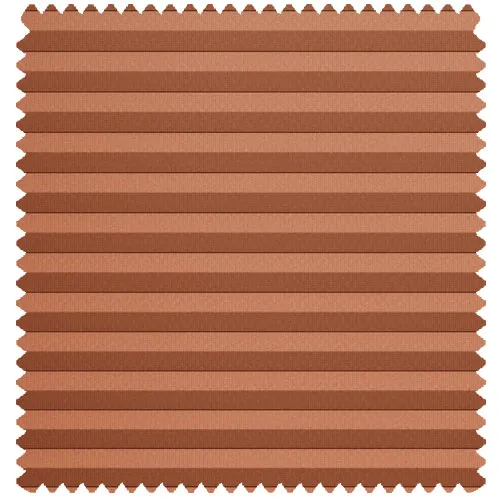
Blenheim Cellular Pleated Blinds
at So Easy Blinds
Blenheim Cellular: a perfect-fit, blackout pleated from So Easy Blinds.


Duoshade Thermal Pleated Blinds
at Blinds 2go
Duoshade Thermal: a perfect-fit, thermal pleated from Blinds 2go with a broad palette.
Best for bifold doors: Bifold Clickfit Duoluxe Pleated Blind, Blinds 2go
Bifold Clickfit Pleated Blinds
at Blinds 2go
Bifold Clickfit: a perfect-fit pleated from Blinds 2go with a broad palette.
This is the one pick in the guide sold specifically for bifold doors, and that positioning is the main reason it takes the category. It is a perfect-fit pleated blind from Blinds 2go, clipping into the glazing of each UPVC panel so that every blind travels with its door when the set folds back. The from-price of £14.59 is the starting point for a single panel. A bifold run multiplies that by the number of leaves, so it is worth pricing the whole set before settling on a shade.
The palette is broad and almost entirely neutral. The retailer groups the shades under anthracite, grey, cream and white, and the individual names include Anthracite, Liquorice, Buttermilk, Dove, Pewter, Ash, Modern Grey, Anchor Grey, Misty Grey, Ice White and Soft White. That restraint is a strength on a bifold run, where the same shade repeats across several panels and anything bold quickly becomes a wall of colour. Several shades are listed at a higher price tier than the from-price, so check which tier the one you want sits in.
What the listing does not say matters too. It is not described as blackout and it is not described as cellular, so if you need the doors to darken a bedroom or to hold heat in a cold room, the Blenheim below is the pick that carries both labels. Against the Duoshade Thermal from the same retailer, the two are close relatives: both perfect-fit, both pleated, both in a neutral palette. The Bifold Clickfit is the one badged for bifold doors, which is the deciding factor when that is what you are fitting.
Best thermal: Blenheim Blackout Cellular Perfect Fit Pleated Blinds, So Easy Blinds
Blenheim Cellular Pleated Blinds
at So Easy Blinds
Blenheim Cellular: a perfect-fit, blackout pleated from So Easy Blinds.
The Blenheim from So Easy Blinds is the only pick that describes itself as cellular, and that single fact is what earns it the thermal category. Cellular blinds form sealed air pockets between two pleated layers, and those pockets give the best insulation of any blind type. Behind a wall of door glass in a north-facing room, or in a kitchen-diner that is cold at the table end in winter, that is the construction that measurably changes things. The retailer also describes the fabric as blackout, and combined with a perfect-fit frame that reduces the light leaking around the edges, it is the one pick here we would put on the French doors of a bedroom.
Its from-price of £151.00 sits well above either Blinds 2go range. What you are paying for is the double-layer construction and a fabric the retailer rates as blackout, neither of which the other two picks claim. Whether that is worth it depends on the room: a living room that only needs glare control gains little from blackout, and only a modest amount from insulation if the rest of the room is already warm.
The palette is shorter than the other two picks and goes in a different direction. The retailer groups the shades under red, green, purple and white, and the names are Rogue, Lime, Indigo, Ochre, Snowdrop and White Mist. If you want a door blind that disappears into a neutral scheme, the Blinds 2go ranges give you more ways to do it. If you want colour, this is the only pick that offers it. The shades the retailer files under white are the ones to consider behind south-facing glass, since lighter fabrics reflect more summer heat. As with every blackout label, treat it as the retailer's description rather than a measured result, and expect a little light at the edges even in a perfect-fit frame.
Best for choice: Duoshade Thermal Blind, Blinds 2go
Duoshade Thermal Pleated Blinds
at Blinds 2go
Duoshade Thermal: a perfect-fit, thermal pleated from Blinds 2go with a broad palette.
The Duoshade Thermal takes the choice category because it has the widest spread of neutrals of the three. The retailer groups its shades under anthracite, beige, cream, grey and white, and the names run through Anthracite, Beige, Mushroom, Ivory, Dark Grey, Grey, Slate Blue, Pebble, Nickel Grey and Chalk. The beige grouping is the one the Bifold Clickfit palette does not have, and for a room decorated in warm neutrals rather than cool greys that may decide it. It is a perfect-fit blind, so the fitting logic is the same as the other two, and the from-price of £14.26 is the entry point, with several shades listed at a higher tier.
"Thermal" in the name is the retailer's description. The listing calls it a thermal blind but does not describe a cellular construction, and that distinction matters. A pleated blind with a thermal backing gives a modest improvement over plain fabric, but the large, measurable gain comes from the sealed air pockets of a cellular build. If insulation is your main reason for covering the doors, the Blenheim is the pick that explicitly offers that construction. If you want a better-than-plain fabric in the shade you like, the Duoshade's thermal label is a reasonable bonus rather than the headline.
It is not sold specifically for bifold doors, and that is the practical line between it and the Bifold Clickfit. For a bifold run the Clickfit is the direct answer. For a single pair of French doors or one sliding patio leaf, where matching the room matters more than matching a neighbouring panel, the Duoshade's larger palette is the better place to start. Neither Blinds 2go range is labelled blackout.
How the three compare
| Bifold Clickfit Duoluxe | Blenheim Blackout Cellular | Duoshade Thermal | |
|---|---|---|---|
| Retailer | Blinds 2go | So Easy Blinds | Blinds 2go |
| Fitting | Perfect-fit frame | Perfect-fit frame | Perfect-fit frame |
| Construction | Single-layer pleated | Cellular (honeycomb) | Pleated, described as thermal |
| Opacity as listed | Not labelled blackout | Blackout, per the retailer | Not labelled blackout |
| Palette | Neutrals: anthracite, grey, cream, white | Colour: red, green, purple, white | Neutrals: anthracite, beige, cream, grey, white |
| Sold for | Bifold doors specifically | General perfect-fit use | General perfect-fit use |
The short version: bifold run in a neutral scheme, take the Clickfit. Bedroom doors, a cold room or a wish for colour, take the Blenheim. A single French or patio door in warm neutrals, start with the Duoshade. For pleated blinds on ordinary windows rather than doors, our pleated blinds guide covers the wider field.
What we didn't include
We limited the picks to perfect-fit pleated blinds because the clip-in frame is what makes a blind workable on a leaf that folds, swings or slides. Pleated blinds fitted with brackets screwed to the door frame are a different installation decision and suit a different buyer, typically someone with timber or aluminium doors who has already accepted drilling. Blinds fixed above the opening, whether rollers, Romans or tracked panel blinds, have to be raised or slid aside before the doors can be used, which defeats the point for most households. Vertical blinds for patio doors are a category of their own and are treated separately.
We also left out plantation shutters and motorised blinds. Shutters are a fixed installation at a very different price and lifespan, and belong in a decision about joinery rather than soft furnishings. Motorised operation adds a step in cost and in wiring or charging that moves it into a separate buying conversation.
Price by your door
Every pick here is made-to-measure and priced by width and drop, so a from-price tells you where a range starts rather than what your doors will cost. Each pick's range page sets out made-to-measure prices across a standard set of sizes. Measure one panel roughly, read off the price, and multiply by the number of leaves before you commit to a shade. For a bifold run that arithmetic is usually the deciding factor, and it is better done before measuring properly than after.