
Stand a plain venetian next to a taped one and the taped blind looks like the dearer purchase every time. The tapes - broad woven ladders running down the face of the slats - take the most functional blind in the house and dress it, so the window reads closer to a plantation shutter than to a slatted piece of hardware. The trick changes nothing about how the blind works. This guide covers what tapes actually are, how to choose the tape colour, what to check before you order, and where the look earns its keep, followed by three picks from three UK retailers: a faux-wood range built entirely around slat-and-tape pairings, a simple ready-taped white, and a motorised real-wood range for the showpiece room.
What tapes actually are
Every venetian hangs its slats on ladders. On a plain blind those ladders are thin cords, and each slat is punched with small routing holes for the cords to pass through. The system works, but it shows: the cords sit as visible tracks down the face, and when you tilt the blind shut against the evening, the routing holes let through pinpricks of light - a grid of bright dots down an otherwise closed surface.
Tapes replace the visible cords with woven cloth ladders broad enough to cover those holes. The slats rest in cloth rungs instead of cord loops, and the strips run the full drop of the blind, front and back. Two things follow. Practically, the closed blind seals better to the eye: the cloth sits over the routing holes, so far less light pinpricks through and the face reads as a continuous surface after dark. Cosmetically, vertical bands over horizontal slats is the geometry of a plantation shutter, which is why a taped venetian reads as dressed and a plain one reads as functional.
The third effect is colour. A plain venetian is one colour; a taped one carries two, and the second is yours to choose. That single decision is most of what this guide is about.
Underneath the dressing it is the same blind. Same headrail, same tilt and lift, same slats, same fitting. The tape is upholstery, not mechanism - so everything you already know about venetians still applies.
Choosing the tape colour
There are two schools, and both are right in the right room.
Matching tapes are the calm option. White tape on white slats, an oak-toned tape on oak, grey on grey: you keep the covered cord holes and the cloth texture, but the blind stays one quiet colour. The bands read as texture rather than pattern, the way a self-stripe reads on a shirt. This is the choice when the room already has plenty going on, or when you want the shutter suggestion without the shutter statement.
Contrasting tapes are architecture. Dark tapes on pale slats - black on bright white is the classic - draw firm vertical lines down the window, and that high-contrast banding is the pairing that reads most shutter-like of all. It turns the blind into a drawn element of the room, like glazing bars or panelling, and it asks to be noticed. The risk runs the same way: a strong contrast on a big window is a lot of stripe, so it wants a scheme that can hold it.
The reliable way to decide is to let the tape answer the room's second colour. Almost every room has one: the door handles and cupboard pulls, the tap, the floor, the sofa, the towels. A kitchen with black handles and a pale worktop has already voted for black-on-white. A sitting room with oak floors and rust-coloured cushions points at a toffee or tan tape on a timber slat. Pick up a colour the room already owns and the blind ties the scheme together; introduce a brand-new one and it competes.
What to look for
The slat finish under the tapes. The tape is trim; the slat is the blind. Faux wood wipes clean with a damp cloth and shrugs off steam and splashes, which is why most taped venetians are faux wood and why they can go in kitchens and bathrooms. Real wood is warmer, lighter on the headrail and carries genuine grain, but it wants to stay out of steam - repeated humidity warps timber - so save it for dry rooms.
Tape options per shade. Ranges handle tapes differently. Some list a tape choice against each slat colour, some sell fixed pairings, and not every shade is offered with every tape. Check that the combination you have in mind is a real one before you fall for it, and order samples: tape cloth and slat finish both flatten on a screen, and a contrast that looks polite in a thumbnail can read far stronger running in full-height bands.
Tilt works normally. Tapes carry the slats exactly as cord ladders do, so the blind tilts, lifts and locks like any other venetian. The slats rotate between the cloth rungs while the tapes themselves stay put, and the only functional difference is in your favour: with cloth over the routing holes, the blind closes more completely.
Measure as any venetian. Nothing about tapes changes the measuring. An inside fit wants enough recess depth for the slat stack and mechanism, an outside fit wants overlap around the opening, and the usual rules apply. If you have measured for a venetian before, you have measured for this one.
Room by room
Kitchens and bathrooms: faux wood with tapes. The rooms with steam and splashes are the rooms where faux wood already wins, and tapes cost the material none of its practicality - the slats still wipe clean and still tilt for privacy over a sink. A taped white or grey faux wood is the tidy way to make a hard-working room look considered.
Living rooms and bedrooms: where the look earns most. These are the windows people actually sit and look at, and the dressed, banded face of a taped venetian pays its way where the window is part of the decorating rather than a service hatch for daylight. A bedroom gains a second benefit: covered routing holes mean fewer pinpricks of light at night. No venetian is a blackout blind - light still finds the slat edges - but a taped one is the darker of the two.
The premium sitting room: real wood. Where the room is dry and the blind is on show, real timber slats with tapes are the top of this particular tree - genuine grain, cloth banding, the nearest a blind gets to plantation shutters without the joinery or the wait. Motorisation suits the same brief: the showpiece room is the one where a dangling wand would let the side down.
How we chose
We picked one taped venetian for each of three briefs - a pairing-led faux wood, a simple white, and a premium real wood - from three different retailers, so the guide spans the real decision rather than ranking three versions of the same blind. Each pick was verified to sell tapes as a genuine ordering option: a taped make-up you can put in a basket, with its pairings listed, not a stylist's flourish that only exists in the product photography. One pick per retailer keeps the comparison honest.
Our picks


Charisma Tape Venetian Blinds
at Unbeatable Blinds
45 named slat-and-tape pairings on wipe-clean faux wood.

Dream Venetian Blinds
at Swift Direct Blinds
A compact white faux-wood venetian sold ready-taped.
%22%3E%0A%20%20%20%20%20%20%3Crect%20width%3D%2214%22%20height%3D%2214%22%20fill%3D%22%23e88a8a%22%2F%3E%0A%20%20%20%20%20%20%3Crect%20x%3D%220%22%20y%3D%220%22%20width%3D%224%22%20height%3D%2214%22%20fill%3D%22%23ffcc4f%22%20opacity%3D%220.85%22%2F%3E%0A%20%20%20%20%20%20%3Crect%20x%3D%228%22%20y%3D%220%22%20width%3D%223%22%20height%3D%2214%22%20fill%3D%22%234fc3f7%22%20opacity%3D%220.85%22%2F%3E%0A%20%20%20%20%3C%2Fpattern%3E%0A%20%20%3C%2Fdefs%3E%0A%20%20%3Crect%20x%3D%2260%22%20y%3D%2222%22%20width%3D%2280%22%20height%3D%228%22%20rx%3D%221.5%22%20fill%3D%22%233a3a3a%22%2F%3E%0A%20%20%3Crect%20x%3D%2262%22%20y%3D%2230%22%20width%3D%2276%22%20height%3D%2283%22%20fill%3D%22url(%23print-fill)%22%20stroke%3D%22%232a2a2a%22%20stroke-width%3D%220.8%22%2F%3E%0A%20%20%3Crect%20x%3D%2257%22%20y%3D%22113%22%20width%3D%2286%22%20height%3D%225%22%20rx%3D%221%22%20fill%3D%22%233a3a3a%22%2F%3E%0A%20%20%3Cline%20x1%3D%22146%22%20y1%3D%2230%22%20x2%3D%22146%22%20y2%3D%22116%22%20stroke%3D%22%239a9a9a%22%20stroke-width%3D%221%22%2F%3E%0A%20%20%3Ccircle%20cx%3D%22146%22%20cy%3D%22120%22%20r%3D%222.2%22%20fill%3D%22%239a9a9a%22%2F%3E%0A%3C%2Fsvg%3E)
Koa Real Wood Venetian Blinds
at Blinds By Post
Motorised real-timber slats with a taped version in warm finishes.
Pick details
Charisma Tape Venetian Blinds
at Unbeatable Blinds
45 named slat-and-tape pairings on wipe-clean faux wood.
The Charisma Tape range at Unbeatable Blinds is the only pick here where the tape is the organising idea rather than an add-on. Its 45 colourways are all named as pairings - Bright White Faux Wood with a Black tape, Light Oak with Toffee, Grey Driftwood with Lunar - so you are never choosing a slat and then hunting for a tape box to tick. The pairing is the range, and the spread runs from crisp monochrome to warm tonal timber.
The slats are faux wood throughout, so every pairing is safe for kitchens and bathrooms and wipes clean with a damp cloth. It is an Unbeatable Blinds exclusive among the retailers we track, which cuts both ways: there is no second shop to price it against, but nothing else on our books treats the tape pairing as the whole point of a range. Our Charisma Tape review walks through the palette pairing by pairing.
Dream Venetian Blinds
at Swift Direct Blinds
A compact white faux-wood venetian sold ready-taped.
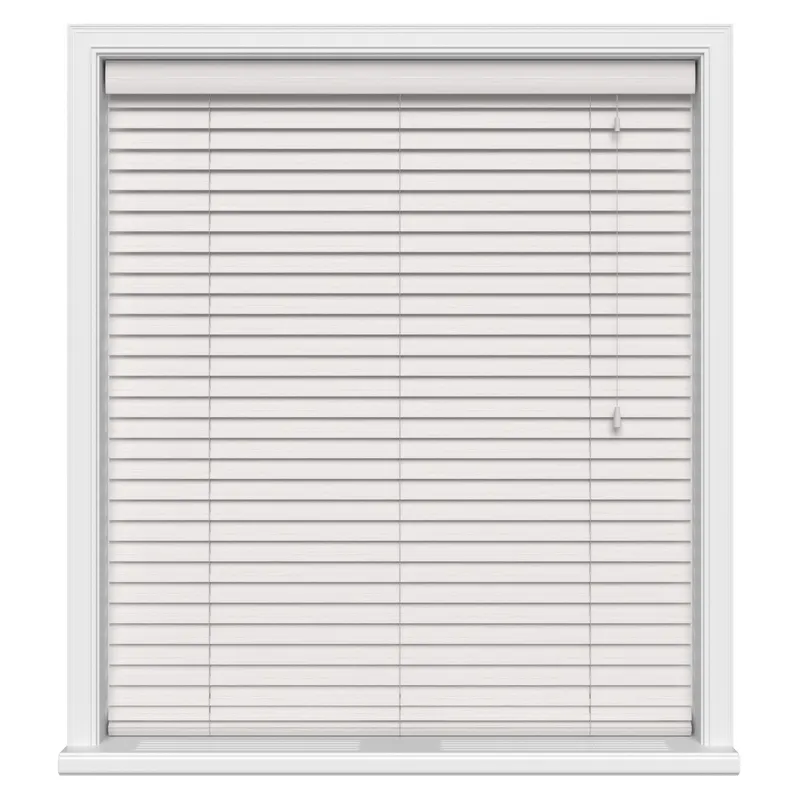
The Dream Taped White at Swift Direct Blinds is the simple answer in this guide: a compact white faux-wood venetian sold in taped form, with the whites split between a plain smooth finish and a fine-grain one carrying a subtle woodgrain texture. White-on-white is the calm school of taping - you get the covered cord holes and the cloth banding as texture, and the blind stays a single bright colour.
That makes it the kitchen-friendly pick. White faux wood bounces light around a working room, wipes down after steam and splashes, and the tapes lift it from builder-basic to considered without asking you to commit to a contrast. If a taped venetian appeals but a black band feels like a decision too far, this is the one to start with - the dressed look at its most forgiving.
Koa Real Wood Venetian Blinds
at Blinds By Post
Motorised real-timber slats with a taped version in warm finishes.
Koa at Blinds By Post is the premium pick: genuine timber slats, sold motorised, with a With Tapes version that adds the cloth banding to real grain. The palette reads like a timber merchant's order book - Honey Oak, Fired Walnut and Tuscan Oak among the entries - so the pairings here are warm and furniture-like rather than graphic, tape and timber in the same register.
This is the blind for the dry, showpiece room: a sitting room, a study, a bedroom where the window is part of the furniture. Real wood wants to stay clear of steam, and the motor spares you leaning over a sofa to work a wand while doing away with operating cords altogether. Our Koa review covers the finishes, the motorisation and the care real timber asks for.
What we didn't include
We have not covered tapes on aluminium venetians, because they barely exist: tapes belong to the wood and faux-wood family, whose broad slats give the cloth something to band, and a slim metal slat is a different look answering a different brief. If your room points at aluminium - a slim profile, a very steamy space - the tape question answers itself.
And we have kept plain, untaped venetians to their own guides. If you are still deciding whether you want tapes at all, the venetian guide covers the whole slatted field across every material, and the faux wood guide covers the moisture-tolerant end where most taped ranges live. This page is for the version with the braces on.