
Blackout perfect fit blinds bring together two separate decisions: a fabric the retailer describes as blocking light through the material itself, and a slim clip-in frame that grips the rubber gasket of a UPVC window without a single screw. Most people searching for them have one of two problems. Either dawn is arriving long before the alarm, a complaint that builds from late March when the clocks change through to midsummer sunrises near half past four, or they rent, or simply do not want to drill into their double glazing. This guide explains what the combination does and does not achieve, sets out what to check before ordering, and compares our picks: two blackout rollers and a blackout honeycomb blind. It covers made-to-measure ranges rather than ready-made sizes.
What "blackout perfect fit" actually means
A blackout fabric is one that is opaque against a backlight: hold it up to a lit window and no glow should come through the weave. Retailers use the word loosely, and some apply it to very heavy dimout fabrics that still pass a little light, so when a range is labelled blackout we treat that as the retailer's description rather than an independent test. Most blackout roller and pleated fabrics are polyester with a coated backing, and it is the backing that does the light-blocking work. A pale colour on the room side does not make a blackout fabric any less opaque, so you need not choose a dark blind to get a dark room.
Opacity is only half of what darkens a bedroom. A blackout fabric hung from brackets above the window leaves a line of daylight down each side and along the bottom, and that line is what wakes you at five in the morning. Perfect fit attacks the gap directly. The blind sits within a slim frame that clips into the rubber seal of a UPVC double-glazed unit, so the fabric is held close to the glass with the frame covering its edges. Nothing is drilled, and the frame comes away without leaving a trace, which is why it suits renters and anyone reluctant to put screws into plastic window frames. The fitting was designed around UPVC and its rubber gasket; it does not grip wooden or aluminium windows in the same way, and the glazing needs enough depth for the frame to seat properly. If you are unsure about your own windows, start with our guide to whether perfect fit blinds will fit your windows.
Perfect fit is the cleanest no-drill fitting but not the only one. One of our picks is listed in Stick and Clic versions, which we read as two different fixing methods, and a few of its variants are labelled Clip On and Stick On. Read the fitting description for the exact variant you order rather than assuming every no-drill blind uses the same clip-in frame.
What to look for
Confirm the window before the colour. Perfect fit depends on a UPVC frame with a rubber gasket and enough depth between the glass and the bead. Wooden sashes and aluminium frames are out, and so are UPVC units where the glazing sits too close to the surface. Settle this first; it decides whether this guide applies to you at all.
Check the opacity of the exact variant. Ranges often come in several weights under one name. One of our picks lists plain, Dimout and Blackout versions of the same colours side by side, and only the Blackout versions will give you darkness. A dimout is the better choice for a home office or living room where you want some daylight with the blind down, but it is not what a shift worker or the parent of a toddler is looking for.
Decide between a roller and a honeycomb. A roller is a single flat sheet of fabric: the broadest colour choice, the tidiest look when raised, and almost no insulation. A honeycomb traps air in sealed cells between two fabric layers, which gives the best thermal performance of any blind type, at the cost of a narrower palette and pleats that can show wear over time. If the window is cold, or you are thinking about winter heating as much as summer light, the honeycomb earns its place.
Think about colour and heat. Light-coloured fabrics reflect more summer heat than dark ones, which matters in a south-facing bedroom that bakes in June. Darker colours read as cosier but reflect less. Since the backing handles the blackout, pick the face colour on looks and heat rather than on darkness.
Ask how it is operated. UK regulations require domestic blinds to be cord-safe by design, with cordless, wand, breakaway-connector or motorised options the usual routes. For a child's room, cordless or wand operation is the standard recommendation, and the seller must include a child-safety device or cord-management equipment. Check how each range is raised and lowered before ordering for a nursery.
Price the colour, not just the range. From-prices apply to the base colours. Some ranges tag a share of their palette as premium, meaning a dearer price for that finish, and the plain whites and creams most bedrooms want can sit in that tier. Look at the price of the specific colour at your window size.
Keep care in mind. Most polyester blind fabrics want a monthly vacuum with the brush attachment and a damp cloth with mild soap for marks; avoid soaking. Because a perfect fit frame lifts out and goes back without leaving a trace, cleaning the glass behind the blind is easier than with a drilled fitting.
Our picks
Our picks in brief, with detail on each below.

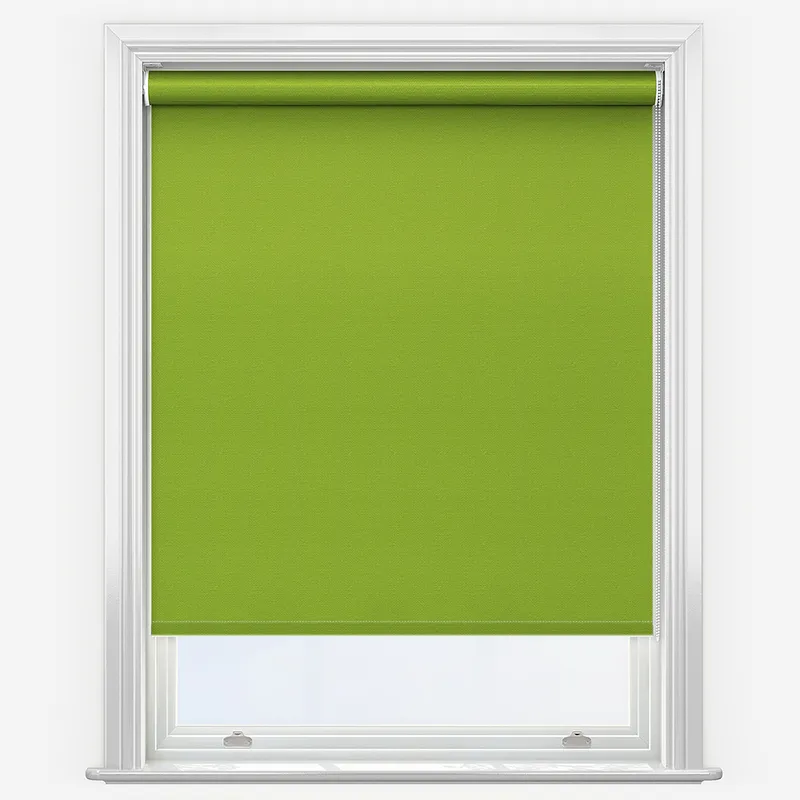
Signature Roller Blinds
at Wilsons Blinds
Signature: a perfect-fit, blackout roller from Wilsons Blinds with a broad palette.
This range is currently unavailable.


Bella Roller Blinds
at So Easy Blinds
Bella: a perfect-fit, blackout roller from So Easy Blinds with a broad palette.
Pick details
Signature Blackout Roller Blind from Wilsons Blinds - best roller
Signature Roller Blinds
at Wilsons Blinds
Signature: a perfect-fit, blackout roller from Wilsons Blinds with a broad palette.
Signature is a perfect-fit blackout roller from Wilsons Blinds with a broad palette, and it is our roller pick because it does the simple job cleanly: one flat sheet of fabric the retailer describes as blackout, in a clip-in frame, with enough colours that most bedrooms will find a match. The palette covers beige, cream, white and porcelain tones, a run of greys including Mist Grey, Pebble Grey, Shadow Grey and Storm Grey, blues including Airforce Blue, Denim Blue and Powder Blue, and stronger names such as Indigo, Azure, Forest Green, Ocean Green, Orange Marmalade, Hot Pink, Peony Pink, Red, Plum and Purple, with Jet, Espresso, Seal and Mineral among the rest.
A good share of that palette is tagged by the retailer as premium, meaning a dearer price than the base colours. White, Porcelain White, Vanilla Cream and Cream all sit in the premium tier, as do Linen, Parchment, Mushroom, Dove Grey, Storm Grey, several of the blues, and Red, Plum and Purple. The from-price of £6.89 therefore applies to the standard colours; if you want a plain white blackout, expect the premium rate for this range and compare on that basis.
Against the other picks, Signature is the straightforward choice. It is the same type of blind as Bella with a smaller palette and plainer colour names, so comparing the two comes down to the exact shade you want and the price at your window's width and drop. Against Lexington it gives up insulation: a single layer of roller fabric does little to slow heat loss through the glass, where a honeycomb's sealed cells do. For a room that is already warm enough, where darkness and a tidy roller look are the whole brief, Signature is the sensible default.
Lexington Honeycomb Blind from Shade & Story - best cellular
This range is currently unavailable.
Lexington is a honeycomb blind: the pleated fabric forms sealed air pockets between its layers, and that structure gives the best insulation of any blind type. It is our cellular pick because it brings that thermal benefit to a no-drill blackout fitting, a useful pairing for a bedroom over a cold window where you want darkness through the light months and some help with heat loss once the heating goes on.
Read the variant names with care, because the range is not uniformly blackout. Shade & Story lists Lexington in plain, Dimout and Blackout versions of each colour, and only the Blackout versions belong in this guide. The colours are a restrained set - Anthracite, Dove Grey, Onyx, Sky, Spring, Taupe, Terra, Cream and White - which is typical of cellular ranges, where the fabric tends to be lighter and less varied than a roller's. Most colours appear in both a Stick and a Clic version, and the retailer also lists a few Paper White blinds in Clip On and Stick On forms. We take Stick and Clic to be two fixing methods and would not guess further from the names; the retailer's own fitting guide should tell you which suits your window.
The from-price of sits above Signature's. The other things to weigh are the ones that apply to any honeycomb: the pleats can show wear after years of daily use, and when raised the fabric stacks at the top rather than vanishing into a tube. For a bedroom that runs cold, or a renter living with older glazing the landlord will not replace, those are small costs against the insulation. For a warm south-facing room, the roller picks do the blackout job with less to think about. Our guide to cellular blinds covers the thermal side in more depth.
Bella Blackout Roller Blinds from So Easy Blinds - best for choice
Bella Roller Blinds
at So Easy Blinds
Bella: a perfect-fit, blackout roller from So Easy Blinds with a broad palette.
Bella is a perfect-fit blackout roller from So Easy Blinds, and it earns the choice label by offering the widest palette of our picks. Its colour families span beige, cream, white, grey, black, blue, green, pink, purple and red, so it covers both the muted neutrals most bedrooms want and the stronger shades a child's room might call for. The naming is evocative rather than descriptive: finishes include Boujee, Cacti, Havana, Heat, Hessian, Lipstick, Mambo, Portobello, Tropez and Vellum, alongside more familiar colour words such as Beige, Taupe and Grey Whisper. That is pleasant on a swatch card but unhelpful when choosing from a list, so judge by the retailer's images, and a sample where you can get one, rather than by the name.
The from-price of £68.15 puts Bella above both other picks at the entry point. We would not read too much into that alone: from-prices usually reflect the smallest size a retailer quotes, and the gap can widen or narrow at a real window's measurements. Bella is the same type of blind as Signature, so the light-control behaviour is the same: both are a single sheet of fabric the retailer describes as blackout, both roll away out of sight, and neither insulates to any meaningful degree. What the difference buys is colour choice. Bella makes sense when the exact shade matters more than the price, and Signature when it does not. Against Lexington the trade is the same as for Signature: far more colour, no insulation.
Choosing between them
Put simply: if the window is cold, or you are buying as much for winter as for summer, choose Lexington and make sure the variant name includes Blackout. If you want a roller and the from-price matters, choose Signature, remembering that its whites and creams sit in the dearer tier. If a particular colour is the whole point, choose Bella. In every case the frame does the edge-sealing and the fabric does the opacity, both as described by the retailer, and none of it applies unless your windows are UPVC with a gasket deep enough to take the frame.
What we didn't include
We left out dimout and light-filtering perfect fit ranges because the brief here is darkness. Many ranges come in a dimout weight that is the better choice for a living room or home office, where you want some daylight with the blind down, but a dimout is not a blackout and we did not want to blur the line. We also left out slat-based blinds, which darken by closing their slats rather than through an opaque fabric; that is a different kind of light control with different gaps, and a different buying decision.
Drilled blackout rollers with side channels are the other common route to a dark bedroom, and our broader guide to blackout blinds covers them; they are absent here because the whole point of this guide is avoiding the drill. Motorised and smart blinds sit outside the list because the price step-up moves them into a different decision. And we kept to made-to-measure ranges rather than ready-made sizes, since a frame that has to seat against a gasket leaves little room for a blind cut down on the kitchen table.
Price by your window
The from-prices above are starting points, not what you will pay. Blinds are priced by width and drop in millimetres, so a tall patio-door pane costs more than a small bathroom window in the same fabric, and dearer colour tiers add to that. Follow a pick through to its own page for prices across a set of common sizes, and look up your own measurements before comparing ranges against each other. Perfect fit frames are measured differently from a standard recess fit, so use the measuring instructions the retailer gives for the specific range rather than a generic recess guide.