
Cellular and honeycomb blinds are among the more specific things you can search for in the UK blinds market, and that specificity usually means the buyer already knows what they want: the insulating air-pocket structure that sets these blinds apart from standard pleated or roller options. If you have landed here, you have likely read that honeycomb blinds are the best-insulating blind type, and you are trying to work out which range to buy - and whether the thermal claims are as meaningful as the marketing suggests. This guide addresses both questions, using three curated picks that cover different priorities: a dedicated cellular product, a blackout-thermal option for bedrooms, and a lower-entry no-drill pleated blind for straightforward situations.
What cellular actually means
The term "cellular" refers to the internal structure of the blind fabric, not just a marketing claim. A standard pleated blind is a single layer of fabric folded accordion-style. A cellular or honeycomb blind adds a second layer, and the two layers are bonded together in a pattern that forms sealed air pockets - typically hexagonal in cross-section, which is where the "honeycomb" name comes from. These pockets run the full drop of the blind when it is closed.
The physics is straightforward: trapped, still air is an effective thermal insulator. Double glazing works on the same principle. A cellular blind adds an additional insulating layer between the cold glass and the warm room air. This is a structural mechanism, not just a coating or a heavier fabric, and it is why cellular blinds are routinely cited for energy-saving benefits. The actual heat-loss reduction will depend on your windows, room, and heating setup, so we would not quote a specific percentage - but the mechanism is genuine.
Beyond the air-pocket construction, several things are worth understanding about cellular blinds before buying:
Cellular vs thermally backed pleated. Many retailers sell "thermal pleated" blinds that are a single layer of fabric with a reflective or multi-layer backing. These are not cellular. They offer modest insulation over a standard single-layer fabric, but the effect is smaller and structurally different from a true honeycomb. A thermally backed pleated blind is not a cellular blind, even if the retailer positions it alongside cellular options. Two of the picks in this guide are thermally backed rather than true cellular - that distinction is worth understanding before reading the pick commentary.
Cellular blinds are typically light-filtering, not blackout. The honeycomb structure limits how opaque the fabric can be made; most cellular fabrics allow diffused light through even when fully closed. If you specifically need a cellular blind that is also blackout-rated, the options narrow considerably. Most buyers who need genuine room darkness are better served by a blackout-rated pleated fabric (our Best blackout pick) than by trying to find a cellular blackout product.
Single-cell vs double-cell. Some cellular ranges offer both single-cell and double-cell constructions - one layer of air pockets versus two. Double-cell adds further insulation but increases the fabric stack depth and is less commonly available at the lower price points. The ranges in this guide do not specify cell count, so we have not drawn a distinction in the pick commentary.
What to look for
True cellular vs thermal-backed. As described above: if the structural air-pocket insulation is the main reason you are buying, check that the range is genuinely cellular rather than simply a thermally marketed pleated fabric. The retailer's product description usually specifies; "honeycomb" in the range name is a reasonable signal.
Light-control expectations. Cellular fabrics are light-filtering to dimout in most cases. If you are buying for a bedroom where you want complete darkness, a cellular blind will probably not satisfy you. Consider whether a blackout-rated thermal option is a more honest fit for your actual need.
No-drill vs standard fitting. Cellular and pleated blinds can be fitted as standard inside-recess or face-fix options, requiring brackets screwed into the window recess or wall. Perfect-fit frames, which clip to the rubber gasket of UPVC windows, are a no-drill alternative for UPVC glazing. The Pleated Fit range from Swift Direct Blinds (our Best value pick) is described by the retailer as a no-drill option - worth considering for renters or anyone reluctant to drill into a UPVC window frame.
Colour range and room matching. Cellular fabrics tend to come in a more restrained palette than roller or Roman options - the construction limits the variety of finishes that can be made. Most ranges concentrate on neutrals, which suits the thermal-first buyer: pale fabrics on a south-facing window reflect summer heat as well as retaining winter warmth. If the blind needs to contribute to a specific room scheme, check the available colours carefully before ordering.
Made-to-measure sizing. All three picks are made-to-measure. Accurate measuring matters: a blind that is too narrow leaves gaps that reduce thermal performance as well as looking untidy. Measure the recess width and drop carefully, and follow each retailer's specific instructions on fitting allowances.
Care. Pleated and cellular fabrics should not be soaked or machine-washed. Vacuum gently with a brush attachment for routine cleaning; spot-clean marks with a damp cloth and mild detergent, working carefully to avoid flattening the pleats. The honeycomb structure can be damaged by rough handling when the blind is raised.
Our picks


Hudson Cellular Pleated Blinds
at So Easy Blinds
A freehanging honeycomb blind from So Easy Blinds, the dedicated cellular option.


Totalshade Complete Thermal Pleated Blinds
at Blinds 2go
A blackout thermal pleated blind from Blinds 2go for bedrooms.

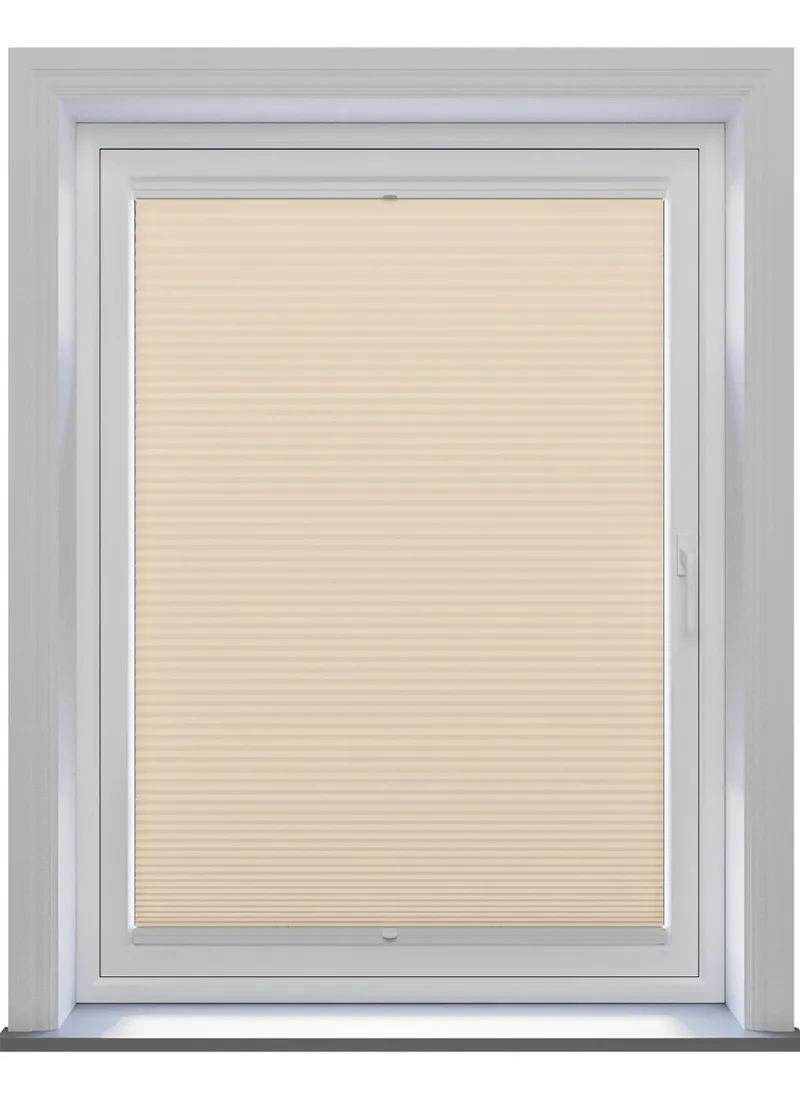
Clic-Stick-Fit Pleated Blinds
at Swift Direct Blinds
A no-drill pleated blind from Swift Direct Blinds at a lower entry price.
Pick details
Hudson Cellular Pleated Blinds
at So Easy Blinds
A freehanging honeycomb blind from So Easy Blinds, the dedicated cellular option.
The Hudson (Cellular) Freehanging Pleated Blinds from So Easy Blinds is our Best overall pick because it is one of the few ranges we cover that is built as a true honeycomb cellular product. Where most "thermal pleated" blinds on the market are single-layer fabrics with a thermal backing, the Hudson explicitly uses the dual-layer cellular construction that creates sealed air pockets at the glass. If you are buying specifically for the insulation mechanism that cellular blinds are known for, this is the dedicated option.
So Easy Blinds lists the Hudson in eight colour options - Burgundy, Fawn, Parchment, Royal Blue, Teal, Platinum, Slate, and Snow. The palette includes neutral tones suited to a thermal-first purchase alongside a few accent colours. Eight options is more focused than some general pleated ranges, which reflects this being a specialist cellular product rather than a broad fabric collection.
The Hudson is a freehanging blind, meaning it fits either inside the recess or face-fixes above the window. No drilling is required if it is top-fixed into the recess ceiling, but standard bracket fitting applies - it is not a clip-in perfect-fit system. As a freehanging blind, it will leave some edge gap at the sides when closed; this is the expected limit of any standard fitting. The fabric is light-filtering rather than blackout, which is characteristic of cellular construction. This is the right pick for someone whose priority is insulation and who is content with diffused rather than blocked light.
Totalshade Complete Thermal Pleated Blinds
at Blinds 2go
A blackout thermal pleated blind from Blinds 2go for bedrooms.
The Totalshade Complete Blackout Thermal Blind from Blinds 2go is our Best blackout pick. It is not a true cellular blind - it is a pleated blind with a thermal backing and a blackout-rated fabric - but it earns its place in this guide because many buyers searching for cellular blinds are actually trying to solve a bedroom problem: heat loss combined with poor light control. The Totalshade addresses both, with blackout opacity that cellular fabrics cannot deliver.
Blinds 2go describes this as a complete-blackout fabric with a thermal backing. The thermal benefit is real but more modest than a structural honeycomb; the blackout performance is the main event. For a bedroom window where both issues matter, the Totalshade is a more honest fit than trying to find a cellular product with blackout properties.
The range is available in 19 colour options - a notably wide palette for a blackout product: Mint, Duck Egg, Sherbet, Peach, Ecru, Sage, Olive, Forest, Pumpkin Spice, Mink, Toffee, Navy, Turtle Dove, Pistachio, Cliffside Grey, Elephant Grey, Birch, Frost White, and White. That breadth is useful if the blind needs to suit a decorated bedroom. It is also substantially less expensive than the Hudson at its entry price point, making it accessible for households wanting to cover several windows.
Compared to the Hudson, the Totalshade gives up the structural cellular insulation in exchange for blackout opacity and a lower price. Which matters more depends entirely on the room: a bedroom where darkness is the real priority is different from a living room or study where the insulation benefit is what matters.
Clic-Stick-Fit Pleated Blinds
at Swift Direct Blinds
A no-drill pleated blind from Swift Direct Blinds at a lower entry price.
The Pleated Fit from Swift Direct Blinds is our Best value pick, and it enters the comparison at the lowest entry price of the three. It is a pleated blind - not cellular, and not explicitly described as a thermal option - but it fits the guide because many buyers looking at cellular or honeycomb options are also weighing whether the cost of a dedicated cellular range is justified compared to a straightforward pleated at a lower price.
Swift Direct Blinds describes the Pleated Fit as a no-drill blind. The fitting system allows installation without screws or brackets drilled into the window frame, which makes it relevant for renters and for UPVC windows where drilling is not desirable. This is a different mechanism from a perfect-fit clip-in frame - the Pleated Fit's no-drill system works by fitting between the window beads or using the existing frame structure; check Swift Direct's fitting instructions for compatibility with your specific window type before ordering.
The range comes in 14 colour options: Nude Clic, Beige Stick, Blue Clic, Blue Stick, Sky Blue Clic, Cream Clic, Cream Stick, Light Green Clic, Dark Grey Stick, Grey Clic, Mouse Grey Stick, Red Stick, Yellow Clic, and Yellow Stick. The "Clic" and "Stick" suffixes denote the fitting mechanism variants within the range. The palette runs across neutrals and a handful of accent colours.
The honest comparison with the Hudson is this: the Pleated Fit does not match the cellular insulation performance of the Hudson, and it does not claim to. It is a well-priced pleated blind with a no-drill fit - the right choice if the installation convenience and entry price are the deciding factors, not if genuine honeycomb insulation is the requirement.
What we didn't include
We did not include Roman blinds with thermal interlining in this guide. Roman blinds with a thermal or blackout interlining are a reasonable option for rooms where the fabric aesthetic of a Roman is preferred, and the insulation from a good interlining is comparable in general terms to a thermally backed pleated fabric. However, the Roman style is a distinct product category with different fitting, cost, and fabric considerations; it belongs in a guide of its own rather than alongside honeycomb and pleated picks.
Motorised cellular blinds - which can be programmed to lower automatically at dusk to retain warmth - also did not make the shortlist. The additional cost of motorisation changes the buying decision significantly; it is a different category of purchase rather than a better version of the manual options here.
We also kept the focus on standard window blinds rather than roof or conservatory honeycomb blinds. Cellular blinds for conservatory roofs are a specialist product with different sizing, fitting, and price characteristics. The three picks here are all for standard vertical windows.