
6 dimout venetian blinds, £44-£54 for a standard window (around 1200×1200 mm). Enter your exact window below - each price updates to your size, and we move you to the right size band if you go outside this one.
Dimout fabric blocks most daylight but not quite all of it - a middle ground between a standard and a blackout blind, useful where you want a darker room without the edge-sealing fuss of true blackout.
A venetian blind is a stack of horizontal slats that tilt together to control light and view, and raise fully when you want the window clear. Tilting gives fine, gradual control - angle the slats to let light bounce up to the ceiling while keeping the view out, or close them down for shade and privacy. It is a style that suits most rooms, with the material choice deciding where each one belongs.
Slats come three ways: aluminium, which is slim, inexpensive and happy in kitchens and bathrooms; real wood, which is warmer and more premium but heavier and best kept away from damp; and faux-wood, which mimics the wood look while tolerating moisture and costing less. Light control is the venetian's strength, but it can never be total - the slat edges and the cord holes always pass some light, so a venetian does not truly black out. Slats need an occasional dust, and aluminium and faux-wood simply wipe clean. On price, aluminium is among the cheapest blinds going, real wood among the dearer, with faux-wood sitting in between.
Slats come in a few widths, commonly around 25, 35 and 50 mm: narrower slats look neat and trim on a small window, while wider ones suit larger rooms and clear more of the view when tilted open. The tilt is worked by a wand or a cord, and a ladder-tape finish hides the cord holes for a tidier face when the slats are closed.
6 of 6 ranges shown.


Essence Venetian
at Blinds 2go

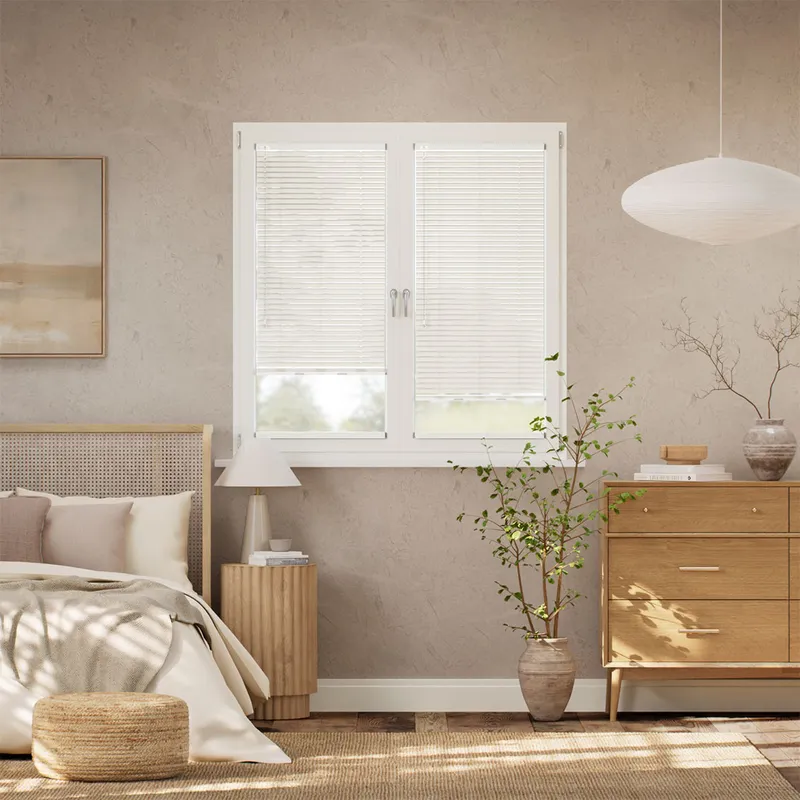
Studio L Shaped Venetian
at Blinds 2go


Spirit Venetian
at Blinds 2go
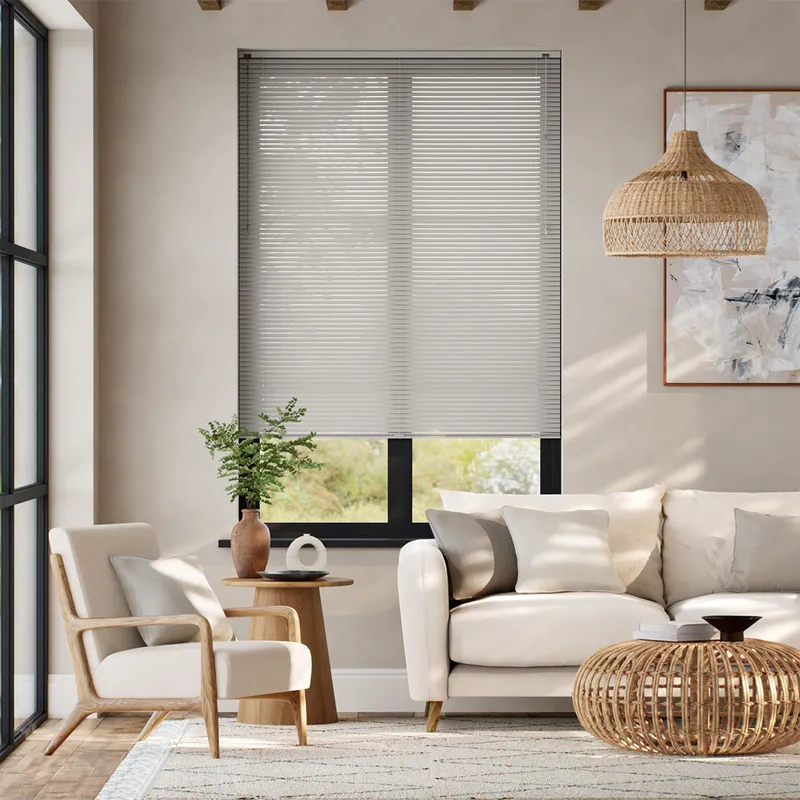
Oscar Matte Venetian
at Blinds 2go
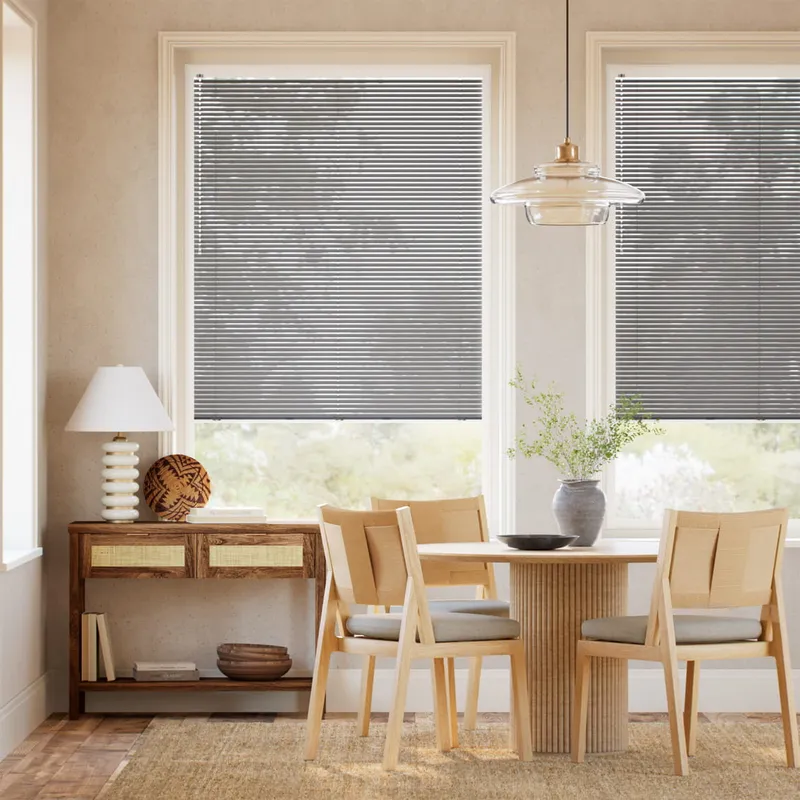
Grey Venetian
at Blinds 2go

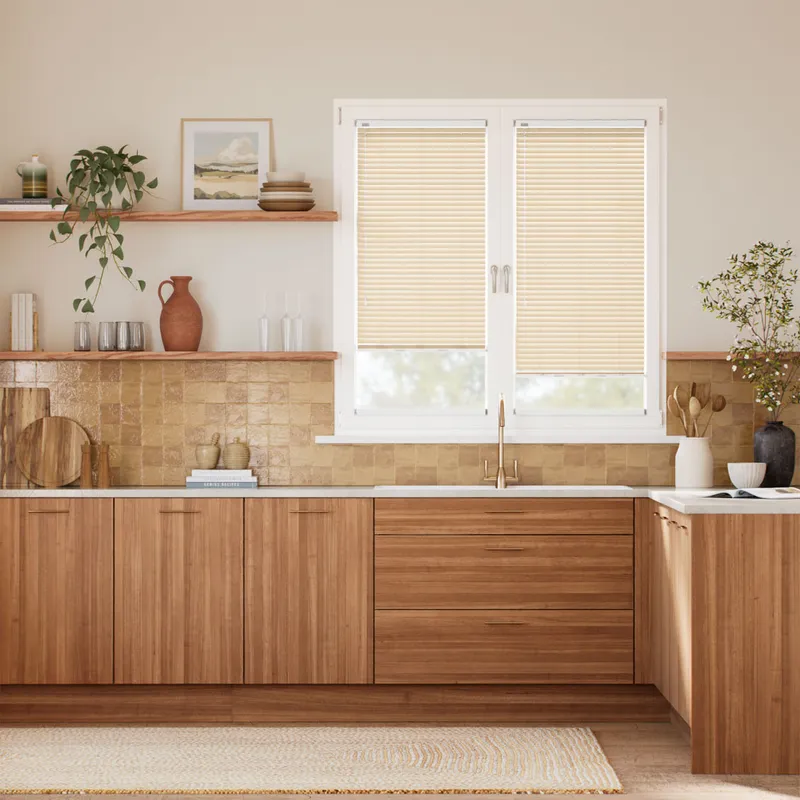
Studio Venetian
at Blinds 2go