
White is the most searched colour in window blinds, and for straightforward reasons: it works with almost any interior, it reflects heat in summer rather than absorbing it, and it reads as clean and neutral without committing to a decorating scheme. The question is less "should I choose white?" and more "which type of white blind suits this window?" A real wood venetian in white gives a very different result from a white vertical on a patio door or a plain roller in an off-white kitchen. This guide covers one pick in each of the three main blind types where white makes a meaningful design and functional choice.
The difference between white, off-white, and warm neutral
Worth saying plainly: "white" covers a wide spread of actual colours. A shade called Cotton White on a roller blind and a shade called Ivory will look different side by side, and neither will match the Scandinavian Oak of a natural-finish venetian. If you're trying to match or complement existing paintwork, you'll want to order samples before committing - the on-screen rendering of any white is an approximation, and natural and artificial light treat whites differently.
The three picks here approach white differently. The Real Wood venetian from Make My Blinds covers finishes in natural wood tones rather than painted white - the category label refers to the type and the retailer's blurb describes a white-painted option, but the six finishes listed are Cedar, Scandinavian Oak, Grey Pearl, Delicate Fawn, Grey Ash, and Golden Oak. These are wood-tone naturals rather than painted whites. If your priority is a bright white venetian slat, these warmer and greyed tones are worth examining against your room's light before ordering.
The Bella roller from Blinds By Post includes several whites and off-whites within its 55 distinct finishes - the exact white options sit within that broader palette. The Trinity vertical from 247 Blinds lists both a "(Blackout) White" and a "(Fr Blackout) Milk White" among its 37 variants, giving two usable near-white options for a patio door or wide window.
What to look for
Blind type before colour. The first decision for any white blind is the mechanism and profile, not the shade. Venetian slats give precise light control via tilt and are good in rooms where you want angled sunlight rather than full brightness. Rollers are the simplest option and the easiest to make in blackout or dimout weights. Vertical blinds suit wide windows and patio doors where a roller or venetian would be unwieldy. Choose the type first; then find the white you want within it.
Real wood in the right rooms. Real wood venetian slats look different from aluminium or faux-wood slats - warmer, more varied in grain. However, real wood isn't suitable for bathrooms or kitchens where moisture is frequent, because it warps and discolours with damp. If you're choosing a venetian for a bathroom or kitchen, faux-wood (PVC slats moulded to resemble wood) handles moisture better and is available in white finishes. The real-wood pick here is appropriate for living rooms, bedrooms, and home offices where humidity is low.
Light control and fabric weight. White and off-white fabrics transmit more light than darker colours when backlit, so a "dimout" white roller may let through more light than a mid-grey dimout roller of the same specification. For a bedroom where you need genuine darkness, a blackout-rated fabric in white or off-white will perform better than dimout - but check whether "blackout" is the retailer's claim for the specific colour you're ordering, not just for darker variants in the same range.
Verticals for wide openings. Vertical blinds are the natural choice for patio doors and any window over about 2.5 metres wide, where a roller or venetian would be either too heavy or impractical to operate. The vanes stack to one side (or split and stack to both sides) when open, leaving the full doorway clear. In white, verticals also read as less commercial than in darker or more saturated colours - a common complaint about verticals is their office aesthetic, which white softens.
Cleaning white. White blinds show marks more readily than darker or patterned alternatives, particularly in kitchens. Polyester roller and vertical fabrics: spot-clean with a damp cloth and mild soap; avoid soaking. Real wood venetian slats: dry-dust only, damp cloth sparingly, never wet. If you want a truly wipe-clean white blind for a kitchen, a PVC roller or aluminium venetian is easier to maintain than real wood or fabric. None of the picks here are PVC - they're fabric or real wood - so factor in cleaning regime against the room's use.
Matching across multiple windows. Ordering from the same range for all windows in a room is the only reliable way to ensure colour consistency. Two different rollers described as "White" will rarely be exactly the same shade under the same light. If you have several windows to cover, order all the blinds from the same retailer and range in the same batch.
Our picks


Wooden Venetian 50mm Blinds
at Make My Blinds
A white-painted real wood venetian from Make My Blinds.

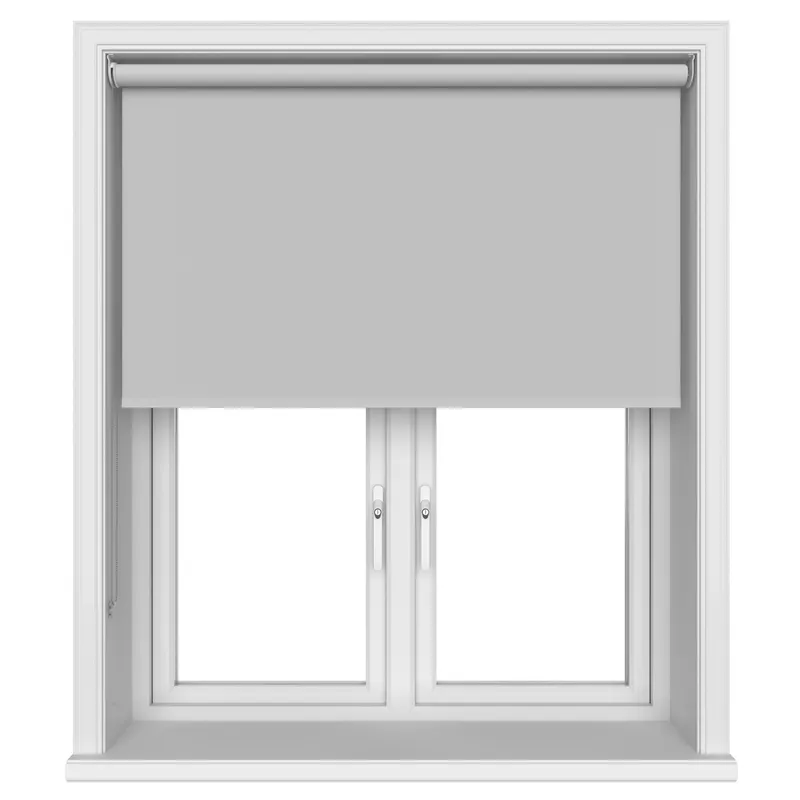
Bella Roller Blinds
at Blinds By Post
A broad-palette roller from Blinds By Post with several whites and off-whites.

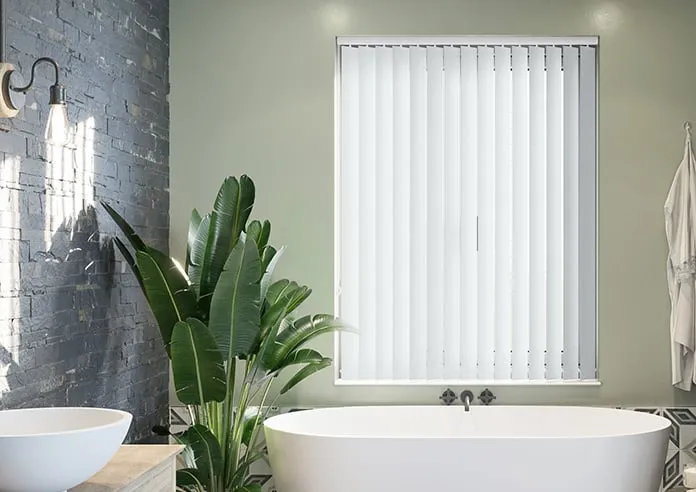
Trinity Vertical Blinds
at 247 Blinds
A vertical from 247 Blinds with clean whites for a bright, neutral room.
Pick details
Wooden Venetian 50mm Blinds
at Make My Blinds
A white-painted real wood venetian from Make My Blinds.
The Real Wood venetian range from Make My Blinds is the wood pick for rooms where the texture and material of the slat matters. Real basswood venetian slats have a visual warmth and grain variation that painted or faux-wood slats don't replicate, and at six carefully chosen finishes - Cedar, Scandinavian Oak, Grey Pearl, Delicate Fawn, Grey Ash, Golden Oak - the range leans towards Scandinavian and natural-tone aesthetics rather than the sharp white-slat look of painted aluminium.
As noted above, if your aim is a bright, clean white venetian, the Scandinavian Oak and Grey Ash are the closest options here - both lean pale and cool-toned, but they are wood-toned naturals rather than painted whites. Cedar and Golden Oak are warmer. This is a range chosen for its material and craft feel rather than as a white-maximalist option.
The venetian format suits living rooms, dining rooms, and home offices particularly well. Slat tilt lets you redirect daylight upwards or angle it to avoid screen glare, which rollers can't do. When the slats are fully closed and overlapping, venetians provide effective blackout - useful in rooms that double as home cinema spaces. When tilted to 45 degrees or less, they let in diffused light while maintaining reasonable privacy from outside.
Care for real wood slats is more demanding than for polyester fabric or faux wood: dry-dust regularly, use a damp cloth sparingly for marks, and keep these away from steam and frequent moisture. Starting price is at the accessible end of real-wood venetians.
Bella Roller Blinds
at Blinds By Post
A broad-palette roller from Blinds By Post with several whites and off-whites.
The Bella UK range from Blinds By Post is a broad-palette roller covering 55 distinct finishes, with whites and off-whites among them. The range spans neutral, cream, dove, and butter tones through to bolder colours, and several of the finishes are also available as motorised blinds (at a higher price point) - so if you start with the standard roller and later want to upgrade to motorised for an awkward or high window, the fabric choice doesn't change.
Of the 55 finishes, 34 are listed as motorised-premium variants. The standard roller versions start at under £9, making this one of the more accessible entry points in a made-to-measure roller range. The white and cream-adjacent finishes - Dove, Oyster, Vellum, and others within the palette - offer the kind of off-white variation that suits rooms where a stark white would feel too clinical.
Compared with the vertical pick, a roller is the better choice for a single standard window where you want a clean finish with minimal visual weight when raised. The fabric rolls onto the tube at the top, so there's very little stack - a lighter look than a roman blind in the same position. For an open-plan kitchen-diner where the blind is down only occasionally, that unobtrusive profile when raised is worth having.
Compared with the venetian pick, the roller gives no slat-angle light control - it's either down or up. But the range of whites and off-whites is wider and the maintenance is simpler: vacuum with a brush attachment periodically, spot-clean with a damp cloth for marks.
Trinity Vertical Blinds
at 247 Blinds
A vertical from 247 Blinds with clean whites for a bright, neutral room.
The Trinity vertical range from 247 Blinds includes "(Blackout) White" and "(Fr Blackout) Milk White" as two of its 37 variants - the distinction being between a standard blackout vane and a fire-retardant blackout vane, both described by the retailer as white-toned. Across the full 37-variant range, the collection also covers a broad set of greys, blues, creams, and neutrals, but for this white-blinds context the two white options are the relevant ones.
Vertical blinds are the practical pick for patio doors and wide windows. Vanes (typically 89mm wide) hang from a top track and rotate to control light angle, then slide along the track to open the full doorway. Unlike a roller, you can partly open a vertical blind by sliding the vanes to one side without losing all the light control - useful on a south-facing patio door where you want to open the door but keep direct sun out of the room.
The blackout-rated vanes here mean that in the closed position, the Trinity vertical will block most direct light transmission through the fabric. Edge and top gaps remain a practical consideration with any vertical blind - the vanes don't seal against the wall - but for rooms where you want a degree of darkness without total blackout, the fabric itself performs well.
Starting at under £16, the Trinity vertical is the most affordable of the three picks when comparing like-for-like starting prices. That lower entry point partly reflects that verticals are generally less material-intensive than the same width in a roman or venetian, and that the range is sold as a straightforward functional product rather than a decorative one. For a utility room, home office, or conservatory with a wide window or door, the clean white finish and the practical light control are the relevant criteria.
What we didn't include
This guide focuses on the three types where a white finish is most commonly sought and most practically useful: venetians (for slat-angle light control), rollers (for clean everyday use), and verticals (for wide windows and patio doors). We haven't included roman blinds in this shortlist - not because white romans don't exist, but because the decorative fabric choice tends to dominate roman blind selection, and the most compelling roman ranges for a white-focused search are patterned fabrics with a white ground rather than plain white romans. If a plain white roman is what you're after, the same buying criteria apply: check fabric weight, ensure the lining option meets your light-control needs, and measure the drop carefully because roman blinds stack at the top and lose some window height when raised.
Plantation shutters in white are another common search that this guide doesn't address. Shutters are a different product category - fixed, louvred, significantly more expensive, and typically installed by a fitter rather than a homeowner. If you're comparing a venetian blind against shutters, the price and installation complexity difference is substantial.