
Perfect fit blinds solve a specific problem: how to dress a UPVC double-glazed window without drilling holes or clamping a bracket onto the frame. The blind slots into a slim clip-in frame that grips the rubber gasket running around the inside of the glazing unit - no screws, no plugs, nothing left behind if you remove it. For renters, or anyone reluctant to damage factory-finish UPVC, it is the cleanest solution available. This guide covers three ranges from UK retailers and explains how they differ, so you can match the right one to your window and your requirements.
What perfect fit actually means
The term is used both generically and as a fitting type. In the generic sense, any blind that fills a window without visible gaps. In the more specific sense used by UK retailers - and in this guide - it means a clip-in frame system designed for UPVC (PVC-U) windows with rubber gasket seals.
The frame is typically a slim aluminium or plastic profile that clips onto the gasket around the inner edge of the double-glazed unit. The blind itself - roller, pleated, or day-and-night mechanism - sits within that frame and operates independently of the window. You can open the window, tilt the handle, or operate the blind without the two interfering - which is also why perfect fit is the standard answer for tilt and turn windows, where the sash opens into the room and fouls any wall-mounted blind.
A few points worth understanding before you measure up:
It only works on UPVC windows with the right gasket profile. Wooden frames and most aluminium frames don't have the same rubber seal. If your windows are timber or powder-coated aluminium, a conventional recess-fit blind on a standard bracket is likely a better route.
The recess needs to be deep enough. The clip-in frame has a depth of its own, typically 28-30mm at minimum. If your window recess is very shallow, there may not be room for the mechanism and the glass to coexist. Measure the depth from the inner face of the glass to the front edge of the frame before ordering.
The fit is close but not technically edge-sealed. Because the frame grips the gasket, the blind sits very close to the glass on all four sides. This dramatically reduces the light leak you'd get from a standard recess-fit blind. But "very little light leak" is not the same as "none at all". In a bedroom where total darkness matters, a close-fitting blackout perfect-fit blind will perform better than a standard roller but may still admit trace light at the corners.
No-drill is not the same as perfect fit. Some roller blinds marketed as "no-drill" use adhesive or tension mounts rather than a clip-in frame. They're different products with different trade-offs. Perfect fit specifically refers to the clip-in gasket system described here.
What to look for
Blind type within the frame. Most perfect fit ranges use a roller mechanism: a fabric that unrolls from a tube at the top. Some offer pleated mechanisms, which stack differently and can suit smaller or shallower recesses. The Blinds 2go Duolight pick in this guide uses a day-and-night roller - two alternating layers of sheer and opaque stripes - which gives in-blind light adjustment without the usual step of fitting separate sheer and opaque blinds. Consider what you actually want the blind to do before deciding on mechanism type.
Opacity. A blackout fabric blocks light through the fabric itself. Combined with the near-edge-to-edge fit of the perfect fit frame, a blackout roller in this system will give a much darker room than a standard recess roller with gap around it. If blackout is your priority - bedroom, nursery, shift worker - a perfect fit blackout roller is one of the more effective no-drill approaches available. Light-filtering or translucent fabrics are also available in the format if you want privacy without darkness.
Colour and fabric range. Because the frame clips in close to the glass, the blind fabric is very visible from inside the room. Colour choice matters more here than in a position where the blind sits further away. The three picks in this guide vary significantly in their palette and finish options - from a 28-colour blackout roller to a 23-finish range with less predictable, more characterful names.
Price. Perfect fit frames add cost relative to equivalent standard blinds. You're paying for the clip-in frame components as well as the fabric. The price range across the three picks here is broad: from just under £24 as a starting point up to around £102. The higher-priced ranges reflect both a different mechanism type and heavier fabric construction. Check the per-range pricing grids for your specific window dimensions before drawing conclusions about value.
Conservatory compatibility. Some ranges explicitly offer conservatory variants - typically the same fabric and mechanism but with a frame matched to the deeper or wider gasket profiles found on conservatory windows and doors. If you're fitting to a conservatory rather than a standard house window, check whether the range specifies conservatory compatibility.
Our picks


Amor Roller Blinds
at Make My Blinds
A clip-in perfect-fit roller from Make My Blinds for UPVC windows and doors.
Duolight Day and Night Blinds
at Blinds 2go
A day-and-night perfect-fit blind from Blinds 2go.
Bella Roller Blinds
at Blinds By Post
A broad-palette perfect-fit range from Blinds By Post.
Pick details
Amor Roller Blinds
at Make My Blinds
A clip-in perfect-fit roller from Make My Blinds for UPVC windows and doors.
The Amor from Make My Blinds is the pick here for the combination of fabric quality, breadth of colour choice, and what is - within this shortlist - a competitive entry price. With 28 finishes across a wide range of colours, this range covers far more decorating contexts than most perfect fit blackout rollers. You can find neutral greys and creams for a plain, recessive look, but also more assertive colours: Cobalt, Midnight, Electric Lime, Vibrant Pink, Blushed Plum, Ocean Green. For anyone decorating a room with intent rather than just blacking it out, the range doesn't force you into a small off-white palette.
Almost all finishes are described by the retailer as blackout rollers. One exception in the list - Soft Grey - doesn't carry the blackout label, which is worth checking when selecting if your priority is darkness. The retailer's blackout claim should be understood as such: the retailer's description, not an independently tested result.
Starting from £27.59 makes this the mid-price entry of the three picks, above the Blinds 2go Duolight but substantially below the Bella from Blinds By Post. That said, price-from figures are for the smallest available size; the final figure depends on your window dimensions, and the grids for this range are worth consulting for your specific measurements.
Duolight Day and Night Blinds
at Blinds 2go
A day-and-night perfect-fit blind from Blinds 2go.
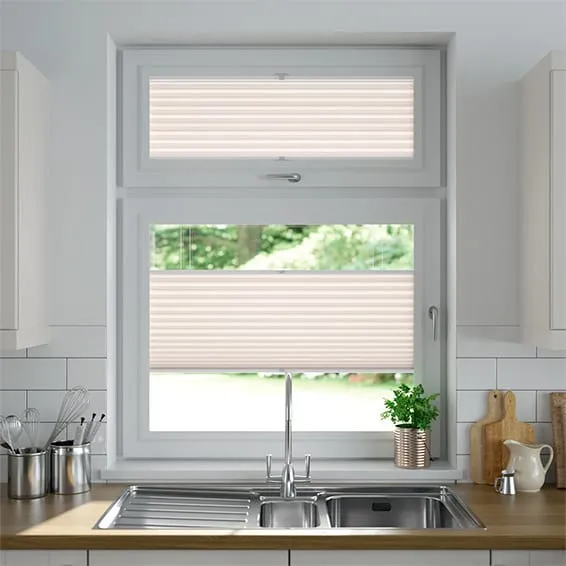
The Perfect Fit Duolight from Blinds 2go is a day-and-night blind in perfect fit format: two alternating horizontal bands of opaque and sheer fabric that sit within the same clip-in frame as a standard roller. By positioning the blind at different heights, you align the stripes to either admit light through the sheer sections or create a more opaque layer by overlapping the solid bands. It gives a degree of in-blind light management that a single-fabric roller can't replicate.
This is a meaningful functional distinction from the other two picks. If you want to use the blind in different conditions - daytime privacy with some light admitted, versus a more closed-down evening setting - the Duolight mechanism handles that adjustment within a single blind. A blackout roller does one thing well but less well at anything else. The day-and-night format suits living rooms and kitchens more readily than bedrooms, where a single reliable blackout tends to be more useful.
Nineteen finishes are listed, all with a "Thermal" label and several with a "Conservatory" variant - making this the most explicitly conservatory-suitable of the three picks. The finish names run to standard neutrals: Cotton, Hopsack, Wheat, Ash Grey, Zinc, and one warmer tone - Dusky Pink. This is a narrower and more restrained palette than the Amor; if you need a specific colour match, the selection here is limited to off-whites, greys, and beiges with one pink option.
Starting from £23.62 makes this the lowest entry point of the three picks by a small margin.
Bella Roller Blinds
at Blinds By Post
A broad-palette perfect-fit range from Blinds By Post.
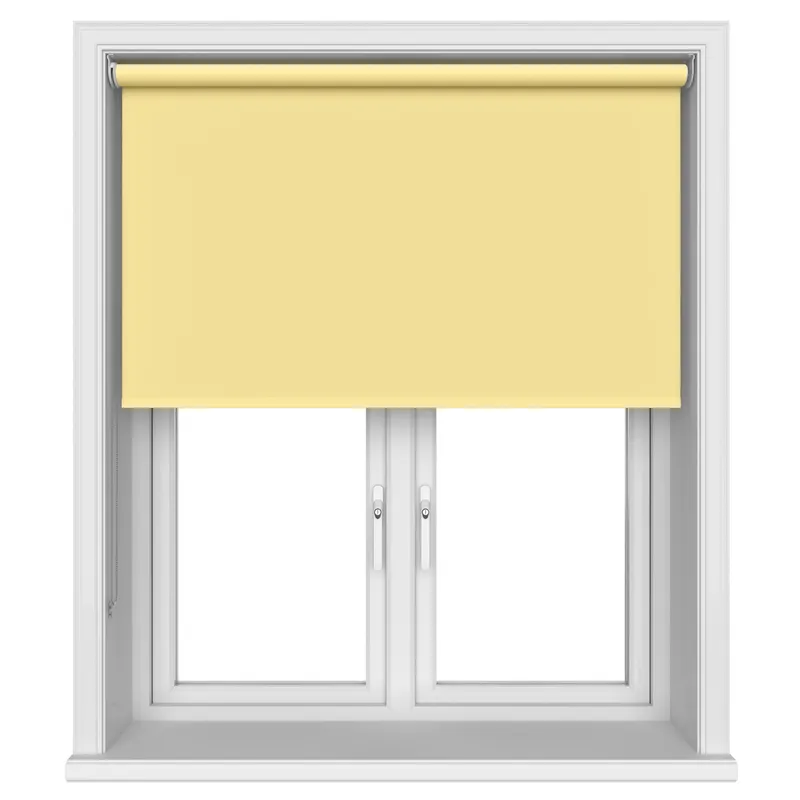
The Bella from Blinds By Post is the most expensive of the three picks, starting from £101.65, and it targets a different part of the market from the other two. Where the Amor and the Duolight offer broadly functional ranges at relatively accessible price points, the Bella positions itself through fabric weight and finish character. The 23 finishes include names like Amalfi, Arcadia, Havana, Mambo, and Tropez alongside more plainly described options like Beige, Snow, and Taupe - a sign that the range is aiming at interior decoration as much as practical window coverage.
The Bella is described by the editor as "best for choice", and that descriptor applies not just to the number of finishes but to their range across the spectrum. The palette includes Lipstick, Ruby, Sloe, Indigo, and Midnight at the more saturated end, alongside Vellum, Oyster, Dove, and Frost at the quieter end. With 23 finishes across that spread, it covers territory the Amor's 28-finish blackout range also covers - but the finish names suggest a different target aesthetic.
The higher price relative to the other two picks is notable. If your primary goal is functional blackout coverage or day-and-night light control, the Amor or Duolight reach those goals at lower cost. Where the Bella earns its price is when the blind's visual character matters - a room where the blind needs to integrate with a considered interior scheme rather than simply disappear into it.
What we didn't include
This guide focuses on roller and day-and-night mechanisms in perfect fit format because those are the most widely available and the most directly comparable across retailers. Pleated perfect fit blinds - which use a concertina-fold fabric rather than a rolling tube - exist in the market but are a distinct mechanism with different fitting depths and stacking behaviour. They suit different window configurations and wouldn't sit cleanly alongside roller picks in the same comparison.
Motorised or electrically operated perfect fit blinds also exist but represent a significantly different price bracket and a different set of installation considerations. The guide keeps its scope to manually operated blinds, where the per-window economics are more typical.