
"Office blinds" is less a product than a cluster of problems: glare on screens, wide runs of glass, a landlord or insurer who specifies flame-retardant fabric, and the daily chore of opening a row of blinds by hand. Autumn and winter sharpen the first of those - the UK sun sits low for most of the working day, and a desk that was comfortable by the window in June is squinting into the light by November. This guide compares three editor-chosen picks that answer three different office briefs: a vertical in flame-retardant fabric, a roller in flame-retardant fabric, and a motorised roller. It is not a general roller or vertical guide; it concentrates on the questions that arise when the room is a workplace, whether that is a commercial unit or the back bedroom.
What 'office blinds' actually covers
Three terms do most of the work in this category, and they are worth separating before you compare anything.
Vertical blinds hang fabric vanes from a top track. The vanes rotate to control light and slide along the track to open, and typical vane widths are 89mm or 127mm. They are the default in offices for a practical reason: they handle wide openings and patio doors better than anything else that is still a blind rather than a curtain, and rotating the vanes sheds a low sun without raising the blind or losing the daylight. The trade-off is a look that reads as commercial - no criticism in a workplace, a mild one in a spare-bedroom study.
Fire-retardant, flame-retardant and FR are used more or less interchangeably by retailers, and we treat them as one label here. In plain terms, a flame-retardant fabric is one treated or constructed to resist catching light and to slow the spread of flame. It is not fireproof, and the label on a listing is the retailer's description rather than anything we have tested. Whether you need it depends on where the blind is going. A home office rarely carries a formal requirement; a shared workplace, a let commercial unit or a public-facing room may well do, set by the landlord, the building's fire risk assessment or the insurer. We can't tell you what your premises require - that is a question for whoever holds responsibility for fire safety there - but if the answer is yes, ask the retailer what test documentation it can supply for the specific fabric, not just the range, before you order.
Motorised blinds replace the chain or cord with a motor. In an office the appeal is partly convenience and partly reach: high windows, long runs of glass and rooms where several blinds should move together are all easier with a motor than a chain. It also removes the operating cord entirely, one of the recognised cord-safe options under UK rules. How a given motor is powered and controlled varies by retailer, so treat those as questions to ask rather than things to assume.
What to look for
- Width of the opening. A wide run of glass or a patio door points to a vertical: the vanes hang from one track and the whole span works as a single blind. Rollers suit standard windows, and retailers set a maximum width per fabric, so check the range's limits against your window before assuming one roller will cover it. Our vertical blinds guide goes deeper on the wide-window case.
- Glare, not darkness. An office rarely needs blackout. Light-filtering or dimout fabrics in lighter colours take the edge off screen glare while keeping the room usable. A blind that can be angled adds something a roller can't: a vertical's vanes cut a low sun at nine and open up again at noon without the drop moving. Reserve blackout for a room that doubles as a presentation space or a bedroom.
- Colour. Lighter colours reflect more summer heat than dark ones and are the usual advice for a screen room. In a workplace they also make several windows easier to match and the result easier to live with for years.
- Fitting. An inside-recess fit gives the cleanest look but needs enough recess depth for the mechanism; a face fix to the wall above covers the edges better and is the fallback where the recess is shallow. Vertical tracks and motorised rollers both need something solid to fix to, so measure depth as well as width and drop.
- Cleaning. Office blinds collect dust rather than kitchen grease. Vertical vanes can be vacuumed and spot-cleaned, and some retailers sell removable vane sets for washing; roller fabrics want a monthly pass with a brush attachment and a damp cloth for marks. Neither is onerous, but a long run of vanes is more work than one flat roller.
- Settle the fire question first. If the premises specifies flame-retardant fabric, make it your first filter rather than your last. It changes which ranges are in play at all, and both FR picks below were chosen for exactly that case.
Our picks


Palette Fr Flame Retardant Vertical Blinds
at So Easy Blinds
Palette Fr Flame Retardant: a vertical from So Easy Blinds with a broad palette.

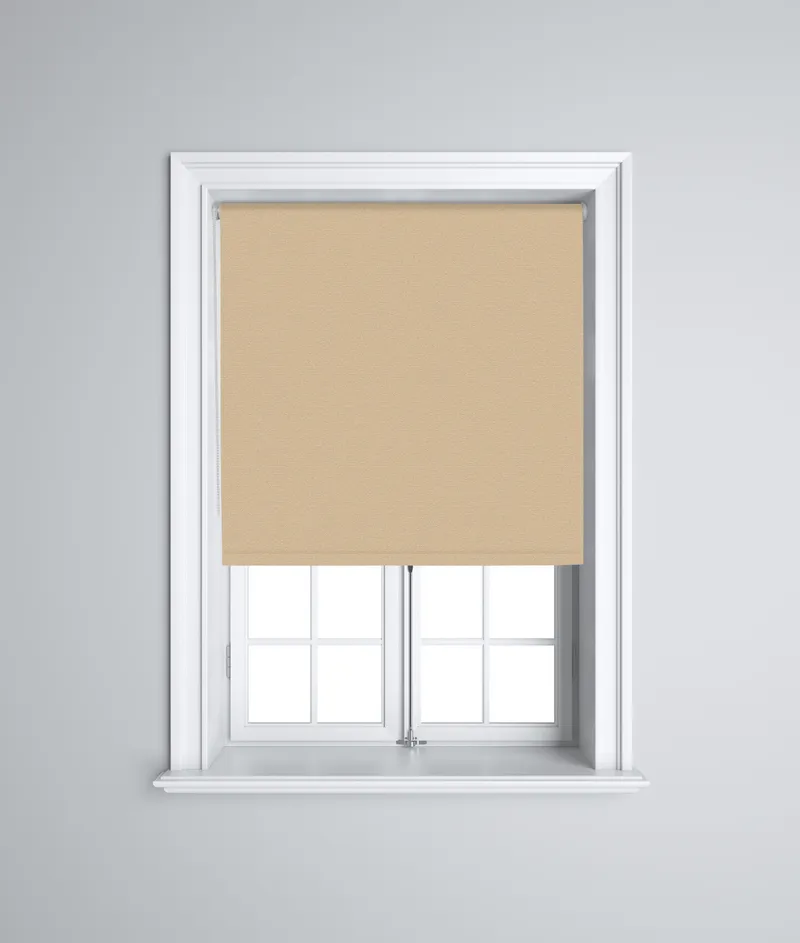
Darktex Fr 3m Swiftpro Premium Roller Blinds
at New Blinds
Darktex Fr 3m Swiftpro Premium: a roller from New Blinds with a broad palette.

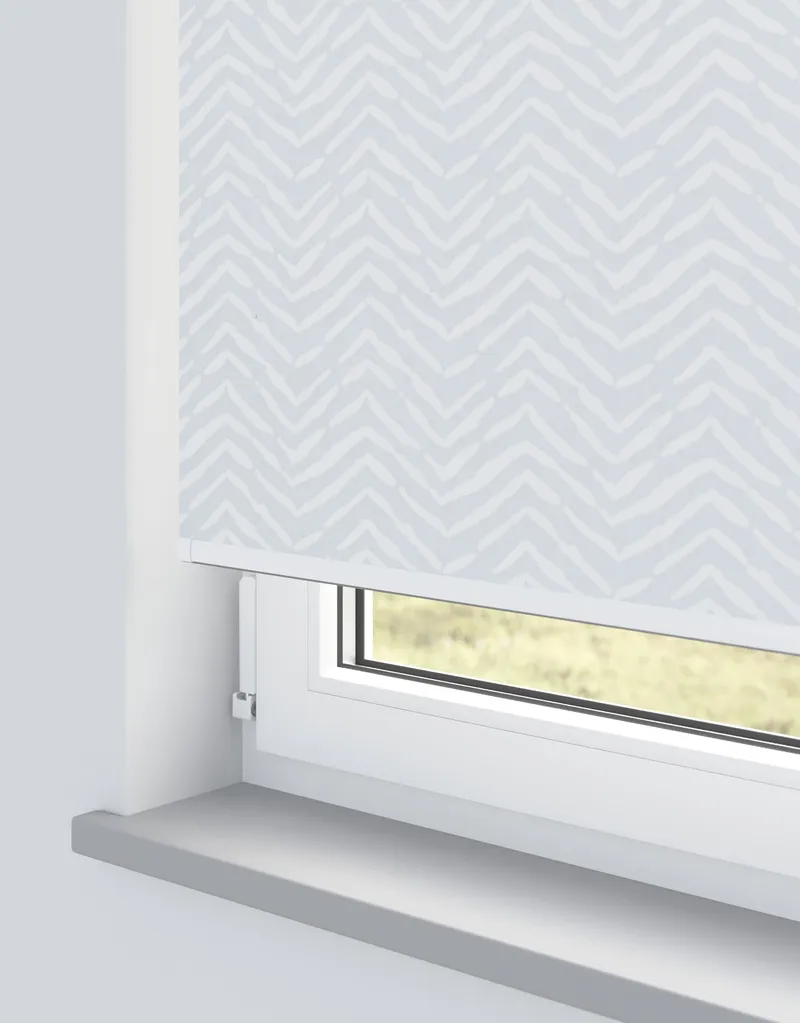
Alta Ice Electrical Roller Blinds
at 1Click Blinds
Alta Ice Electrical: a roller from 1Click Blinds with a broad palette.
Pick details
Best fire-retardant vertical
Palette Fr Flame Retardant Vertical Blinds
at So Easy Blinds
Palette Fr Flame Retardant: a vertical from So Easy Blinds with a broad palette.
The Palette Fr Flame Retardant vertical from So Easy Blinds is the pick for the most common office brief: a wide window or patio door, a workplace that specifies flame-retardant fabric, and a budget that has to stretch across several openings. It has the lowest from-price of the three picks, at £34.57, and as a vertical it does the thing rollers struggle with, covering a wide span as one blind with vanes that rotate to manage glare through the day.
The editor describes it as a vertical with a broad palette, and the finish list bears that out. The spine of the range is workplace neutrals: Bright White, White, Pearl, Cream, Calico, Beige, Sand, Taupe, Pale Grey, Grey, Stone Grey, Ultimate Grey, Charcoal and Black. Lighter colours are the sensible default for a screen room, so the pale end of that list is where we would start. Around it sit accent colours - Redcurrant, Dijon, Copper, Teal, Denim, Dark Blue, Glacier Blue, Sky, Iris, Baby Lavender and Desert Sage - which give a way to pick up a brand colour in a reception area or meeting room without changing range or retailer.
The trade-offs are the usual vertical ones. The look is commercial, which is the point in an office and less of one in a home study. Vanes can swing in a draught; most verticals carry weights and a bottom chain to limit this, and the listing is the place to confirm the detail for this range. The fabric is there to work rather than to decorate, so it won't soften a room the way a Roman would - but nobody buying a flame-retardant vertical for an office is asking it to.
Against the Darktex roller below, the decision is mostly the window. Wide opening, or a need to angle the light rather than block it: the vertical. A standard window where a flat, clean fabric suits the room better: the roller.
Best fire-retardant roller
Darktex Fr 3m Swiftpro Premium Roller Blinds
at New Blinds
Darktex Fr 3m Swiftpro Premium: a roller from New Blinds with a broad palette.
The Darktex Fr 3m Swiftpro Premium roller from New Blinds is the pick where you want the flame-retardant label on a roller rather than a vertical: standard windows, a tidier look than vanes, or a home office that still has to meet a workplace requirement. Its from-price of £61.58 sits between the vertical and the motorised pick, and the roller format keeps the fabric flat to the glass with fewer parts to dust.
What makes the range interesting is that the finish list reads as several fabric families under one name rather than one fabric in a run of colours. The names include Darktex Fr in Beige, Black, Cream, Dark Grey, Light Grey and White; an Essence Fr series whose names carry 1% and 3% labels, in White, White-pearl, White-sand, Pearl, Black, Bronze-black and Grey-black; a set simply called Opaque in Beige, Black, Dark Grey, Light Grey and White; and a few Shot Silk Rb finishes in Pannacotta, Ivory and Moonstone. We haven't tested any of them for light transmission, and the percentages and the word Opaque are the retailer's labels, so the product page is where to confirm how much light each fabric passes.
One point deserves emphasis: not every finish name carries the Fr label - the Opaque and Shot Silk Rb names don't - so if the fire rating is why you're here, confirm the specific fabric rather than relying on the range title, and ask what documentation the retailer can supply for it.
The palette is strictly neutral, whites through greys to black, which for most offices is a feature rather than a gap. Against the vertical, you lose angle adjustment and single-blind coverage of a very wide opening; you gain a flat fabric, a less commercial look and an easier clean. Against the motorised Alta Ice, this is operated by hand and costs considerably less at the from-price, and for a home office with one or two ordinary windows the motor may not justify the step. Our roller blinds guide covers the format more generally.
Best motorised
Alta Ice Electrical Roller Blinds
at 1Click Blinds
Alta Ice Electrical: a roller from 1Click Blinds with a broad palette.
The Alta Ice Electrical roller from 1Click Blinds is the pick for offices where operating the blinds is itself the problem: high windows, a long run of glass, or a meeting room where every blind should drop together before a presentation. It is the dearest of the three at a from-price of £116.20, and the step up from the other two picks is what you pay for electric operation.
Despite the name, the range runs well beyond the Alta Ice fabric itself. The editor describes it as having a broad palette, and the finish list is the longest of the three picks, spanning fabric families such as Maddox, Makira, Perrie, Peyton, Quentin, Romain, Sawyer, Valentina, Banlight Duo Fr and Urban Fr, in colours from Milk, Putty and Oatmeal through Mustard, Lemon and Canary to Navy, Marine, Crimson and Soot. A majority of the finishes carry a premium tag, so the from-price reflects the plainer fabrics and the tagged ones cost more. For a screen room we would still start pale - Milk, Ecru, Oatmeal, Putty - but this is the only pick of the three where a strong colour is a real option.
Two things matter for an office. First, a few of the fabric names - Banlight Duo Fr and Urban Fr among them - carry the FR label that defines the other two picks, so if you need both a motor and a flame-retardant fabric this range has candidates; confirm with the retailer which fabrics are covered and what documentation exists. Second, the range name tells you the blind is electric and nothing more. Whether it runs from the mains or a battery, whether it's operated from a wall switch or a remote, and whether several blinds can be grouped are the questions that decide if a motorised blind suits a given room. Ask before you order.
Against the two fire-retardant picks the comparison is about what the blind has to do. One or two standard windows in a home office: the manual roller does the same job for less. A wide opening: the vertical covers it better. The Alta Ice earns its place where windows are awkward to reach or numerous, where users shouldn't be handling cords, or where you want the blinds to move as one.
What we didn't include
We kept to three picks that answer three distinct office problems rather than listing variations on each. Venetian blinds are a reasonable office choice - the slat tilt gives the same angle control as vertical vanes, and aluminium wipes clean - but they suit standard-width windows rather than the wide spans that push people towards verticals, and this guide leans towards the latter. Blackout is left out as a category because most offices want glare control with the daylight kept, not darkness.
We also stayed with made-to-measure ranges. Ready-made blinds in fixed widths exist and can be cut down, but office windows are rarely standard sizes, and a row of near-misses looks worse in a workplace than at home. Nor is anything here Perfect Fit: those clip-in frames work only on UPVC double-glazed windows with rubber gaskets, and none of the three picks is described as a Perfect Fit option, so this guide assumes a conventional bracket fix.
Price by your window
The from-prices above are each range's starting point; a made-to-measure blind costs more as width and drop increase, and in the Alta Ice's case the premium-tagged fabrics add to that. Each pick's page lets you price a specific width and drop, which is the figure to compare rather than the from-price, because the gap between the three may look different at a patio-door width than at a small window. Measure first - our measuring guide explains the inside versus outside fit allowance and how retailers quote width by drop - then compare the three at your actual size.