
Grey is the most popular blind colour in the country, and a Roman is one of the softest ways to wear it. Where a roller lays grey flat and a venetian slices it into slats, a Roman gathers its fabric into folds as it lifts, so the shade reads as soft furnishing rather than a coated panel. This guide is for anyone who has settled on grey and on a Roman, and now wants to know which shade, which fabric and which retailer. It spans a value plain, a blackout and a patterned designer range, drawn from three different UK retailers.
What grey brings to a room
Grey is the working neutral. It does the job beige and magnolia used to do - sitting back and letting furniture, art and accent colours lead - but with a cooler, more contemporary edge that suits the way most UK homes are now decorated. A grey Roman is the safe choice in the best sense: it will not fight a scheme, will not date quickly, and the soft fold gives it more warmth than a flat panel would.
The reason grey rewards thought is that it has a temperature. Cool greys lean blue and read crisp and modern, flattering a bright or south-facing room but feeling chilly in a north-facing one. Warm greys - greige, taupe-grey, mushroom - carry a hint of brown and feel softer and cosier, the safer bet in a cooler room or against warm wood. Matching the grey's temperature to the room is what separates a grey that looks deliberate from one that clashes with its neighbours.
Depth is the other lever. A pale dove or silver behaves almost as a soft white; a mid steel or pewter reads clearly as a colour; a charcoal or slate grounds a scheme without the full weight of black. A Roman in a deeper grey, lined, gives a particularly rich, dressed finish. Test a swatch against your light and your existing greys, because grey shifts more than most colours between rooms.
What to look for
Pattern or plain. The first decision. A patterned grey - a soft floral, a stripe, a check - makes the window a feature; a plain or textured grey makes it a calm backdrop. Grey carries pattern especially well because the colour itself is quiet.
Blackout vs light-filtering. A Roman's standard lining filters light rather than blocking it, which suits a living room. For a bedroom - grey is a popular bedroom colour - look for a blackout lining, usually an upgrade on the same blind rather than a separate product.
Chain side and safety. Roman blinds raise on a cord or chain, and most retailers let you choose the side. In a child's room, pick a cord-safe option in line with UK requirements.
Recess vs face-fix. Inside the recess looks neat but leaves a small gap each side; a face-fix mount gives a tighter light seal and makes a short window look taller. For a bedroom grey, face-fix is the better choice.
Stacking. A Roman gathers into a stack of pleats at the top when raised, so it always covers a band of glass. On a short window this costs daylight, and a lined grey stacks a little deeper than an unlined one.
How we chose
We wanted three honest routes into a grey Roman rather than three versions of the same blind, so each pick answers a different brief and comes from a different retailer: a low-cost plain for an everyday window, a blackout for a bedroom, and a patterned designer range for a feature. Across the three you get a spread of grey shade and three suppliers to compare.
Our picks

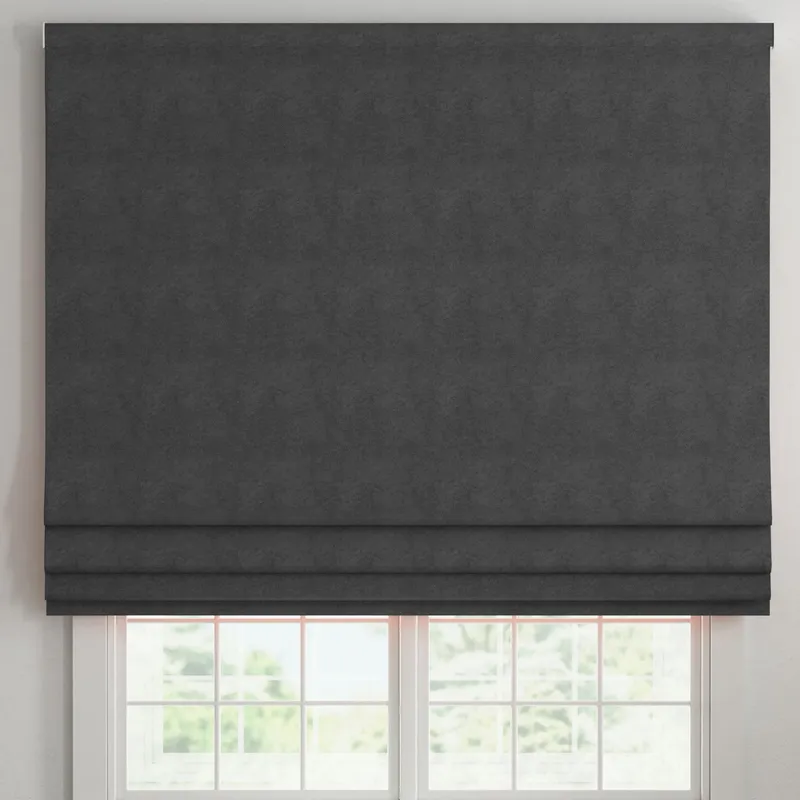
Ante Decor Roman Blinds
at Terrys Fabrics
A low-cost plain Roman from Terrys Fabrics across a wide spread of greys.

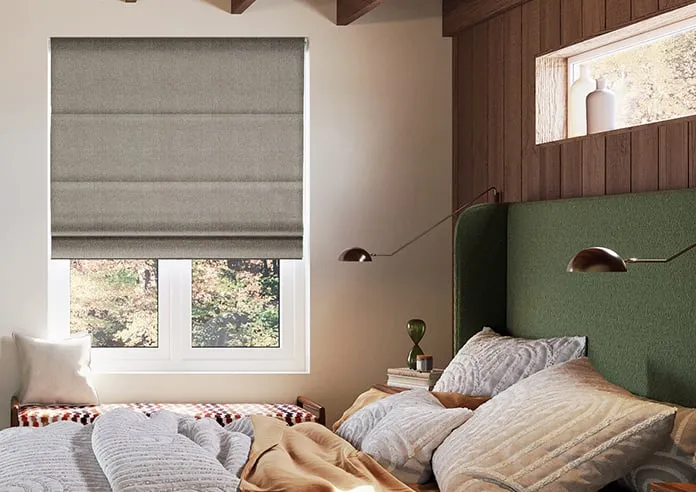
Roslin Roman Blinds
at 247 Blinds
A blackout grey Roman from 247 Blinds for a bedroom.

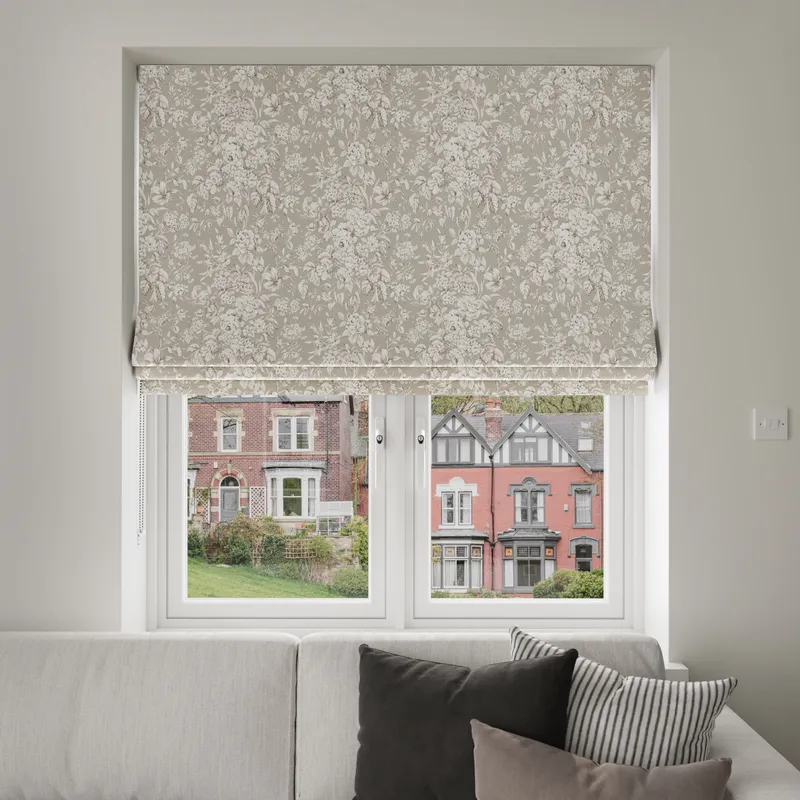
Laura Ashley Roman Blinds
at Blinds By Post
Laura Ashley designs with an exceptionally wide grey choice, from Blinds By Post.
Pick details
Ante Decor Roman Blinds
at Terrys Fabrics
A low-cost plain Roman from Terrys Fabrics across a wide spread of greys.
For a plain grey Roman at the lowest sensible price, the Ante Decor range at Terrys Fabrics is our value pick. It is a generic base cloth rather than a designer print, and that is the point: it carries a wide spread of greys at an entry price well below the patterned options, so it is the sensible choice when you want a calm grey backdrop and are dressing more than one window. As a plain it works best where the pattern in the room comes from elsewhere and the window is meant to settle the scheme.
Roslin Roman Blinds
at 247 Blinds
A blackout grey Roman from 247 Blinds for a bedroom.
When the grey needs to black the room out - a bedroom - the Roslin at 247 Blinds is our blackout pick. The blind is built to block daylight rather than dim it, in a dark grey that reads as a dressed, considered colour while doing the practical job. It sits at a low-to-mid entry price for a blackout Roman, and is the sensible choice when a bedroom needs genuine darkness in a soft-furnishing finish. Pair it with a face-fix fit for the tightest seal. As a different retailer from the value pick, it is also worth comparing on price and fit.
Laura Ashley Roman Blinds
at Blinds By Post
Laura Ashley designs with an exceptionally wide grey choice, from Blinds By Post.
When the grey is meant to be the feature, the Laura Ashley Roman range at Blinds By Post is our pick for pattern. It draws on the Laura Ashley archive of florals, stripes and checks and carries an exceptionally wide grey choice - from pale dove through the mid greys - so you can pick the exact tone as well as the print. It sits at a mid entry price, earning it through the licensed designs and the soft fold a Roman gives them. A print needs a window wide enough to show a full motif. The same range is stocked at Swift Direct Blinds, so you can compare fit and price against a second retailer.
What we didn't include
We have kept this guide to grey, and to a value plain, a blackout and a patterned designer Roman. We have not covered other colours - each has its own guide. We have also not treated blackout beyond the dedicated pick: on most ranges a blackout lining is an order option on the fabric you choose, so for a bedroom ask about it on whichever grey you prefer and pair it with a face-fix fit.