
Black is the most dramatic colour you can hang at a window, and a Roman blind softens that drama into something wearable. Where a roller lays black flat as a sharp panel and a venetian breaks it into slats, a Roman gathers its fabric into folds, so a black reads as rich soft furnishing rather than a hard graphic line. This guide is for anyone who has settled on black and on a Roman, and now wants to know which finish, which opacity and which retailer. It spans a value plain, a blackout and a patterned near-black, drawn from three different UK retailers.
What black brings to a room
Black is confidence. It grounds a scheme, frames a window and reads as deliberate and contemporary - the natural partner to a monochrome, industrial or boldly modern interior, and a sharp counterpoint to white walls and pale wood. In a Roman, black gains something a roller cannot give it: the folds catch light and shadow, so the colour reads as depth and texture rather than a flat block, which makes a black Roman feel dressed rather than severe.
The thing to weigh with black is weight. In a bright, generous room a black blind looks deliberate and anchors the scheme; in a small or north-facing room the same blind can close the space down, especially across a run of windows. Black earns its place where there is light wall, pale floor or metal and glass to play against. A near-black - a deep charcoal, a midnight, a black-ground print - is often the easier choice than a flat true black, carrying the drama with a little more softness.
Because black absorbs rather than reflects light, it does not bounce daylight back into a room the way a pale blind does - a fair trade for the drama, but worth knowing if the room is already short of light. In strong sun a quality dyed cloth resists fading better, worth the small premium on a south-facing window.
What to look for
Pattern or plain. A plain black is the boldest, most graphic choice; a black-ground print - a dark floral, a midnight design - carries the drama with more interest and is often easier to live with than a flat black. Black is an excellent ground for a pattern because the colour itself recedes.
Blackout vs light-filtering. A Roman's standard lining filters light; for a bedroom or a media room - where black is a natural fit - look for a blackout lining, usually an upgrade on the same blind rather than a separate product.
Chain side and safety. Roman blinds raise on a cord or chain, and most retailers let you choose the side. In a child's room, pick a cord-safe option in line with UK requirements.
Recess vs face-fix. Inside the recess looks neat; a face-fix mount gives a tighter light seal. For a black blackout in a bedroom, face-fix is the better choice for darkness.
Stacking. A Roman gathers into a stack of pleats at the top when raised, so it always covers a band of glass. On a short window this costs daylight, and a lined black stacks a little deeper than an unlined one.
How we chose
We wanted three honest routes into a black Roman rather than three versions of the same blind, so each pick answers a different brief and comes from a different retailer: a low-cost plain for an everyday window, a blackout for a bedroom or media room, and a patterned near-black for a feature. Across the three you get plain, blackout and pattern, and three suppliers to compare.
Our picks

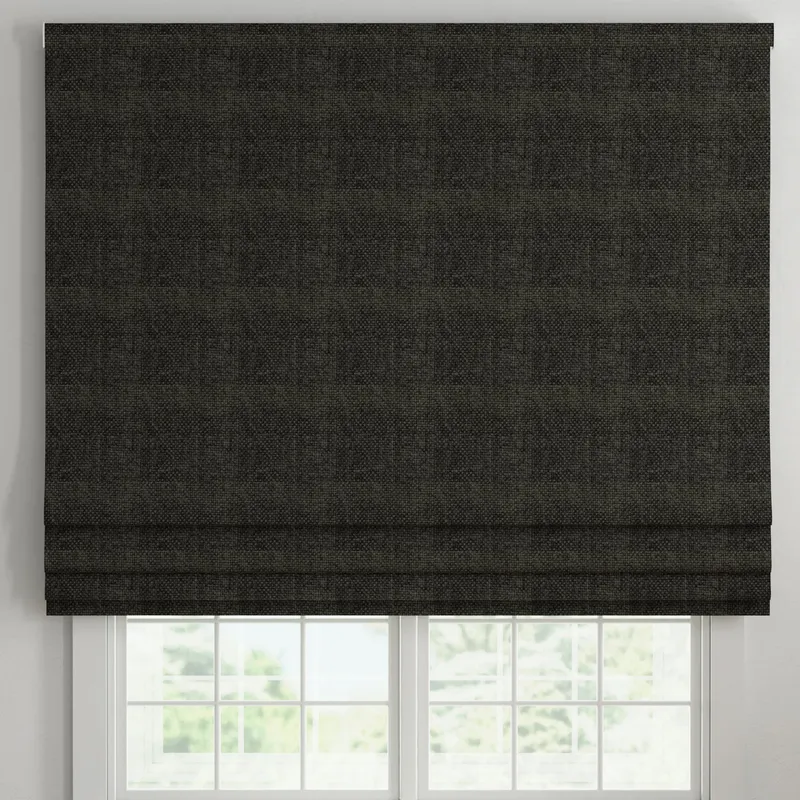
Ante Decor Roman Blinds
at Terrys Fabrics
A low-cost plain black Roman from Terrys Fabrics.
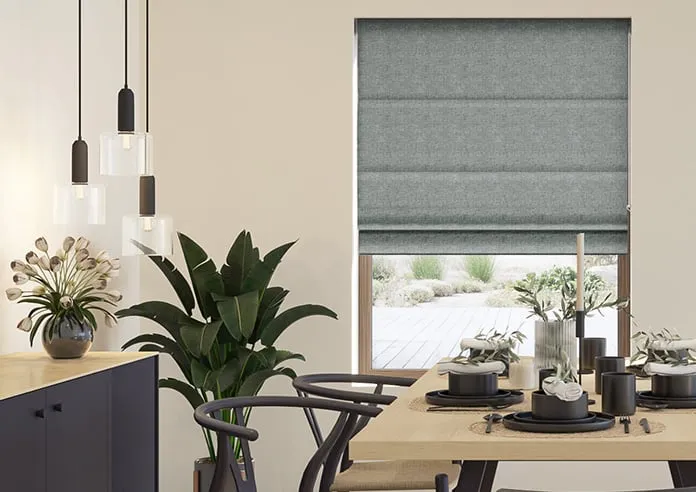
Atina Roman Blinds
at 247 Blinds
A blackout black Roman from 247 Blinds for a bedroom or media room.
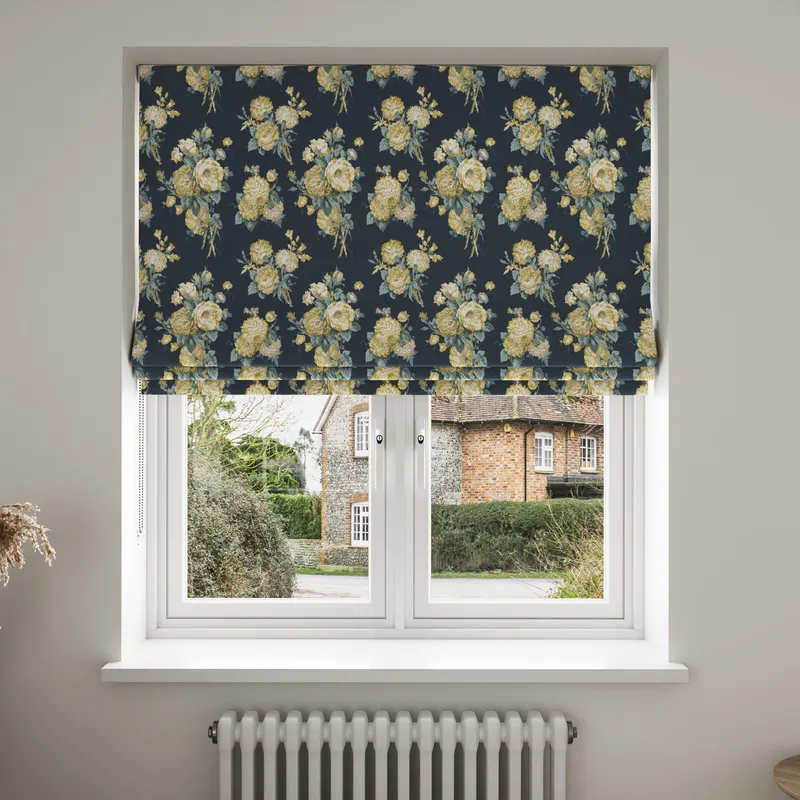
Laura Ashley Roman Blinds
at Blinds By Post
Laura Ashley midnight and near-black designs from Blinds By Post.
Pick details
Ante Decor Roman Blinds
at Terrys Fabrics
A low-cost plain black Roman from Terrys Fabrics.
For a plain black Roman at the lowest sensible price, the Ante Decor range at Terrys Fabrics is our value pick. It is a generic base cloth rather than a designer print, carrying black at an entry price well below the patterned options - the sensible choice when you want a bold black panel and are dressing more than one window. As a plain it makes the most graphic statement of the three, and works best where the rest of the room is kept light around it.
Atina Roman Blinds
at 247 Blinds
A blackout black Roman from 247 Blinds for a bedroom or media room.
When the black needs to black the room out - a bedroom, a media room - the Atina at 247 Blinds is our blackout pick. The blind is built to block daylight rather than dim it, in a black that suits exactly the rooms blackout is for: where you want both genuine darkness and a dramatic, dressed finish. It sits at a low-to-mid entry price for a blackout Roman. Pair it with a face-fix fit for the tightest seal. As a different retailer from the value pick, it is also worth comparing on price and fit.
Laura Ashley Roman Blinds
at Blinds By Post
Laura Ashley midnight and near-black designs from Blinds By Post.
When the black is meant to be a feature rather than a flat statement, the Laura Ashley Roman range at Blinds By Post is our pick for pattern. Its midnight and near-black designs put a print on a dark ground - the drama of black with the interest of a pattern - which is often easier to live with than a flat black, especially in a living room or bedroom. It sits at a mid entry price, earning it through the licensed designs and the soft fold a Roman gives them. The same range is stocked at Swift Direct Blinds, so you can compare fit and price against a second retailer.
What we didn't include
We have kept this guide to black, and to a value plain, a blackout and a patterned near-black. We have not covered other colours - grey, white and the rest each have their own guides. We have also not treated blackout beyond the dedicated pick: on most ranges a blackout lining is an order option on the fabric you choose, so for a bedroom ask about it on whichever black you prefer and pair it with a face-fix fit.