
The Oculus Magic Screen is a roller blind sold by Blinds 2go in 7 colourways, starting from £12.65. The range leans heavily into a neutral palette - whites, creams, greys, and a pair of dark tones - which makes it a practical, if unshowy, option for rooms where the blind needs to recede rather than make a statement.
Who it suits
The Oculus Magic Screen is best placed in living rooms and home offices where you want diffused light rather than complete darkness. A "magic screen" fabric is a translucent mesh-style weave that softens glare and offers a degree of privacy from the outside without blocking views entirely when the blind is down - the right trade-off for a kitchen window over a sink or a study desk facing a busy street. The neutral palette also makes it easier to pair with existing interior colours without the blind becoming a focal point.
It is less suited to bedrooms where genuine blackout is the goal. A mesh fabric will not block early-morning light in any meaningful way, and anyone who needs real darkness for sleep should look at an opaque or blackout roller instead. As the UK moves into spring and early-morning light creeps in well before 6am, the gap between a translucent fabric and a blackout one becomes very apparent - for bedrooms, be honest with yourself about which side of that divide you need. Similarly, the Oculus is not the natural choice for a bathroom, where a PVC or wipe-clean fabric would be more appropriate for dealing with condensation and splashing.
The colours
7 colours available



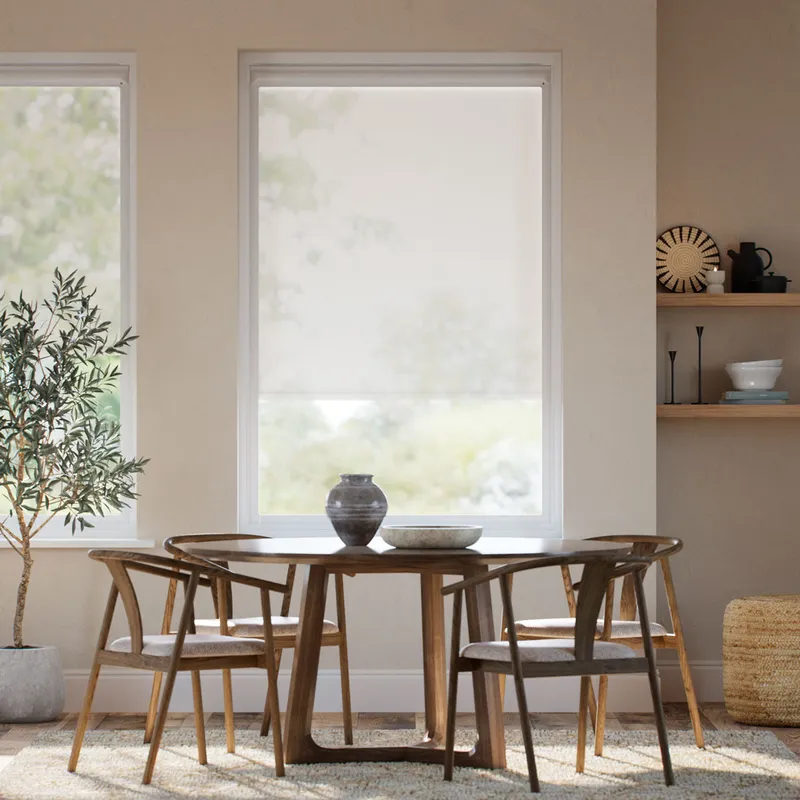

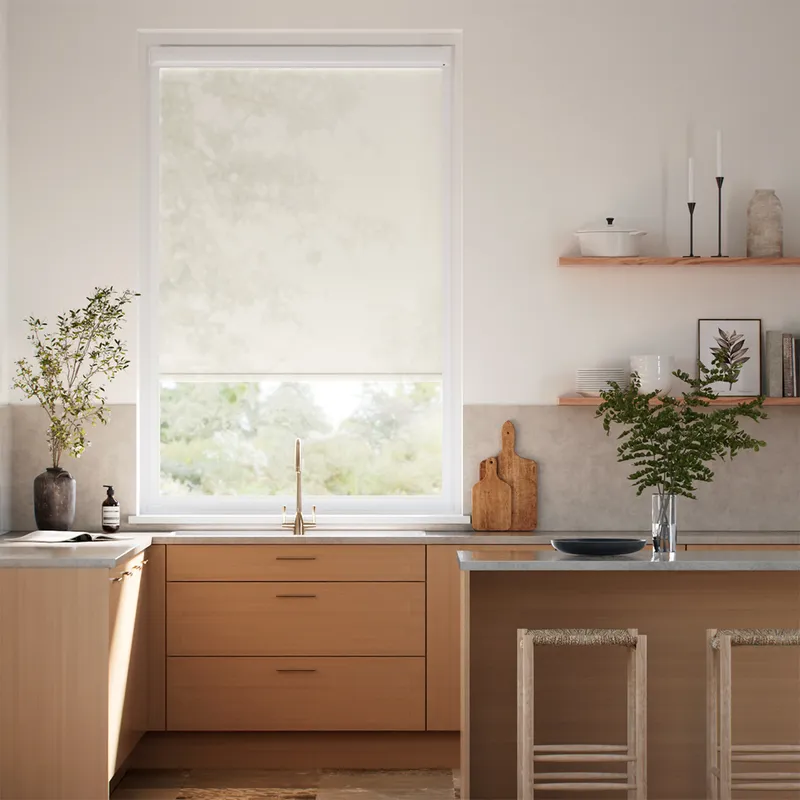



The palette splits neatly into two groups: the lighter neutrals - Cotton White, Pure White, Bone White, Alabaster, Pearl, and Linen - and the mid-to-dark tones of Modern Grey, Slate, Dune, Midnight, and True Black. There is no strong colour here in the conventional sense; Midnight sits at the blue end of the grey family, and Dune is a warm sandy beige, but nothing in the range is bold or pattern-led. That consistency is a feature rather than a limitation if you are fitting several windows in the same space and want them to read as a set.
The darker tones - Midnight and True Black - will absorb more light and give a slightly more dramatic look from outside, while the whites and creams keep a room feeling open and add minimal visual weight. For north-facing rooms that already feel dim, the lighter finishes are the more practical choice; for a south-facing room with plenty of light, the greys and darker tones can help take the edge off without plunging the space into shadow.
Price by your dimensions
Made to measure. Check Blinds 2go for the price at your exact window size.
Price up 2% since 7 Oct. (our checks since 6 Jul)
With a starting price in the low teens, the Oculus Magic Screen sits at the accessible end of made-to-measure roller blinds. As with most made-to-measure ranges, the price climbs as the width and drop increase - the widget above shows what your specific window dimensions would cost.
How it compares
Within the roller blind category, the key decision is usually between a light-filtering fabric and a blackout or dimout one. The Oculus Magic Screen is firmly in the light-filtering camp; if your primary concern is morning light in a bedroom or a shift worker's sleep schedule, a heavier opaque fabric from the same retailer would serve better. Where the Oculus earns its place is in situations where you want to reduce glare and gain some privacy without losing the sense of natural light in a room - that is a genuinely different use case, not just a style preference.
Day-and-night or zebra-style blinds offer a similar in-between light-control proposition with the added ability to switch between full-stripe and offset positions, though typically at a higher price point. For most living-room and office installations, the simplicity of a single translucent fabric is a reasonable trade-off.