
Natural blinds are one of those categories where the word means different things to different buyers. For some it means actual natural fibres - jute, linen, cotton. For others it simply means a colour palette: warm beiges, oat tones, undyed creams, earthy greys. The ranges we cover tend to cover the second meaning more than the first, but they overlap in ways worth understanding. This guide covers six blind types - roller, roman, venetian, vertical, pleated, and day and night - with one honest pick in each category drawn from ranges across UK retailers.
What "natural" actually means in blinds
The most literal interpretation is fabric composition: jute, seagrass, bamboo, and woven grasses are all genuinely natural-fibre materials. They tend to appear as roller or roman-style blinds, they filter light rather than blocking it, and they bring obvious texture to a room. They are, by their nature, not blackout.
A second, looser definition covers synthetic fabrics designed to look natural: polyester in Hessian weaves, textured chenille-style rollers, printed linen effects. These can achieve any opacity level from sheer to blackout while keeping the palette and texture of natural material. Most of the picks in this guide fall into this category.
The third meaning is simply colour: beige, oat, taupe, stone, cream, warm white. A room decorated with natural-fibre furniture and rattan accessories needs a blind that sits in that palette; the exact fabric composition matters less than the visual warmth of the colour.
It is worth being honest that the lines between these three definitions are blurred in retail. A "Natural Hessian" finish on a roller blind is almost certainly a woven polyester backing rather than actual hessian - but the texture and tone are the point, not the fibre certificate.
What to look for
Opacity and use case. If you want a natural-look blind for a bedroom, you need a blackout or at minimum a dimout fabric regardless of palette. Many earthy neutrals are available in blackout - the Twistfit pleated in Natural Beige is one example. If you are furnishing a living room where daytime visibility matters, a light-filtering roller in Taupe Brown or Almond will serve better than a heavy dimout. Match the light class to the room before choosing the colour.
Fabric weight and hang. Heavier roller fabrics hang more cleanly and are less likely to flap in a draught near a door or window. If the room has a through-flow - kitchen onto garden, hallway - a weightier fabric will behave better. The trade-off is that heavier fabrics stack more visibly when raised.
Blind type and window shape. Roman blinds suit rectangular windows in traditional and country-style rooms. Vertical blinds are the practical choice for patio doors or wide conservatory windows. Venetians offer precise slat-angle control that other types cannot match - useful if you want to admit low winter light without losing privacy. Day and night blinds sit in the middle: less precise than venetians, softer-looking than a standard roller.
Room suitability for natural fibres. If your interest is in actual natural fibre rather than synthetic lookalikes, keep humidity in mind. Real jute and woven grass are not suited to bathrooms or damp kitchens - moisture will warp and discolour them. Synthetic "natural-look" fabrics are more tolerant.
Fitting. Made-to-measure is the standard for all the ranges in this guide. Measure width and drop carefully - UK convention is always width first, then drop, in millimetres. Inside-recess fits give a cleaner look; outside (face) fits cover edge-leak more effectively. Most blind mechanisms support both.
Care. Most polyester-backed roller and roman fabrics can be vacuumed with a brush attachment and spot-cleaned with a damp cloth. Venetian slats wipe down individually. Real natural-fibre blinds (where applicable) are typically dry-dust only - check the retailer's care instructions before ordering.
Our picks


Splash Roller Blinds
at Swift Direct Blinds
A roller from Swift Direct Blinds with 35 finishes including Natural Hessian, Mushroom Brown, and Taupe Brown - earthy neutrals that suit a natural-palette interior without sacrificing made-to-measure fit.

Laura Ashley Roman Blinds
at Blinds By Post
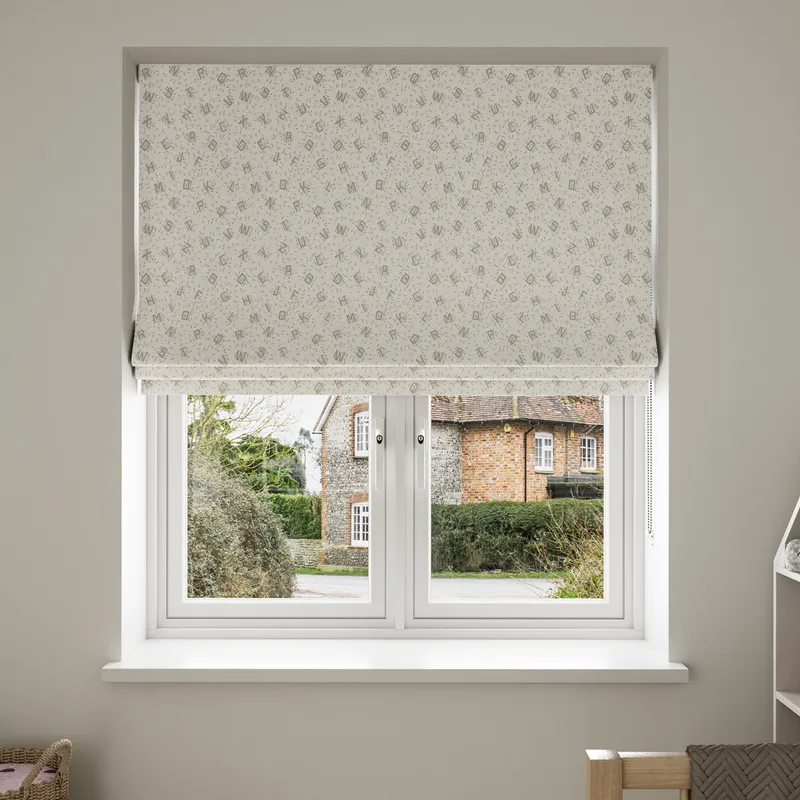
A roman from Blinds By Post drawing on the Laura Ashley fabric library - 134 finishes spanning botanical prints, linen plains, and meadow patterns, from £20.57.


Turin Venetian Blinds
at Swift Direct Blinds
The Turin from Swift Direct Blinds is a 25mm aluminium venetian with a warm Neutral (premium) finish that reads closer to parchment than standard white, from £6.71.

Bella Vertical Blinds
at Blinds By Post
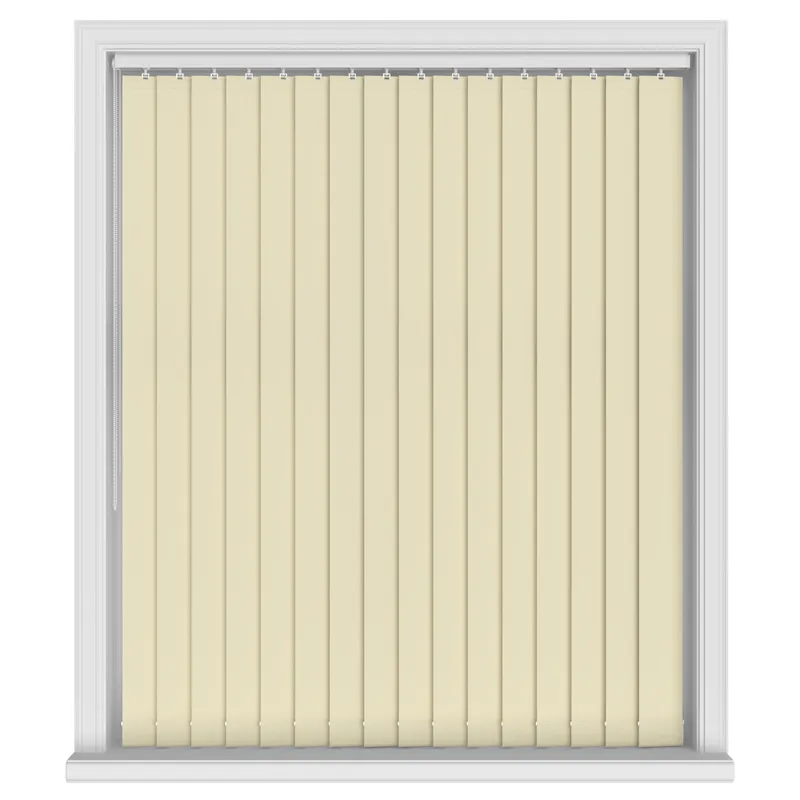
The Bella from Blinds By Post covers 55 vertical-blind finishes including Hessian, Oyster, and Vellum - textural options that avoid the flat commercial look typical of vertical louvres, from £10.70.

Blackout Pleated Blinds
at Blinds By Post
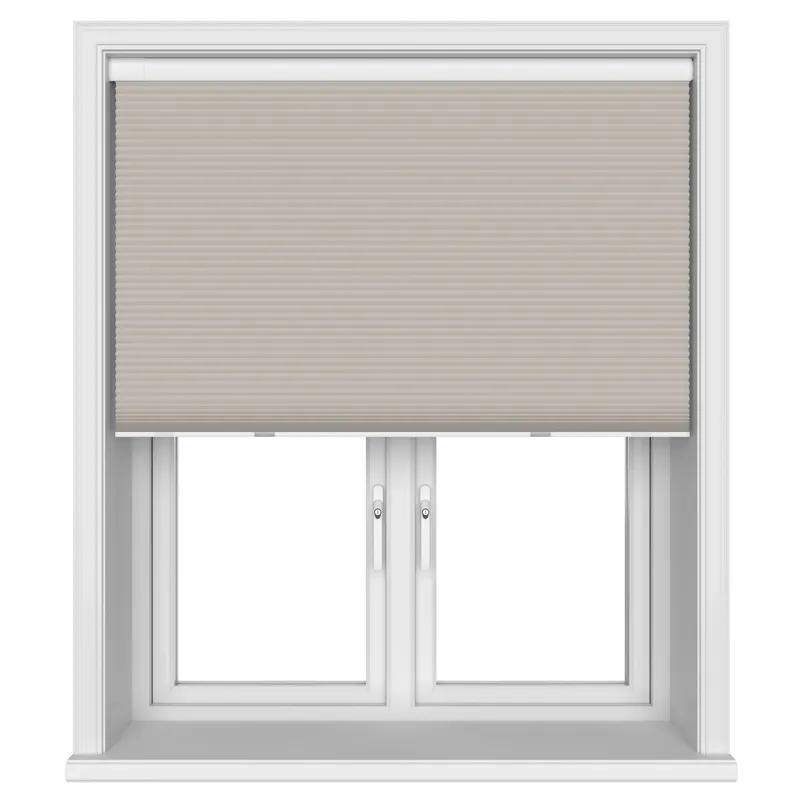
The Twistfit blackout pleated from Blinds By Post comes in 7 finishes including Natural Beige and Stone Grey, with a no-drill Twistfit fitting for UPVC windows, from £46.78.
Day Night Day and Night Blinds
at Make My Blinds
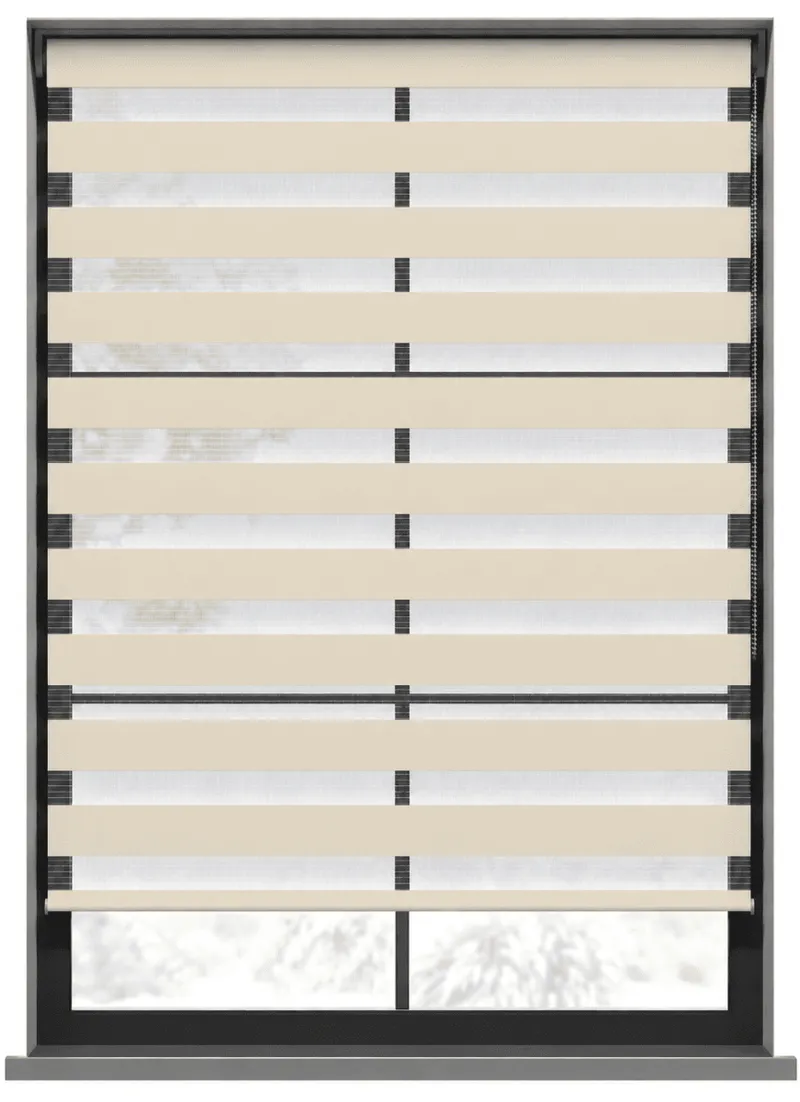
Make My Blinds' Day and Night blind in 2 woven finishes - Natural Daisy Fresh and Woven Barley - brings textured, organic character to a blind type that usually comes only in plain greys, from £9.62.
Pick details
Splash Roller Blinds
at Swift Direct Blinds
A roller from Swift Direct Blinds with 35 finishes including Natural Hessian, Mushroom Brown, and Taupe Brown - earthy neutrals that suit a natural-palette interior without sacrificing made-to-measure fit.
The Splash Twist roller from Swift Direct Blinds spans 35 finishes - a broad palette that includes several genuinely natural-looking tones: Natural Hessian, Mushroom Brown, Taupe Brown, Mocha Brown, and Almond sit alongside a full range of greys, blues, pinks, and greens. The range starts from £8.36, making it one of the more accessible entry points for a made-to-measure roller.
The natural-palette options here are polyester with a textured backing - they read as hessian or linen without being either. That matters if you need a blackout or dimout result: a woven jute blind cannot achieve either, but a woven-look polyester can. For buyers who want the look of a natural-fibre roller but need the room properly dark, this is the practical path.
Compared to the other roller at the price end of this guide, the Splash Twist offers noticeably more colour choice, which means you can match it to a specific interior palette rather than settling for the nearest off-white.
Laura Ashley Roman Blinds
at Blinds By Post
A roman from Blinds By Post drawing on the Laura Ashley fabric library - 134 finishes spanning botanical prints, linen plains, and meadow patterns, from £20.57.
The Laura Ashley range at Blinds By Post is the pick for buyers who want a roman blind with genuine decorative character. At 134 finishes and starting from £20.57, it covers botanical prints, linen plains, meadow patterns, and striped weaves - the breadth of a fabric collection rather than a production-dye run.
Roman blinds in this range fold into horizontal pleats when raised, stacking at the top in the characteristic way. That means they occupy some of the window when fully open - relevant in a room where light from a fully-opened window matters. The trade-off is visual warmth: a well-folded roman in a botanical print fills a room in a way no roller can.
The natural palette within the range includes linen-look plains (Eva Linen, Pembrey Hazelnut), botanical prints in greens and earth tones (Pussy Willow Fern Green, Belvedere Hedgerow Green), and soft neutrals (Coralie Pearl, Walled Garden Dove Grey). These are decorative fabrics - roman blinds at this price point are a furnishing choice, not just a light-control solution.
If you are choosing between a roman and a roller for a natural-palette room, the roman gives more presence; the roller gives a cleaner, flatter profile. Living rooms and dining rooms tend to suit romans; kitchens and bathrooms lean roller.
Turin Venetian Blinds
at Swift Direct Blinds
The Turin from Swift Direct Blinds is a 25mm aluminium venetian with a warm Neutral (premium) finish that reads closer to parchment than standard white, from £6.71.
The Turin is Swift Direct Blinds' aluminium venetian range, listed from £6.71. It comes in 3 finishes: a 25mm Neutral (premium option), 25mm Smoke Grey, and Matt White. Of these, the 25mm Neutral is the pick for natural-palette rooms - a warm off-white that sits noticeably closer to a bone or parchment tone than the cooler Matt White.
Venetians are the pick when you need adjustable light control that fabric blinds cannot deliver. By rotating the 25mm slats you can admit low-angle afternoon sun while keeping sight-lines private, or close them fully for near-blackout conditions. That slat-angle control makes venetians useful in west-facing rooms where summer sun is a problem but full blackout is not needed.
The Turin's aluminium slats are practical for kitchens and bathrooms - wipe-clean and moisture-tolerant - which suits the neutral palette well in those rooms. Real wood venetians offer a warmer aesthetic but are not suited to humidity; the Turin's aluminium construction avoids that constraint while still offering a near-neutral colour option.
The 3-finish range is narrow compared to most of the other picks in this guide. Buyers who want a venetian in a specific earthy tone - warm taupe, deep tan, or warm brown - will need to look elsewhere; the Neutral finish is a near-white warm cream, not a mid-tone earth.
Bella Vertical Blinds
at Blinds By Post
The Bella from Blinds By Post covers 55 vertical-blind finishes including Hessian, Oyster, and Vellum - textural options that avoid the flat commercial look typical of vertical louvres, from £10.70.
The Bella range from Blinds By Post addresses one of the genuine weaknesses of vertical blinds: they tend to come in wipe-clean PVC-look fabrics that read as flat and commercial. At 55 finishes and starting from £10.70, the Bella works against that tendency with a range that includes Hessian, Vellum, Oyster, Gable, and Portobello alongside the standard greys, blues, and whites.
Hessian in particular translates unusually well to a vertical blind. The coarse-weave texture reads as genuinely natural even in louvre form, which is not a claim you can make for most vertical-blind fabrics. Vellum and Oyster sit in a warm cream-to-off-white range that photographs warmly and suits a room with a lot of light wood or rattan.
Vertical blinds are the functional choice for patio doors and wide windows. The Bella range addresses the style objection to verticals - that they look like office furniture - while keeping the practical advantages: easy operation across a wide span, independent vane rotation for directional light control, and the ability to pull the blind entirely to one side without it stacking on the window glass.
For a conservatory with a wide aperture or a kitchen-diner with bifold doors, a natural-finish vertical blind is a more practical solution than a roman or roller, which would need multiple blinds across the same span.
Blackout Pleated Blinds
at Blinds By Post
The Twistfit blackout pleated from Blinds By Post comes in 7 finishes including Natural Beige and Stone Grey, with a no-drill Twistfit fitting for UPVC windows, from £46.78.
The Twistfit Blackout from Blinds By Post is the pleated pick, starting from £46.78. It comes in 7 finishes: Natural Beige, Sky Blue, Carbon Black, Pebble Grey, Slate Grey, Stone Grey, and Soft White. The "Twistfit" name refers to the fitting system - a no-drill mechanism that clips into the UPVC window rebate without screws.
Pleated blinds fold into neat horizontal stacks when raised, taking up less window height than a roman blind for a given drop. The blackout fabric in this range adds an insulating backing that also reduces light transmission to near-zero - the retailer describes this as blackout, which at the fabric level it is; edge-leak remains a function of fitting rather than fabric.
Natural Beige is the natural-palette entry point here. It is a warm, medium-depth beige - not a pale cream, but a tone that reads as earthy against timber frames or stone-coloured walls. Stone Grey is the next-closest if you want a natural-palette grey with warmth rather than cool steel.
The no-drill fitting makes this range relevant to renters. It is specifically designed for UPVC windows with a suitable rebate depth; buyers with wooden or aluminium frames will need a different fitting approach. At £46.78 from, it is the most expensive pick in this guide on a per-blind starting price, reflecting both the blackout fabric construction and the Twistfit fitting system.
Day Night Day and Night Blinds
at Make My Blinds
Make My Blinds' Day and Night blind in 2 woven finishes - Natural Daisy Fresh and Woven Barley - brings textured, organic character to a blind type that usually comes only in plain greys, from £9.62.
Make My Blinds' Day and Night range in the natural colourway comes in 2 finishes: Natural Daisy Fresh (a premium-tier option) and Woven Barley. Both are textured, warm-toned fabrics that hold the visual character of a natural-material room far better than the typical plain-white or plain-grey day and night blind. Prices start from £9.62.
Day and night blinds work by layering two fabrics - alternating opaque and sheer horizontal stripes - that slide past each other. Align the stripes and the blind is at its most private; offset them and sheer sections admit diffused light. The result sits between a sheer net and a standard dimout blind: more flexible than either, though not full blackout in any position.
Woven Barley reads as a warm, straw-coloured weave - closer in appearance to a natural-grass or rattan texture than the flatter fabrics in most of this guide. Natural Daisy Fresh is lighter and has more of a linen or cotton-weave character. Both translate the idea of natural materials into a day and night construction that is otherwise an inherently modern blind type.
The day and night format is most useful in rooms where you want privacy without sacrificing daylight - living rooms, studies, and dining rooms with overlooked windows. Bedrooms are a qualified fit: if genuine darkness is the priority, a blackout roller or the Twistfit pleated will serve better.
What we did not include
This guide does not include actual natural-fibre woven blinds - seagrass, jute, or bamboo roller and roman blinds sold as a specific natural-material product. Those blinds have a distinct texture and character but they are not blackout or dimout; they filter light loosely and are not suited to bedrooms or any room where light control matters. A room that needs both a natural aesthetic and genuine darkness is better served by a natural-palette synthetic fabric than a natural-fibre one that cannot block light.
We also did not include plantation shutters. Shutters sit at a different price point and represent a different type of purchase - fixed, more structural, typically installed by a fitter rather than the homeowner. The natural aesthetic of timber shutters is genuine, but the buying decision is different enough that this guide is not the right place to compare them against made-to-measure blinds.
Price by your window
Each pick in this guide has a price-by-dimensions table on its range page. Starting prices cover smaller windows; the cost rises with width and drop in the usual way for made-to-measure blinds. If you have identified the pick that fits your room, the range page will show you exactly what it costs at your window size.