
Electric blinds put a small motor where the chain or cord used to be, so the blind raises, lowers or tilts at the press of a button, a tap on a phone, or a word to a smart speaker. They are no longer the preserve of new-builds and grand designs: the motors have shrunk, rechargeable batteries have made fitting them a screwdriver job rather than an electrician's, and the price gap over a manual blind has narrowed. This guide covers what to look for and three electric blinds we rate in 2026 - a value motorised roller, a wood-look motorised venetian, and a fire-rated coloured roller - across two UK retailers.
What an electric blind actually is
The blind itself is the same fabric and style you would buy manually; what changes is the operation. A motor lives inside the roller tube, the venetian headrail or the vertical track, and you control it instead of pulling a cord. That brings three things a manual blind cannot:
Reach. A motor moves a blind you physically cannot - the high window over a stairwell, the run of glass above a bifold, a conservatory roof line of windows that would mean a ladder and a pole every morning. This is the single best reason to go electric, and why large, tall and awkward windows are where motorised earns its keep.
No cord. Because there is no chain or pull cord, an electric blind is cord-free by design, which makes it one of the safest choices for a child's room - there is simply no looped cord to be a hazard. (See our guide to blind cord safety for why that matters.)
Routine and absence. Worked by a timer or an app, blinds can lower at dusk for privacy, rise at dawn, or run while you are away so the house does not look empty. None of that needs you to be standing at the window.
What to look for
Battery or hardwired. This is the first decision. A rechargeable battery motor is the easy route: it clips in like a manual blind with no wiring, and you top the battery up every few months by cable or a small solar panel. A hardwired (mains) motor never needs charging and is the tidiest long-term answer, but it wants the cable run and an electrician, so it is best planned into a refit or a new window rather than retrofitted. For most homes adding electric blinds to existing windows, battery is the sensible choice, and it is the kind most of the picks below use.
How you control it. The basic kit is a handheld remote; many add a wall switch, a phone app through a small hub, timers and scenes, and increasingly voice through Alexa or Google. A single remote is plenty for one room. The app and timers come into their own across a whole house, where you might raise every blind with one tap in the morning or set a south-facing room to shade itself in the afternoon. If a smart-home setup matters to you, check the blind works with a hub you already run rather than a proprietary one you do not, and that you can group blinds together rather than control each on its own.
Where you buy it. There are two routes, and our picks show both. A dedicated motorised retailer sells nothing but electric blinds, so the whole range is built for it and the choice of motor and control is widest. A mainstream retailer instead offers motorisation as an upgrade on its standard ranges - you pick the fabric you would have chosen anyway and add the motor. The upgrade route often lists a lower entry price and keeps the blind in the same family as the rest of your windows; the specialist route gives more control options and a deeper motorised-only range. It is worth pricing the same style both ways before you decide.
The cost. Electric is a genuine step up in price over a manual blind of the same fabric and size - you are paying for the motor and the battery or wiring on top of the blind. Expect motorised blinds to start around the £100 mark where a manual equivalent might be £20 to £40, and more for larger sizes, wood and premium control. That premium reads very differently window by window: it is easy to justify on an unreachable rooflight you would otherwise never use, and harder on a small, easily-reached window where a chain does the job. Many people motorise the two or three windows that genuinely benefit and leave the rest manual.
Style and colour are not limited. Going electric does not mean settling for a plain white roller. Motorised blinds come as rollers, venetians, verticals, romans and pleated, in the full run of colours and finishes - so a green or red electric roller, or a wood-effect venetian, is as available as the fabric is manually. Opacity is your choice too: a motorised blind can be blackout for a bedroom or light-filtering for a living room, exactly as a manual one would be.
Where electric blinds make the most sense
Electric blinds are worth the premium in some places far more than others, so it helps to know where they pull their weight.
The clearest case is windows you cannot easily reach: the tall window over a stairwell, a run of glass above bifold or French doors, the high lights in a double-height hall, or a conservatory roof. A pole or a ladder turns daily use into a chore, and most people simply leave those blinds where they are, which defeats the point of having them. A motor makes them usable again.
Conservatories and garden rooms benefit twice over, because they often pair height with a lot of glass: motorising the set lets you shade the room as the sun tracks round without a circuit of the room with a wand.
In a bedroom, the draw is routine rather than reach - blinds that lower at dusk and lift at dawn on a timer, so you wake to daylight and the room is private by evening without a thought.
A child's room is the safety case: with no cord at all, the most common blind hazard is simply designed out.
A second home or a house left empty gains a security angle - blinds that move on a schedule make a place look lived in. And for anyone with limited mobility or reach, a remote or a voice command replaces a pull that may be genuinely difficult. None of these needs a full smart home; a single remote covers most of them, with the app as an optional extra.
Fitting and living with them
A battery-motorised blind fits much like a manual one - it clips into the same sort of brackets, with no wiring - so it is a realistic do-it-yourself job at an accessible window. A hardwired blind is a different matter: the cable has to reach a fused spur, which usually means an electrician and is far easier to plan into a refit or a new window than to add to an existing one.
The honest trade-off with battery is the recharging. Depending on the blind's size and how often it runs, a charge lasts somewhere between a few months and the best part of a year; a small solar panel sited on the glass can stretch that further, and a low-battery warning gives you notice rather than a surprise. It is a cable and an hour or two rather than a real chore, but it is not nothing, and it is the reason a much-used or very large blind is sometimes better hardwired from the start.
Modern motors are quiet - a soft hum for a few seconds - rather than the grind older ones made, so a blind on a dawn timer will not wake the house. Most include a manual override or a wall switch, so a flat battery or a router dropout never leaves a blind stuck open. And as with any blind, check the guarantee: the motor is the part that carries the longer warranty, so it is worth knowing how long it runs and what it covers before you buy.
How we chose
The three picks below are spread on purpose. One comes from a retailer that sells nothing but electric blinds, where the choice of motor and control is widest; two come from a mainstream retailer that adds motorisation as an upgrade to its standard ranges, which usually keeps the entry price down. Between them they cover the ground most buyers start from: a value blackout roller for a bedroom, a wood-look venetian for a living room, and a fire-rated coloured roller for a room that calls for one. All three are cord-free. The fabric, size and price shown track each retailer's live listing, so read them as a sensible starting point for the style rather than the only version on offer - most come in a range of colours and widths beyond the one pictured.
Our picks

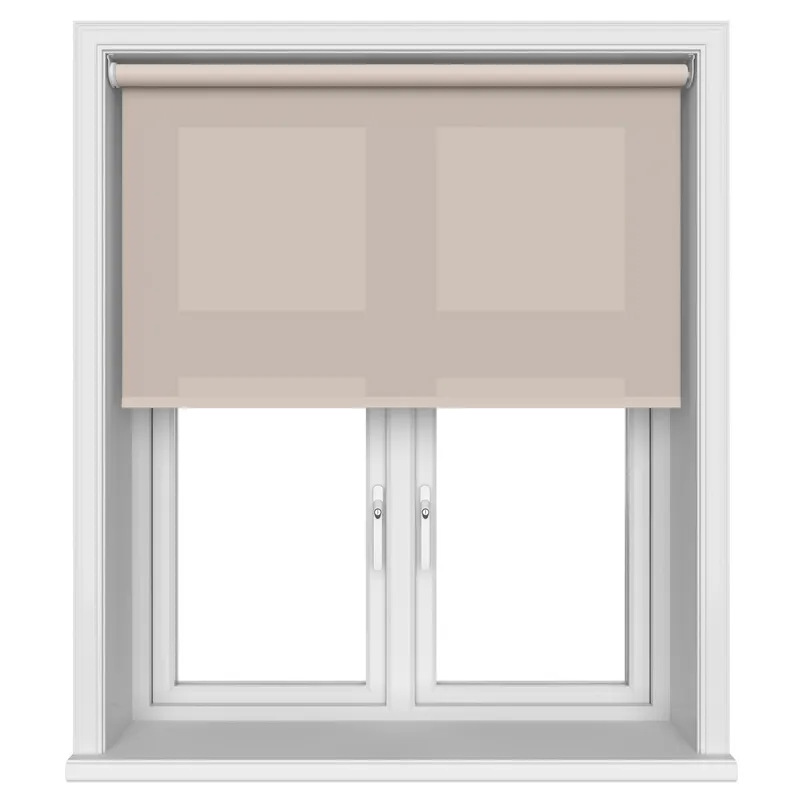
Accent Roller Blinds
at Motorised Blinds
A blackout motorised roller from a dedicated electric-blind retailer, in a wide colour range - the affordable way in.

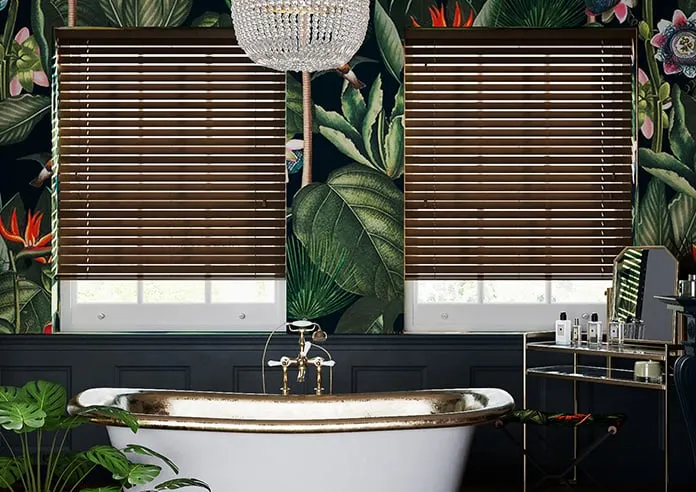
Kolsva Venetian Blinds
at 247 Blinds
A wood-look motorised venetian from 247 Blinds, proof you don't have to go to a specialist for an electric blind.

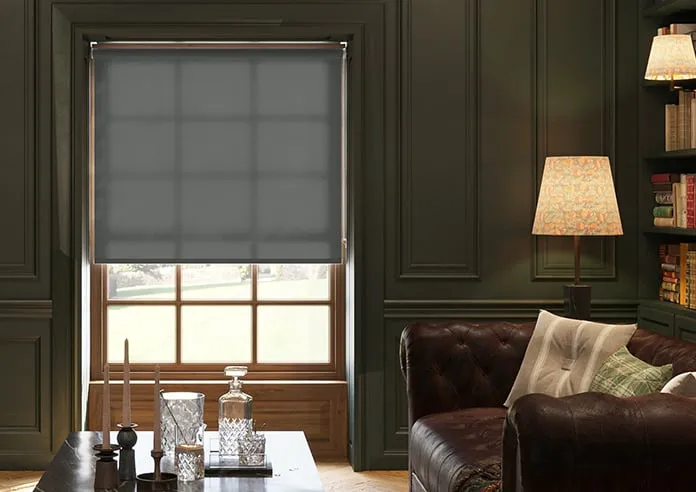
Roma Fr Roller Blinds
at 247 Blinds
A fire-rated motorised roller from 247 Blinds, available in azure and other colours where a coloured or FR fabric is needed.
Pick details
Accent Roller Blinds
at Motorised Blinds
A blackout motorised roller from a dedicated electric-blind retailer, in a wide colour range - the affordable way in.
The Accent motorised roller from Motorised Blinds is the gentle way into electric blinds. The retailer sells nothing but electric, so the blind is built around the motor rather than having one added on, and the rechargeable battery clips in much as a manual roller would - a screwdriver job at an accessible window rather than a wiring one. For a first electric blind, or for a bedroom where you want the dusk-and-dawn routine without committing to a whole-house system, it is a sensible starting point.
The fabric is a blackout roller, so it suits a bedroom or nursery where you want the room genuinely dark, and it comes in a spread of soft neutrals and greys that covers most bedroom schemes without pushing you towards a dearer range. As a single-layer roller it does not carry the thermal backing a pleated or cellular blind would, so if winter warmth matters as much as darkness, a thermal style is the better fit.
On price it sits near the entry point for motorised blinds rather than at the premium end, which is what earns it the value pick. It is dearer than the same blind would be manually - that is the motor you are paying for - but among dedicated electric rollers it is one of the more affordable routes in.
Kolsva Venetian Blinds
at 247 Blinds
A wood-look motorised venetian from 247 Blinds, proof you don't have to go to a specialist for an electric blind.
The Kolsva is a wood-effect venetian from 247 Blinds, and it makes the point that an electric blind need not come from a specialist. 247 is a mainstream retailer that offers motorisation as an upgrade on its standard ranges, so you choose the Kolsva for its finish first - a warm timber-look slat in tones such as Sheesham and Sycamore - and add the motor on top. The headline price is for the base blind, so budget for the motor upgrade above it; in return the blind stays in the same family as the rest of your 247 windows.
A motorised venetian earns its keep differently from a roller, because tilting the slats is the fiddly part of a manual venetian - reaching across a worktop or behind furniture to turn a wand. A motor tilts the whole blind to the angle you want at a touch, which is genuinely useful on a wide or awkwardly-placed window. The wood-effect finish gives the look of a timber venetian without the weight, which also keeps the motor's job lighter.
It is the pick for a living room or study that wants the slatted, adjustable light of a venetian with the convenience of electric control, bought through a mainstream retailer rather than a motorised-only one.
Because it comes from the dedicated motorised retailer, it is built for electric from the start, with the battery motor inside the tube and the same cord-free safety as the other picks here. It sits at the higher end of this shortlist on price, reflecting the patterned wood-grain fabric rather than a plain one, so it is the choice when the look is the priority rather than the lowest cost.
If you like the idea of a wood finish but find a real wooden blind too heavy or a venetian too busy, this is the softer, warmer middle ground - and motorising it removes the one chore a roller this size would otherwise bring.
Roma Fr Roller Blinds
at 247 Blinds
A fire-rated motorised roller from 247 Blinds, available in azure and other colours where a coloured or FR fabric is needed.
The Roma (FR) is a fire-rated motorised roller from 247 Blinds, and it covers a need the other picks do not: a flame-retardant fabric. Fire-rated blinds matter where the fabric has to meet a safety standard - a rented HMO, a student let, some workplaces - or simply where a household wants the extra margin near a kitchen. The Roma carries that FR fabric while still coming in colour rather than only safe neutrals, with options across blues and warmer tones including named shades, so you are not forced to trade safety for a plain white blind.
As with the Kolsva, this is the mainstream upgrade route: 247 sells the Roma as a standard roller and motorisation is an added upgrade, so the listed price is the base blind and the motor sits on top. That keeps the entry point low and lets you match it to other 247 blinds in the house.
It is the pick for a room that needs both a fire-rated fabric and a bit of colour, and where reach or routine makes the motor worth adding. Cord-free by design, like every blind in this guide, it doubles as a safe choice for a child's room into the bargain.