
Cream is the colour people reach for when white feels too cold and a stronger shade feels too committal. On a Roman blind - the soft, folding option that gathers into pleats as it raises - a cream fabric reads as warm, calm and quietly tailored, the sort of window dressing that recedes into a room rather than announcing itself. It suits living rooms and bedrooms that want a soft, dressed feel without a bold colour or a busy pattern taking over, and it sits happily alongside almost any scheme you already have. This guide covers what cream brings to a room, what to look for in a Roman specifically, and three picks spanning patterned designer fabric, plain value and a plain mid-priced option.
What cream brings to a room
Cream is a light, neutral, brightening colour. Because it is pale it reflects daylight back into the room rather than soaking it up, so a cream Roman keeps a space feeling open and airy even when the blind is down over the glass. That makes it a sensible choice for a north-facing room, a smaller room, or anywhere you are trying to make the most of the light you have.
Its main appeal is that it is a warmer alternative to stark white. Pure white can look clinical against soft furnishings and natural materials; cream carries a faint yellow warmth that flatters wood, linen, wool and the kind of layered, lived-in scheme most homes actually have. It is also one of the most forgiving neutrals to work with - it pairs with greys, greens, blues, naturals and warm earthy tones without fighting any of them, which is why it remains a safe choice when the rest of the room might change over time.
It helps to be clear about the family of shades, because retailers name them differently. Cream is a soft off-white with a warm cast. Ivory leans a touch richer and creamier still. Stone is a deeper, greyer neutral that edges towards beige. Natural usually describes an undyed, linen-like tone with visible texture. None is more correct than another - the right one depends on whether your room wants something closer to white or something closer to a warm beige - but it is worth holding a sample against your wall and your existing furnishings before deciding, because pale shades shift considerably under different light.
What to look for
Fabric and lining. A Roman is made in furnishing-weight fabric with rods sewn into the back, and many ranges offer a lining. A lining adds weight, improves the way the folds hang, and increases opacity - worth considering in a bedroom or wherever you want the blind to feel substantial. With cream especially, a lining also helps the fabric read as a clean, even tone rather than letting outside light wash through and flatten the colour.
Light-filtering versus blackout. A plain cream Roman in standard fabric filters light to a soft glow rather than blocking it. If you need genuine darkness in a bedroom, look for a blackout lining as an ordering option on whichever fabric you choose, rather than assuming a pale fabric will do it on its own - pale colours tend to transmit more light than dark ones.
Chain side and operation. Romans are raised by a cord or chain, and most retailers let you pick which side the control sits on - choose the side away from the door or the busiest corner of the room. UK rules require domestic blinds to be cord-safe by design, so in a child's room look for a cordless or wand-operated option.
Recess or exterior fit, and stacking. A Roman stacks into a band of gathered fabric at the top of the window when raised, so it always covers some glass even when up - on a short window that costs daylight, which a recess fit makes more noticeable. A face or exterior fit mounted above the recess lets the stack sit clear of the glass and covers the window edges more fully. Measure the stack depth against the headroom you have above the panes.
Cleanability. Pale fabrics show marks more readily than darker ones, and a Roman's furnishing fabric is not wipe-clean. Keep cream Romans to dry rooms - living rooms, bedrooms, dining rooms - rather than kitchens or bathrooms, and check what the retailer says about spot-cleaning or removable, washable options before you buy.
How we chose
We wanted three honest routes to a cream Roman rather than three near-identical blinds, so the picks differ by what they offer and by retailer. The first is a patterned designer route, for anyone who wants cream and natural tones with some print or texture in them rather than a flat plain. The second is a plain value route, the lower-cost way to a clean cream Roman. The third is a plain mid-priced option, for a simple cream blind with a little more to it than the budget end. Each comes from a different UK retailer so the comparison is genuine rather than three lines from one shop.
Our picks

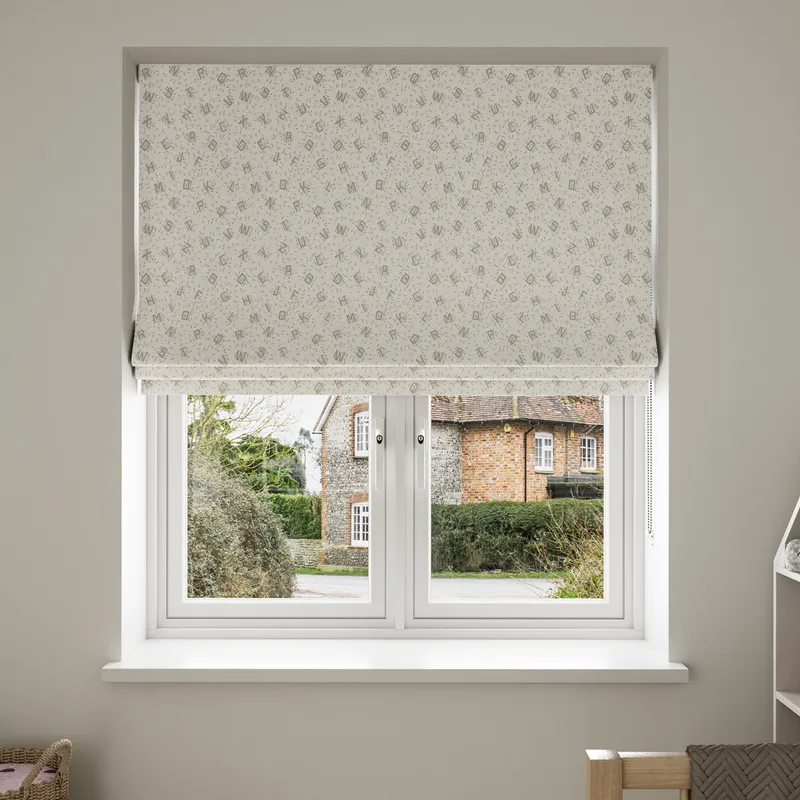
Laura Ashley Roman Blinds
at Blinds By Post
Laura Ashley linens and pearls - patterned cream and natural tones.
%22%3E%0A%20%20%20%20%20%20%3Crect%20width%3D%2214%22%20height%3D%2214%22%20fill%3D%22%23e88a8a%22%2F%3E%0A%20%20%20%20%20%20%3Crect%20x%3D%220%22%20y%3D%220%22%20width%3D%224%22%20height%3D%2214%22%20fill%3D%22%23ffcc4f%22%20opacity%3D%220.85%22%2F%3E%0A%20%20%20%20%20%20%3Crect%20x%3D%228%22%20y%3D%220%22%20width%3D%223%22%20height%3D%2214%22%20fill%3D%22%234fc3f7%22%20opacity%3D%220.85%22%2F%3E%0A%20%20%20%20%3C%2Fpattern%3E%0A%20%20%3C%2Fdefs%3E%0A%20%20%3Crect%20x%3D%2260%22%20y%3D%2222%22%20width%3D%2280%22%20height%3D%228%22%20rx%3D%221.5%22%20fill%3D%22%233a3a3a%22%2F%3E%0A%20%20%3Crect%20x%3D%2262%22%20y%3D%2230%22%20width%3D%2276%22%20height%3D%2283%22%20fill%3D%22url(%23print-fill)%22%20stroke%3D%22%232a2a2a%22%20stroke-width%3D%220.8%22%2F%3E%0A%20%20%3Crect%20x%3D%2257%22%20y%3D%22113%22%20width%3D%2286%22%20height%3D%225%22%20rx%3D%221%22%20fill%3D%22%233a3a3a%22%2F%3E%0A%20%20%3Cline%20x1%3D%22146%22%20y1%3D%2230%22%20x2%3D%22146%22%20y2%3D%22116%22%20stroke%3D%22%239a9a9a%22%20stroke-width%3D%221%22%2F%3E%0A%20%20%3Ccircle%20cx%3D%22146%22%20cy%3D%22120%22%20r%3D%222.2%22%20fill%3D%22%239a9a9a%22%2F%3E%0A%3C%2Fsvg%3E)

Arklow Natural Woven Roman Blinds
at Unbeatable Blinds
A natural-woven Roman in cream from Unbeatable Blinds, the lowest entry price here.


Solo Roman Blinds
at English Blinds
A plain Roman in ivory and pearl from English Blinds.
Pick details
Laura Ashley Roman Blinds
at Blinds By Post
Laura Ashley linens and pearls - patterned cream and natural tones.
When the point is to have pattern and texture rather than a flat plain, the Laura Ashley Roman range at Blinds By Post is our pick for cream and natural tones. This is the designer route: the range carries Laura Ashley's familiar furnishing fabrics in soft neutral shades such as Linen and Pearl, where the interest comes from the weave and the muted print rather than from a strong colour. It gives the widest patterned choice in the neutral family of the three picks here, which makes it the one to look at if you want a cream window that still has something going on up close.
It sits at a mid entry price, above a plain budget Roman but in keeping with a licensed designer fabric. The soft fold of a Roman flatters this kind of textured, lightly patterned cloth particularly well, holding the pattern in gentle horizontal pleats. If you want to compare before committing, the same Laura Ashley Roman line is also stocked at Swift Direct Blinds, so it is worth checking both retailers on shade availability and on the price at your exact window size.
Arklow Natural Woven Roman Blinds
at Unbeatable Blinds
A natural-woven Roman in cream from Unbeatable Blinds, the lowest entry price here.
For a plain cream Roman without a designer premium, the Arklow Natural Woven Roman at Unbeatable Blinds is our value pick. It is a natural woven cloth - a softly textured weave rather than a smooth flat plain - so it reads as a little more considered than a basic budget fabric while staying firmly in plain, neutral territory. In cream terms it sits in the warm natural ground, with a grey alternative in the same range if you want to cool the shade down.
It comes in at the lowest entry price of the three picks here, which is the main argument for it: this is the value route to a clean, textured cream Roman where the pattern in the room is coming from elsewhere - a sofa, a rug, the wallpaper. For a living room or bedroom that wants a soft, quiet window without spending on a licensed print, it does the job warmly for the money.
Solo Roman Blinds
at English Blinds
A plain Roman in ivory and pearl from English Blinds.
For a plain cream Roman in the middle of the range, the Solo Roman at English Blinds is our pick. It is a straightforward plain Roman, with the cream end of its palette covered by Ivory and Pearl - two shades that lean to the warmer, softer side of off-white rather than towards a greyer stone. That makes it a good choice if what you want is a clean, uncomplicated plain cream that brightens the room and stays out of the way of everything else in it.
It sits at a mid entry price, between the value faux-suede option and the designer patterned range. The appeal here is simplicity done properly: a plain fabric in a well-judged ivory or pearl, made to your window, with the soft drape that makes a Roman feel dressed rather than flat. If the Laura Ashley range is the pick for pattern and the Arklow is the budget plain, the Solo is the plain cream for someone who wants something a step up from the entry level without moving to a designer fabric.
What we didn't include
We have kept this to three cream picks spanning patterned designer, plain value and plain mid-priced. A note on the gaps.
Other colours have their own guides. This is a cream guide, so we have not tried to cover white, or the greige and grey neutrals that sit a shade cooler - those belong in their own colour guides, where the comparison is between like and like. If your room is leaning grey rather than warm, that is the guide to read instead.
We have also not split pattern and plain into separate guides here; instead we have put a patterned route and two plain routes side by side so you can weigh texture against simplicity in one place. And we have not treated blackout as a category of its own, because on a Roman a blackout lining is an ordering option to add to whichever fabric you choose rather than a separate product to pick. If a cream bedroom needs genuine darkness, ask about a blackout lining on your chosen shade.